


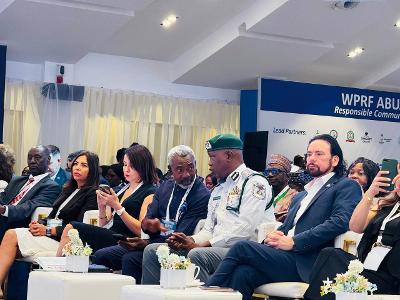
President of the Global Alliance for Public Relations and Communication Management, Professor Justen Green, has warned that the growing spread of misinformation and disinformation, compounded by the rapid advancement of artificial intelligence (AI), poses a serious threat to public trust, global stability and effective communication.
Professor Green, who gave the warning at the World Public Relations Forum (WPRF) in Abuja, Nigeria, called on public relations and communication professionals to take the lead in defending truth, promoting accountability and ensuring that emerging technologies are deployed responsibly.
He said the increasing difficulty of distinguishing facts from falsehoods, particularly during conflicts, humanitarian emergencies and environmental crises, had made the role of communication professionals more critical than ever.
According to him, the world is confronted with several challenges, including armed conflicts, forced migration and climate-related disasters, which have been further complicated by the spread of misleading information.
READ ALSO: CJN Urges Judges to Verify AI-Generated Authorities
He cautioned that the misuse of artificial intelligence could worsen the situation, making it increasingly difficult for individuals, communities and governments to establish the truth and make informed decisions.
Green, therefore, challenged practitioners to recognise that their responsibility extends beyond managing corporate reputations and delivering organisational messages to protecting the integrity of information and safeguarding public interest.
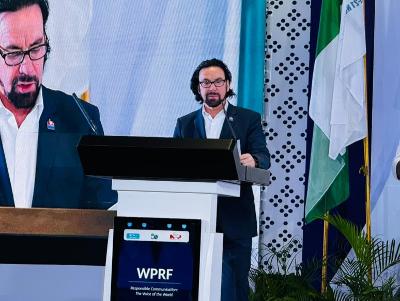
He described public relations professionals as influential actors whose positions within governments, international organisations, businesses and other institutions give them considerable power to shape public opinion and influence decisions affecting millions of people.
“You have the power to change the world. We are among the most powerful influencers in the world,” he Said.
The Global Alliance president maintained that practitioners must deploy this influence to champion justice, equality, accountability and sustainable development, rather than allow their professional expertise to be used to promote deception or conceal wrongdoing.
He described communication professionals as “the voice of those who can’t speak out” and “the conscience of major industry and governance,” urging them to remain committed to defending vulnerable populations and holding powerful institutions accountable.
On the increasing adoption of artificial intelligence in the communication industry, Green said the technology should be seen as an opportunity for professional growth rather than an outright threat to employment.
He argued that the ability to understand and effectively utilise AI would increasingly determine the relevance and competitiveness of communication professionals in the evolving workplace.
“AI won’t take jobs. People who don’t know how to use it will lose jobs,” he said.
However, he warned that technological competence alone would not be sufficient to guarantee excellence in the profession, insisting that human understanding, empathy and emotional intelligence remained indispensable to effective communication.
Using the example of a family that loses its home to a natural disaster after years of building and nurturing it, Green explained that while artificial intelligence could analyse information and generate responses, it could not genuinely experience the pain, trauma and emotional realities of the affected family.
“The future of artificial intelligence is emotional intelligence. Communication professionals must combine technological knowledge with empathy, compassion and human understanding,” he said.
He also stressed the need for practitioners to uphold ethical standards in the discharge of their responsibilities, noting that the Global Alliance remained committed to promoting professionalism through its Global Code of Ethics and principles guiding the responsible use of artificial intelligence.
Green said ethical communication must remain central to the profession, particularly at a time when technological advancements are changing how information is created, distributed and consumed.
He urged delegates at the forum to use the gathering as an opportunity to exchange knowledge, strengthen professional capacity and develop communication strategies capable of addressing contemporary global challenges.
According to him, the knowledge and skills acquired through education, training and professional collaboration could significantly improve the lives of people across different societies.
“Through education, training, and development combined with your communication knowledge and strategies, you can enhance the lives of billions of people around the world,” he said.
The Global Alliance president further reminded practitioners that professional credibility is measured not merely by the messages they communicate but also by the values reflected in their conduct.
“Your words have the power to make history. But today, you don’t speak with words. You speak with your actions,” he stated.
He congratulated Nigeria and the African continent on hosting the international gathering, describing the event as an important milestone in the development and global recognition of the public relations profession in Africa.
Green’s address reinforced the need for a more responsible, ethical and technologically equipped communication industry, urging professionals to use their influence not only to shape narratives but also to defend truth, strengthen public confidence and contribute to a more just and inclusive world.

