


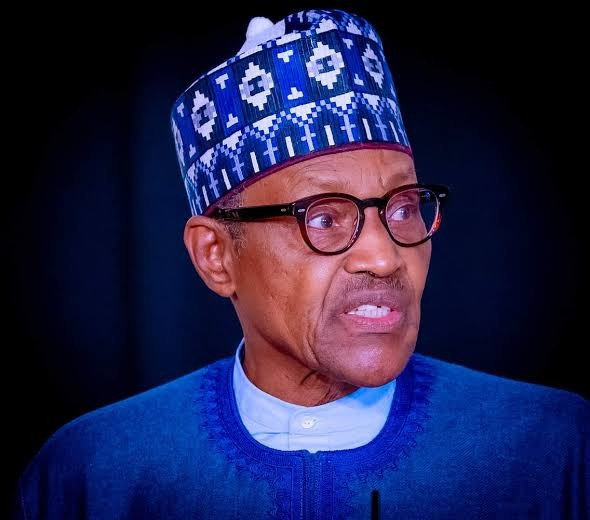
Vice President Kashim Shettima has paid glowing tribute to the late former President Muhammadu Buhari, saying the true measure of leadership lies in the character of those entrusted with public office rather than the power and privileges they wield.
VP Shettima recalled that the former Nigerian leader demonstrated this principle through his modest lifestyle, personal discipline and devotion to the country, stressing that “the dignity of public office depends largely on the character of its occupant.”
VP Shettima echoed this principle in his latest tribute to the late former President, during the public presentation of the book Muhammadu Buhari: The Authorised Biography, held at the Nigerian Army Conference Centre and Suites, Abuja.
The Vice President, who was represented by the Special Adviser to the President on General Duties, Dr. Aliyu Modibbo, spoke on the theme, “The Life We Leave to History,” describing the former President as a remarkable figure in Nigeria’s political history whose personal restraint and enduring public following distinguished him from many of his contemporaries.
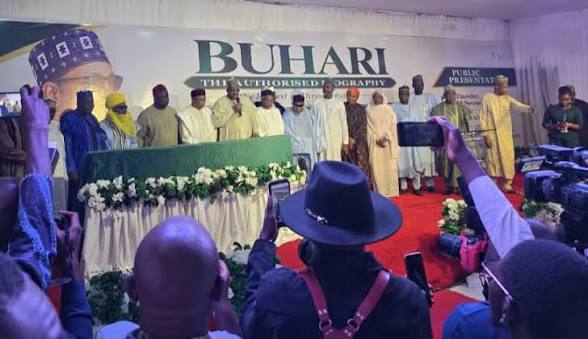
“His Spartan lifestyle distinguished him in a world where too many seek public office to satisfy private appetites. There was something arresting about a man who could command so much and desire so little,” he stated.
VP Shettima recalled the lessons he personally learnt from Buhari, particularly his indifference to material possessions and his commitment to national service.
“I learnt so much from President Buhari as a leader, as a human being who was not drawn to worldly possessions, and as a patriot whose devotion to Nigeria endured beyond the offices he held.
“He taught me that the dignity of office depends upon the character of its occupant. He also taught me that a leader’s example continues to speak long after he’s out of service. We belong to a generation that doesn’t seem to care about this wisdom,” he maintained.
VP Shettima observed that Buhari’s political career, spanning military leadership and democratic governance, attracted extraordinary public affection as well as strong disagreements over his policies and decisions.
“The late President Muhammadu Buhari was a phenomenon that defied the familiar art of Nigerian politics. His life confounded those who claimed to predict him and offered instruction to successive generations of leaders.
“Whether as a military leader or a democratically elected President, his organic following expressed something that his critics often struggled to explain: the people’s recognition of a man who lived differently,” he said.
Beyond celebrating Buhari’s life, the Vice President said the publication of his authorised biography offered important lessons in public accountability, institutional memory and the responsibility of leaders to preserve accurate records of their stewardship.
He warned that when public officeholders fail to document their experiences and explain the circumstances surrounding their decisions, they leave future generations vulnerable to speculation and distorted accounts of national events.
The Vice President maintained that the obligation of public service extends beyond making decisions to preserving the evidence and reasoning behind them, particularly for the benefit of succeeding administrations and future generations.
He welcomed the publication of the three-volume biography, noting that the work drew upon years of research, documentary study and interviews with Buhari and individuals who knew or worked with him.
He said the former President’s decision to authorise the project during his lifetime and participate personally in its development provided an opportunity for his own recollections to be examined alongside those of his associates and other historical records.
The Chairman of the occasion and former President of the Republic of Niger, Mahamadou Issoufou, described the presentation of former President Muhammadu Buhari’s three-volume biography as an important contribution to Nigeria’s historical record.
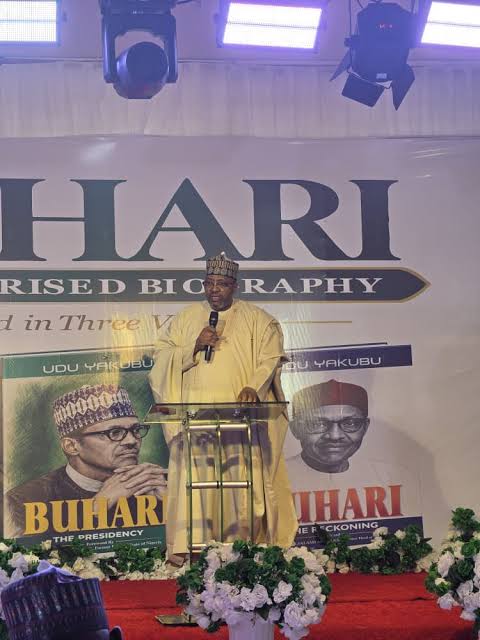
Issoufou said that the publication would help future generations understand his leadership, achievements and controversies.
“Today, in presenting these volumes, we move from mourning to historical reflection. Mourning belongs first to the family, friends and contemporaries. History belongs to everyone, including generations that never knew the man,” he said.
Issoufou maintained that Buhari’s legacy must be assessed fairly, taking into account his decisions, successes and limitations, while commending the former President for participating in the research during his lifetime.
Former Senate President, Pius Anyim, who represented former President Goodluck Jonathan, described Buhari as “a man who valued personal relationships and remained committed to maintaining them, saying that this quality deserved a prominent place in the remembrance of his life.”
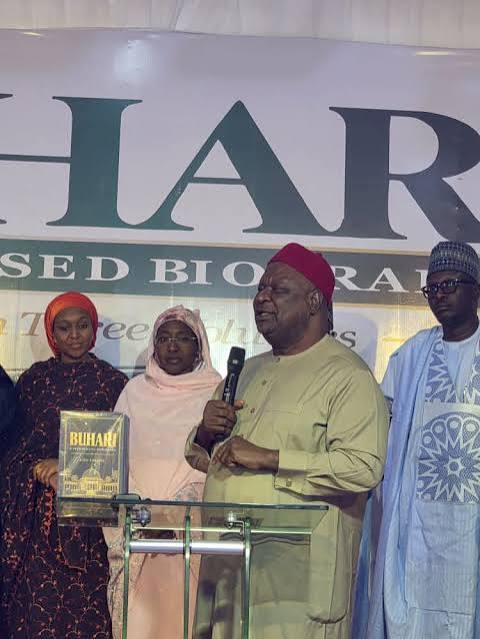
The author of the three volumes, Dr. Udu Yakubu, described the publication as the culmination of more than two and a half years of research and documentation.
“For more than two and a half years, these three volumes existed only as work. Today that labour leaves my hands,” he said.
Yakubu acknowledged Buhari’s cooperation throughout the research, noting that the former President granted him access without interfering with his independent judgment.
“He gave the work the legitimacy of access without taking away my independence of judgement. I regret that he did not live to see these works completed but the record now carries his voice,” he stated.
Reviewing Volume One of the authorised biography, Buhari Ambassador Dr. Chijioke Wigwe described the publication as an authoritative account containing Buhari’s last substantial recorded reflections.
He traced Buhari’s journey from his upbringing in Daura through his military career, appointment as Federal Commissioner for Petroleum, emergence as Head of State and eventual return to farming following his removal from office.

