


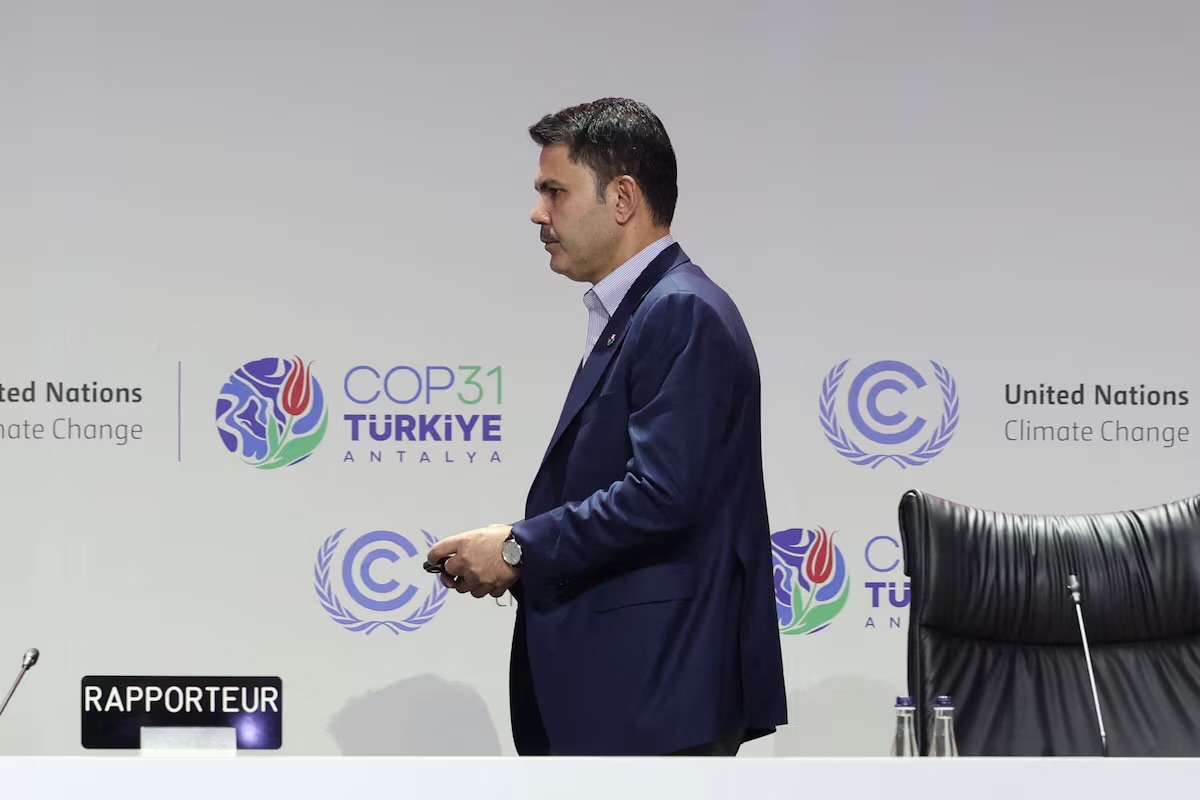
The COP31 talks in Turkey have faced an uncertain outcome as countries remained divided over the pace of the clean-energy transition, the role of carbon capture and financial support for developing nations.
COP31 President Murat Kurum said the proposed agreement reflected a compromise among participating countries, although not all had secured their preferred outcomes.
READ ALSO: World Leaders to Outline Climate Priorities at COP31
“No party approached the document solely with its own priorities; rather, through consensus, a text was crafted in which everyone can see themselves reflected,” Kurum said.
He expressed hope that the agreement would demonstrate that multilateral cooperation could still deliver results.
Australia and Turkey struggled to secure consensus among nearly 200 national delegations.
A revised draft deal was released two days after the conference was scheduled to end, but some countries are still pushing for more ambitious commitments.
The draft acknowledges that global warming is on course to exceed the 1.5-degree Celsius limit set under the Paris Agreement and calls for faster development of carbon-removal technologies.
However, it makes no explicit mention of fossil fuels, which scientists identify as the main drivers of climate change. Instead, it refers to an earlier agreement to transition away from oil, gas and coal.
READ ALSO: COP31 Leaders Urge Stronger Action Against Global Warming
Saudi Arabia and other major oil-producing countries reportedly pushed to keep direct references to fossil fuels out of the text.
The talks seek to bridge differences between countries vulnerable to climate change and those whose economies depend on fossil fuel production and consumption.
Reuters

