


A Professor of African History, Peace and Conflict Studies at the University of Ibadan, Isaac Olawale Albert, has warned that Artificial Intelligence-driven misinformation and disinformation could undermine the credibility of Nigeria’s 2027 General Elections.
Prof. Albert called on journalists, security agencies, the Independent National Electoral Commission (INEC), and other stakeholders to strengthen their capacity to detect and counter digital manipulation capable of misleading voters and triggering political, ethnic, and religious tensions.
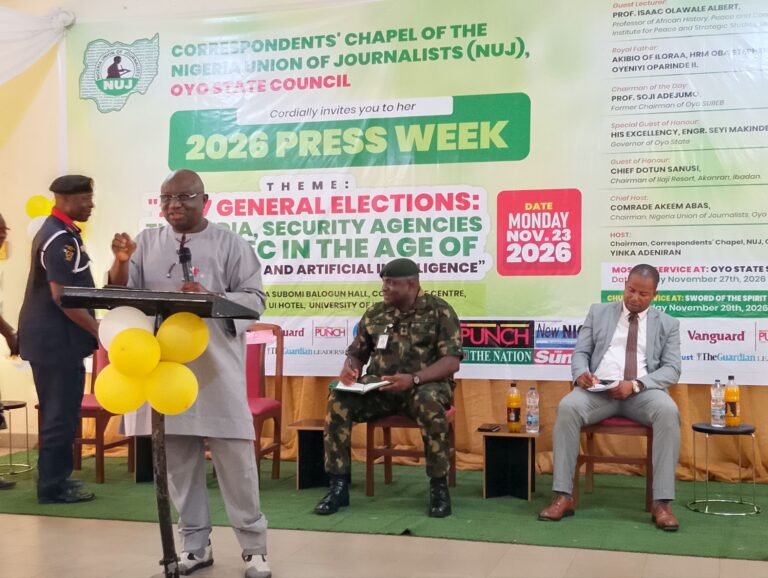
Albert gave the warning while delivering a lecture at the Opening Ceremony of the 2026 Press Week of the Correspondents’ Chapel of the Nigeria Union of Journalists (NUJ), Oyo State Council, held at the Conference Centre, University of Ibadan.
The lecture, titled “2027 General Election: The Media, Security Agencies and INEC in the Age of Disinformation and Artificial Intelligence,” highlighted the growing threat of manipulated digital content to Nigeria’s electoral process.
The Professor described the 2027 elections as potentially the most challenging in the country’s democratic history, warning that desperate political actors could exploit emerging technologies to manipulate public opinion and electoral outcomes.
He identified fabricated videos of candidates conceding defeat, fake audio recordings attributed to INEC, manipulated election results, and misleading social media campaigns as possible tools of electoral disinformation.
Prof. Albert urged media organisations to strengthen fact-checking mechanisms, adopt digital verification tools and authenticate social media content before publication, stressing that information integrity is as critical as ballot integrity.
He said “responsible journalism remained central to public confidence in elections, warning that misinformation could distort voters’ choices and weaken democratic institutions”.
The Chairman of the occasion, Professor Soji Adejumo, expressed concern over insecurity in crisis-prone communities, questioning how residents would exercise their voting rights if their safety could not be guaranteed.
The Resident Electoral Commissioner in Oyo State, Professor Adeniran Tella, represented by the Head, Publicity Unit of Oyo State INEC, Olayiwola Awolowo, said INEC was improving its electoral technology and result-management systems to enhance transparency and prevent discrepancies.
He cited improvements to the Bimodal Voter Accreditation System (BVAS), the INEC Result Viewing Portal (IReV), electronic ECBA and Results Management System, including the electronic EC8A designed to detect inconsistencies between manually completed polling-unit result sheets and electronically captured results.
The General Officer Commanding, 2 Division, Nigerian Army, Major General Auwalu Mahmuda, represented by the Acting Deputy Director, Lt Col Jonah Danjuma, called for stronger collaboration among stakeholders and urged residents to provide credible intelligence to security agencies.
The Oyo State Commissioner of Police, Aimbola Olugbenga, represented by CSP Olatunji Adesina, said surveillance had been intensified across Oyo State, with divisional police officers equipped with surveillance cameras to strengthen security monitoring.
The Commandant of the Nigeria Security and Civil Defence Corps (NSCDC), Oyo State Command, Augustine Padonu, represented by DCC Oluwole Olusegun, pledged collaboration with other security agencies to ensure peaceful elections.
In a goodwill message, the Oyo State Commissioner for Energy and Mineral Resources, Professor Dahud Sangodoyin, represented by the Permanent Secretary of the Ministry, Michael Ayanniyi, called for stronger cooperation between government and the media, urging public institutions to remain transparent and journalists to uphold professional standards.
Earlier, the Chairman of the Correspondents’ Chapel of the NUJ, Oyo State Council, Yinka Adeniran, explained that the title of the lecture was selected to facilitate discussions on the challenges posed by Artificial Intelligence and misinformation as the 2027 General Elections draw near.
Adeniran stated that the knowledge gained from the lecture would help the media, security agencies, INEC, and other stakeholders to channel their efforts positively towards nation building and responsible use of AI.
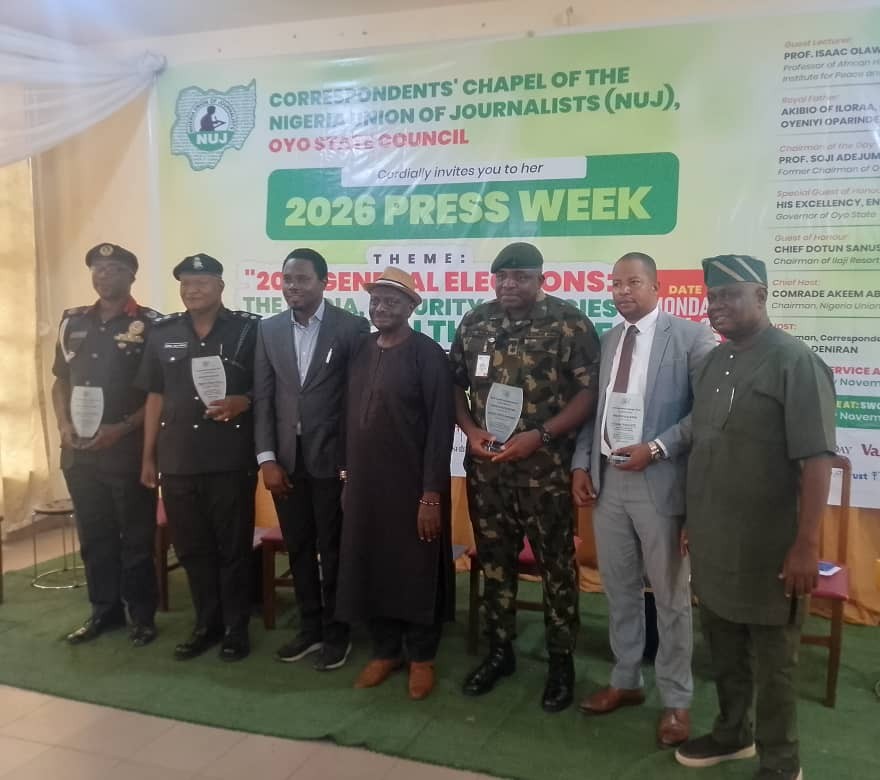
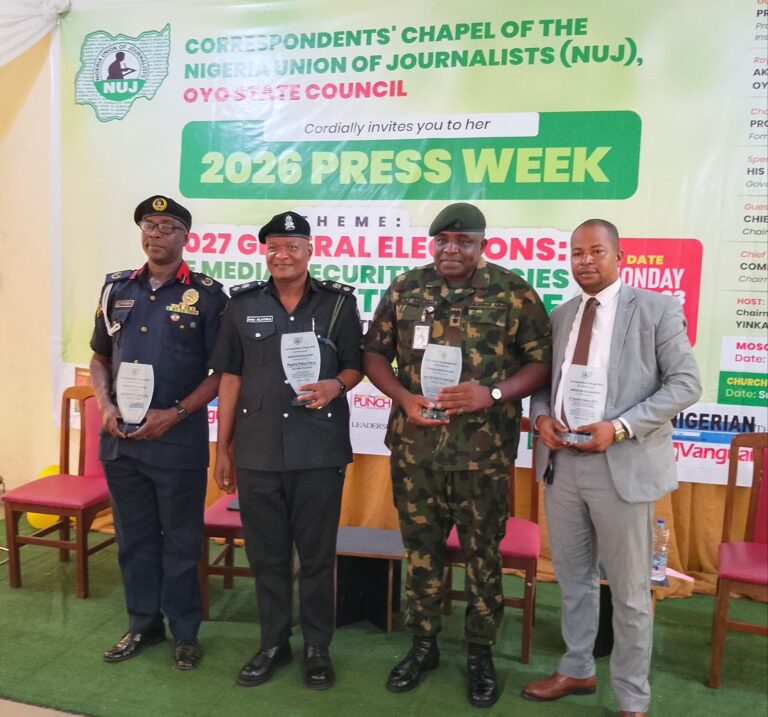
The ceremony featured the presentation of awards to the General Officer Commanding, 2 Division, Nigerian Army; the Oyo State Commissioner of Police; the State Commandant of the NSCDC; and the Special Adviser on Security to Governor Seyi Makinde, in recognition of their handling of the Oriire kidnapping incident.
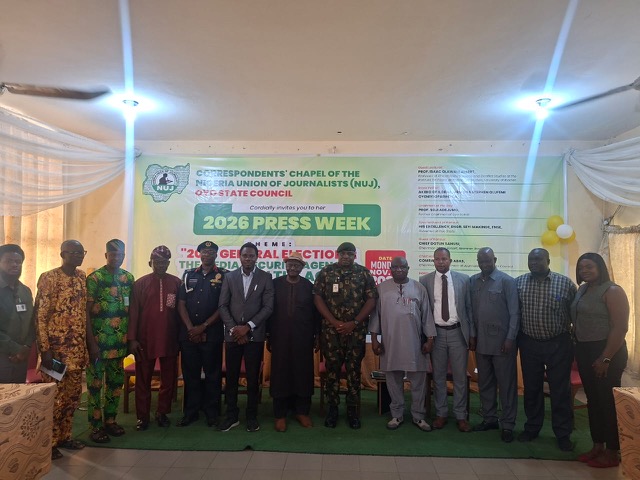
The event brought together journalists, security officials, academics, and other stakeholders to discuss emerging threats to Nigeria’s electoral process and the need for collective action to protect democratic institutions.

