


The Pan African Alliance of Small and Medium Industries (PAOSMI) has called on African governments to prioritise local manufacturing through deliberate industrial policies, warning that small and medium-scale industries may struggle to compete globally without urgent reforms.
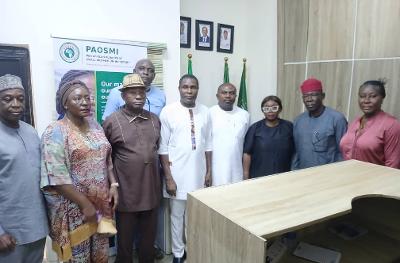
The Director-General of PAOSMI, Dr Henry Emejuo, made the call in Abuja when the executive members of the Association of West African Legislative Correspondents (AWALCO), led by its President, Comrade Innocent Odoh, paid him a courtesy visit.
Emejuo identified poor policy coordination, high interest rates, expensive electricity, inadequate technical skills and fragmented product standards as major obstacles to industrial growth across the continent.
He said African countries must move beyond policy declarations to practical measures that strengthen local production, improve the business environment and enhance the global competitiveness of their industries.
According to him, industrial development requires a coordinated approach involving governments, industries, academic institutions and the media.
“Our approach is a triple helix. So how do we bring industry, academia, and the government? And then they talk like the media to drive industrialisation in the continent,” he said.
He explained that while universities and research institutions should drive research and innovation, industries must translate such knowledge into commercial products, while governments provide the necessary policies and enabling environment.
The PAOSMI Director General disclosed that the organisation, which supports small and medium industries, emerging manufacturers and start-ups, had established affiliate networks in 40 African countries, with about 84 affiliate networks, including ASURI in Nigeria.
He expressed concern over the high cost of borrowing and short repayment periods, saying these conditions made it difficult for manufacturers to secure the long-term financing required to establish factories, acquire equipment and expand production.
“One, the rate is high, in average in the continent, compared to China and other countries. And then the second one is a short term. And if you want to embark on a productive economy, it becomes very difficult when you have short-term loans. In other words, we say that banks in the continent really do not want to lend money for productive economy,” he said.
Major Constraints
Emejuo also identified the high cost and unreliable supply of electricity as major constraints undermining the competitiveness of African manufacturers.
He noted that Nigerian businesses spend more on energy while grappling with inadequate supply, increasing production costs and making locally manufactured goods less competitive.
“If you look at the average in Nigeria, one kilowatt of power of energy is about 16 cents. When you compare that to other countries, it cannot work. Your product is not competitive in the market,” he noted.
He added that affordable electricity must be accompanied by reliable supply to support sustainable industrial production.
“When I say there is a need for cheap power, and then there’s a need for availability of power, I started from the cheapness of the power, but it’s not also available. So you find out that it’s a double jeopardy,” he said.
READ ALSO: Nigeria to Boost African Seed Trade, Tackle Counterfeits
On skills development, Emejuo called for reforms in technical education and stronger collaboration between academic institutions and industries to ensure that graduates acquire skills relevant to the needs of employers.
He expressed concern that African countries continued to rely on foreign expertise for technical positions that could be occupied by adequately trained local professionals.
“So do we need to restructure our academic system? Do we need to talk to industry? Do we need to get a good technique to see where, what do the industry need? What kind of skills do they need to be able to operate effectively?” he said.
On regional trade, he urged African countries to harmonise industrial policies and product standards to facilitate the movement of locally manufactured goods across national borders.
He said differences in certification and registration requirements increased the cost of doing business and discouraged manufacturers from accessing other African markets.
Emejuo called for accelerated efforts by the African Organisation for Standardisation and national standards institutions to harmonise product standards, particularly as the continent advances the implementation of the African Continental Free Trade Area (AfCFTA).
He also identified weak financial connectivity, difficulties with cross-border payments, transportation challenges and restrictions on mobility as barriers to intra-African trade, stressing the need for stronger cooperation among governments and regional institutions.
The PAOSMI Director-General welcomed the proposed partnership with AWALCO, describing the media as an important partner in communicating industrial policies, highlighting challenges confronting businesses and drawing government attention to practical solutions.
Speaking earlier, AWALCO President, Comrade Innocent Odoh, said the association was seeking a sustainable partnership with PAOSMI to strengthen media coverage of trade, investment, manufacturing and industrial development.
He explained that an earlier engagement between both organisations had exposed AWALCO members to PAOSMI’s activities and created the need for a more structured relationship.
“That meeting was very productive, and we were able to come up with certain things. So we decided that it is not just about having business or collaboration in areas to achieve purposes,” he said.
Odoh said AWALCO was interested in participating in PAOSMI’s programmes, conferences, seminars and workshops, while creating opportunities for interviews and wider reportage of issues affecting African industries.
“As a media organisation, as those who cover the media industry, we are here to ensure that that collaboration is actually enriched in a way that will make us partners, not just about achieving some activities, but also becoming very, very closer in terms of reportage,” he said.
He assured PAOSMI of the association’s commitment to sustained coverage of its initiatives, particularly those relating to industrial development, investment and economic growth.
“We want to assure you that we’re always going to be here for you in terms of reportage, expand it to whatever level you want,” he said.
The proposed partnership is expected to strengthen public awareness of the challenges facing African manufacturers and promote sustained engagement between policymakers, industry stakeholders and the media in advancing the continent’s industrialisation agend

