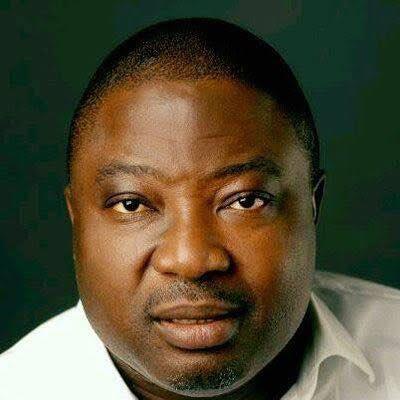
The Senior Special Assistant to President Bola Ahmed Tinubu on Media and Special Duties, Tunde Rahman, says the emerging alliance between National Democratic Congress presidential candidate, Mr Peter Obi, and Oyo State Governor, Seyi Makinde, is not yet a coalition.
Mr Rahman said the alliance is a signal that opposition leaders recognise that their division contributed to their defeat in the 2023 presidential election.
Rahman said the development suggests that opposition figures are beginning to test the waters ahead of the January 16, 2027, presidential election, warning that whether the emerging political realignment becomes a serious threat to the ruling All Progressives Congress, APC, would depend largely on the ability of opposition leaders to subordinate personal ambition to broader political strategy.
“The Obi-Makinde rapprochement is not a coalition. It is a signal that opposition leaders know they lost in 2023 because they were divided. It signals that they are now testing the waters.
“Whether that signal becomes a threat depends on whether they can do what Nigerian politicians have failed to do for 25 years: put country and strategy ahead of personal ambition.
“President Tinubu is the favourite. But for the first time since 2023, APC may now have something to worry about,” Rahman wrote.
Read Also:
In an article titled “Obi, Makinde and Hurdles Against Opposition Coalition”, Rahman noted that a fresh thaw in relations between Obi and Governor Makinde is fuelling renewed speculation about a possible opposition coalition to challenge President Tinubu in 2027.
The two political leaders, who were on opposite sides during the 2023 election cycle, were recently seen together at a private meeting in Ibadan, the Oyo State capital, followed by joint appearances at public events, including the inauguration of the Allied People’s Movement presidential Campaign Office in Abuja last Monday.
Rahman said the campaign office belongs to Governor Makinde, who is a candidate in the race for the 2027 presidency on the APM platform.
According to him, the Obi-Makinde rapprochement followed a plan by G-100, an amorphous group of opposition stakeholders advocating a united opposition front.
He said Obi’s appearance at the inauguration of Makinde’s campaign office appeared to raise the stakes in the plan, noting that it was the first time in recent memory that a presidential candidate would appear at the opening of the campaign office of a rival candidate.
“Do the two have a working alliance, or is this just make-believe?” Rahman asked, adding that sources close to both camps said their discussions centred on “national interest, governance, and 2027 permutations.”
Rahman recalled that in 2023, Makinde, then a PDP chieftain, was part of the influential G-5 governors who worked against the then Peoples Democratic Party presidential candidate and former Vice President, Atiku Abubakar, while Obi led the Labour Party’s surprise third-force movement.
He noted that their paths diverged sharply during the 2023 presidential campaign but questioned whether, with four months to the January 16, 2027 election, prevailing political realities were now forcing a rethink.
Rahman said the answer might only be conjectural but maintained that the bigger question was whether opposition leaders could put ego aside and present a united front in 2027.
He said Governor Makinde had, in recent months, taken a more independent posture, frequently criticising federal policies while also calling for opposition unity.
According to him, Makinde, faced with an internal crisis within the PDP, moved to the Allied People’s Movement to contest on its platform, while Obi has continued to mobilise his key support base under the “Obidient” movement and has not ruled out another presidential run.
Rahman questioned whether a potential Obi-Makinde alignment could become the nucleus of a wider opposition front involving aggrieved members of the PDP, excluding what he described as “Wike’s PDP,” as well as the Labour Party, NNPP, ADC and other groups, alongside the NDC and APM.
He also asked whether the seeming rapprochement could move the opposition from fragmentation to coordination.
Rahman said both Obi and Makinde had downplayed talk of a formal alliance, describing their engagements as “consultations among patriots.”
He argued that whether the consultations produce a tangible result would depend on whether Obi, Makinde and other opposition leaders, including African Democratic Congress presidential candidate, Alhaji Atiku Abubakar, could bridge personal, regional and party differences before the election season intensifies.
“Beyond handshakes and meetings, does the opposition actually have the numbers, structure, and unity to pose a real threat to President Tinubu and the APC?” he asked.