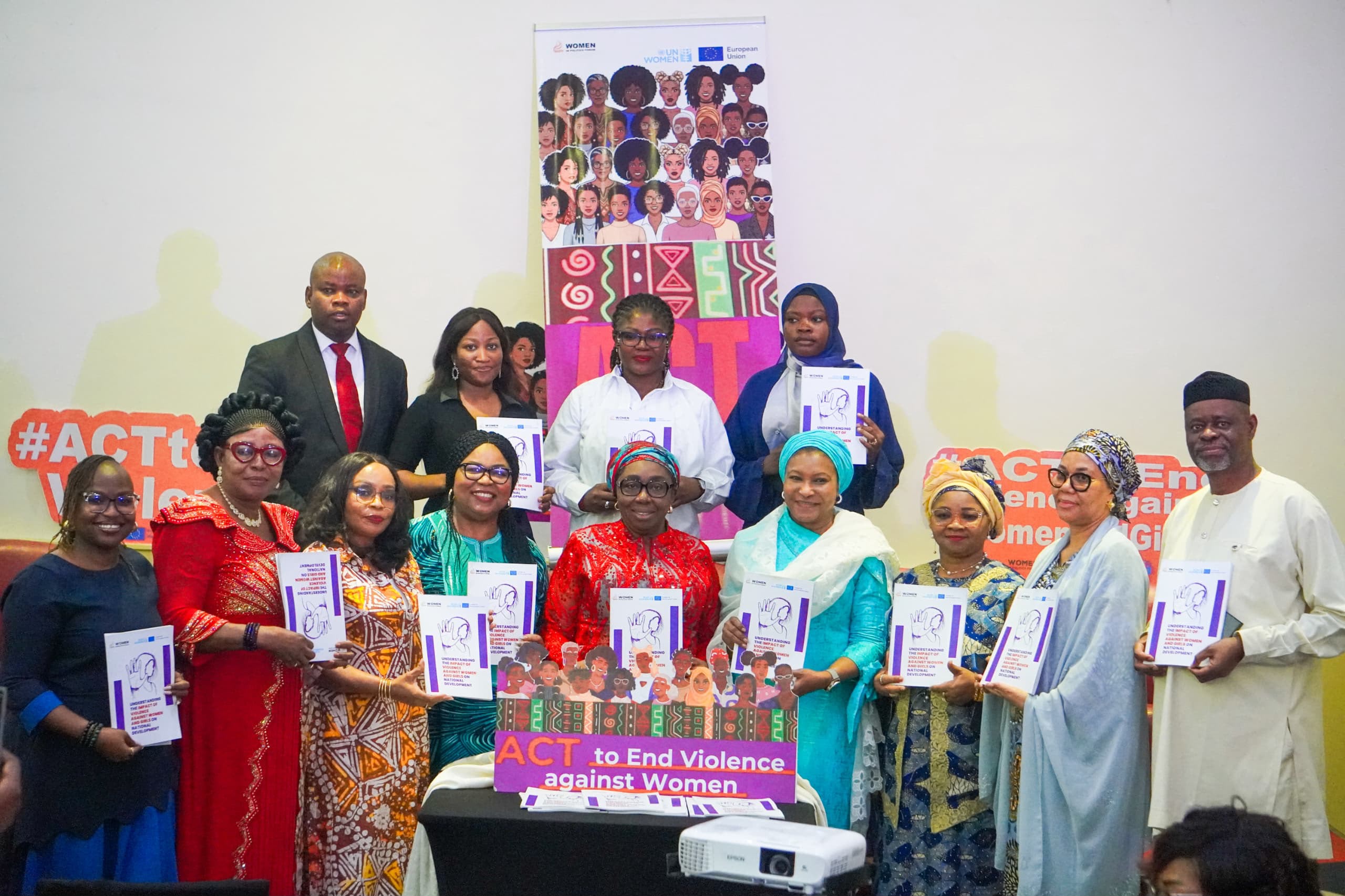
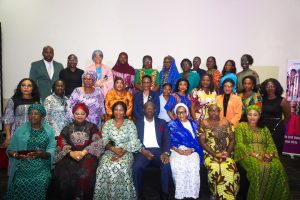
West African female parliamentarians at the West Africa Female Parliamentarians Peer Review Conference in Accra, Ghana, has reaffirmed a collective commitment to harmonising legislation, strengthening implementation, advancing gender-responsive budgeting and deepening regional cooperation to end violence against women and girls across the sub-region.
Delivering Nigeria’s institutional position on behalf of the Honourable Minister of Women Affairs and Social Development, Hajiya Imaan Sulaiman-Ibrahim, Chairperson of the Governing Board of the Maryam Babangida National Centre for Women Development, Princess Jummai Idonije outlined Nigeria’s evolving policy framework for combating gender-based violence through legislative reforms, institutional coordination and strengthened implementation.
“Our legal framework is built on pillars such as the VAPP Act of 2015 (now domesticated in 35 states), the Child Rights Act of 2003 (all 36 states), and the National Gender Policy (2021–2026). This is bolstered by the National Women’s Economic Empowerment (WEE) Policy of 2023 and the Third National Action Plan (NAP III) on Women, Peace, and Security (2025–2030), which domesticates UNSCR 1325 to ensure women’s leadership in conflict resolution.”
The minister charged: “Laws are only as powerful as their relevance to current realities. To close critical enforcement loopholes, address emerging societal shifts, and strengthen implementation, these foundational frameworks are currently undergoing comprehensive legislative and policy reviews.”
She said Nigeria had aligned its gender and social protection agenda with the Renewed Hope Agenda of President Bola Ahmed Tinubu through the nine-pillared Renewed Hope Social Impact Intervention 774; strengthened inter-ministerial gender coordination; expanded legal and policy reforms; reviewed more than 40 strategic policy documents and standard operating procedures; introduced the National Boy Child Policy; initiated legislative reviews addressing technology-facilitated gender-based violence; scaled women’s political participation; expanded economic empowerment programmes; and deployed an electronic dashboard to monitor implementation across the country’s 774 local government areas.
“We are actively refining their provisions to make them more robust, agile, and protective for every Nigerian.” She said.
Women in Politics Forum President Ebere Ifendu said the idea is to bring women parliamentarians together from across West Africa to examine what has worked, what has not worked, and how countries that have made progress achieved their results.
Ifendu stressed that “in some countries, the laws exist, but implementation remains a major problem. We need stronger political will. It is no longer enough for individual countries to act alone. We must work collectively to ensure that violence against women and girls is drastically reduced.”
Presenting on the theme “Combating Gender-Based Violence through Gender-Responsive Budgets”, Executive Director of the Women’s Democracy Network, Kenya, Veronica Mangeni, emphasised that “Gender-responsive budgeting is not a separate budget for women. Rather, it is the process of integrating gender considerations into the entire budget cycle from planning and allocation to spending, monitoring and evaluation.”
She stressed that laws and national action plans on gender-based violence could not succeed unless governments committed adequate financial resources for implementation.
Ghanaian Member of Parliament for Salaga South, Zuwera Mohammed Ibrahimah, underscored legislative responsibility, saying: “As legislators, our responsibility goes beyond passing laws. We must ask ourselves how those laws are implemented and how they improve the lives of the people they are intended to protect.”
She added: “If we want our daughters to be treated with dignity when they become wives and mothers, then we must also teach our sons to treat women with dignity and respect.”
The conference, organised by the Women in Politics Forum with support from the UN Women Regional Office and funding from the European Union, enabled lawmakers, civil society organisations and development partners to examine effective legislative models, implementation challenges and regional policy responses.
Delegates agreed that stronger regional collaboration, effective implementation of existing laws, gender-responsive public financing and sustained cross-border partnerships remain critical to advancing gender equality and eliminating violence against women and girls across West Africa.