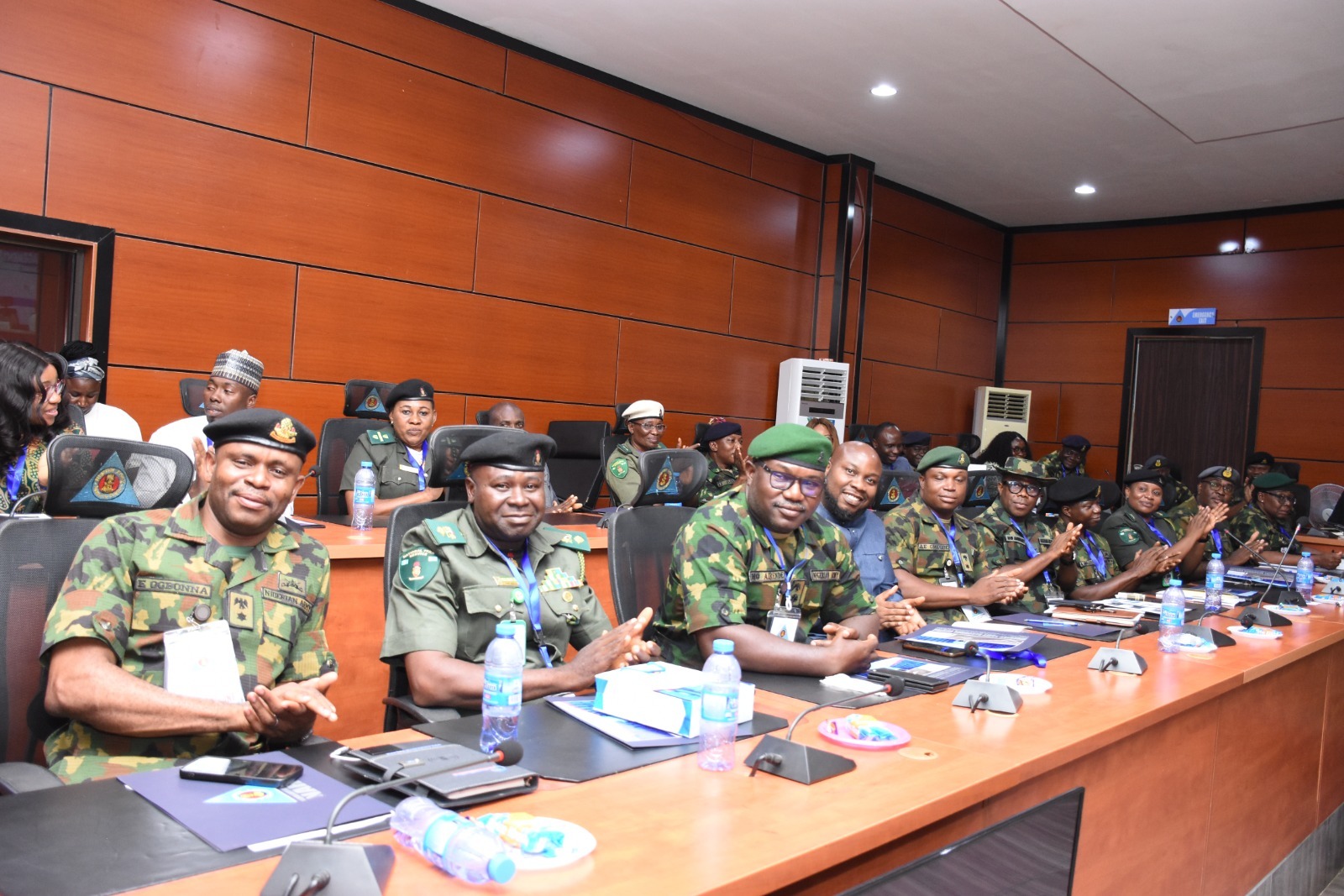
The Nigerian Army Resource Centre (NARC) has concluded its five-day Human Resource Management Course for junior and middle-cadre officers and professionals, with participants drawn from security agencies, Ministries, Departments and Agencies completing the capacity-building programme.
Representing the Director General of the Nigerian Army Resource Centre, Major General James Myam (Retired), the Executive Director Consult, Major General Arnold Okoro, described the outcome of the training as a successful fulfilment of its objectives.
READ ALSO: NARC Begins Human Resource Management Course for Officers
He noted that the programme had built the capacity of participants to contribute more effectively to their organisations.
“Those objectives have been achieved. In fact, it was overachieved,” Major General Okoro stated, emphasising that the essence of the programme was to prepare participants with the knowledge and skills required to improve institutional performance.
Improve Recruitment
According to the NARC DG’s representative, the training focused on strengthening participants’ ability to manage human resources, handle organisational challenges, improve recruitment processes and support effective workplace relationships.
The course coordinator, Brigadier General Ferdinand Eze (Rtd) said that the five-day programme covered key areas including goal setting, recruitment and selection, ethics, work culture, performance management, workplace conflict and retirement processes.
Brigadier General Eze noted that 52 participants from different Ministries, Departments and Agencies completed the programme, adding that the expectation was for them to apply the knowledge acquired to enhance performance within their respective institutions.
The course coordinator also highlighted the value of interaction among participants from diverse organisations, noting that the network created during the training would support future collaboration and problem-solving across agencies.
Giving a vote of thanks on behalf of participants, Danicius Kaihnneh Sengbeh described the programme as a transformative experience that moved beyond conventional training into practical professional development.
Improved Understanding
Sengbeh said participants arrived with different experiences from government institutions, civil society, international organisations and the private sector but departed with stronger professional relationships and improved understanding of human resource management.
He praised the facilitators and NARC management, noting that the lessons from recruitment, leadership, emotional intelligence, workplace culture and organisational management would continue to influence participants beyond the classroom.
The programme, according to the NARC leadership, reinforced the importance of human capital development as a critical element in building effective institutions capable of supporting national security and governance objectives.