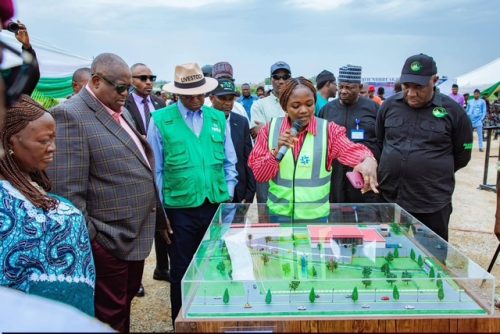
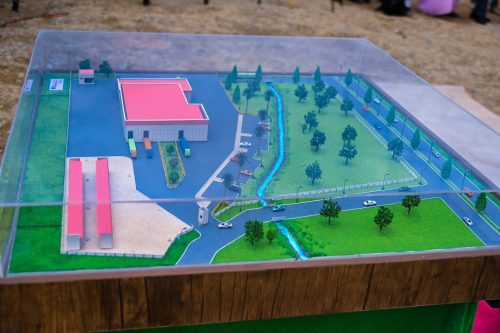
The Plateau State Government has begun the construction of a modern abattoir at the Haipang Special Agro-Processing Zone, with the capacity to process up to 500 cattle daily.
The project is designed to boost the state’s agricultural value chain, strengthen its economy, and support wider industrial development.
Speaking during the foundation-laying ceremony, Governor Caleb Mutfwang described the project as a significant milestone in Plateau’s drive to build a diversified and sustainable economy anchored on agriculture and livestock development.
READ ALSO: Nigeria Embraces Bold Steps for Sustainable Buildings
According to the governor, the facility represents a move away from outdated livestock processing methods toward a modern system that prioritises value addition, efficiency, and economic expansion.
He noted that the abattoir would rank among the largest in the region and would significantly improve meat processing standards while creating new opportunities for investment and employment.
“This project symbolizes our commitment to building a stronger economic future for Plateau State. It is a practical step toward unlocking the immense potential of our livestock sector,” Mutfwang said.
The governor explained that the administration’s development agenda focuses on transforming raw agricultural production into processed products capable of generating higher income and boosting internally generated revenue.
He emphasised that economic prosperity is driven not only by production but also by processing and commercialisation.
,the Governor stated that the state was positioning itself to reduce dependence on federal allocations.
Mutfwang also acknowledged the support and encouragement of President Bola Tinubu, saying the Federal Government’s backing has strengthened the state’s development initiatives.
He stated that the livestock industry offers opportunities across multiple sectors, including transportation, feed production, processing, storage, marketing, and rural enterprise development.
“Our goal is to ensure that every participant in the livestock value chain benefits economically, from producers and processors to distributors and service providers,” he said.
Livestock Ecosystem
The governor further disclosed that the state is developing a comprehensive livestock ecosystem that will encourage dairy production, leather manufacturing, feed processing, and broader agro-industrial investments.
He stated that the Special Agro-Processing Zone is intended to attract private-sector participation, enhance food safety, improve access to markets, create employment, and stimulate economic growth.
Mutfwang noted that the project is being implemented through a partnership involving government, private investors, and development agencies, including support from the Livestock Productivity and Resilience Support (L-PRES) programme.
In his remarks, the Minister of Livestock Development, Alhaji Idi Maiha, described the project as “a landmark investment that could reshape Plateau’s economic landscape”.
He said the modern facility would help transition the state from a predominantly civil service-driven economy to one powered by commercial agriculture and industrial activities.
Maiha noted that the abattoir would strengthen the livestock value chain, improve food safety standards, and contribute to long-term economic growth.
“This initiative represents the beginning of a new chapter of prosperity and industrial development for Plateau State,” the Minister said.
He praised Governor Mutfwang for demonstrating strong leadership and foresight in advancing livestock sector development.
Also speaking, the Commissioner for Agriculture, Samson Ishaku Bugama, said the project would bring an end to traditional slaughtering methods and replace them with internationally accepted practices that promote hygiene, animal welfare, and productivity.
Bugama explained that the facility, which is supported by the L-PRES programme, is expected to drive export-oriented livestock processing, support feedlot development, generate jobs, and deepen economic activities within the sector.
He described the livestock industry as an underutilised asset with enormous potential for growth and wealth creation.
“The livestock sector has remained largely untapped for years. This project marks the beginning of its full development and contribution to the state’s economy,” he said.
The commissioner encouraged livestock farmers, pastoralists, and investors to seize the opportunities that the project will create, assuring them that the government has established a conducive environment for business and investment.
He reaffirmed the state’s commitment to supporting agribusiness expansion and attracting both local and international investors to its growing agro-industrial sector.
The State Governor also laid the foundation for the veterinary teaching hospital in Barkin Ladi Local Government Area of the State.