

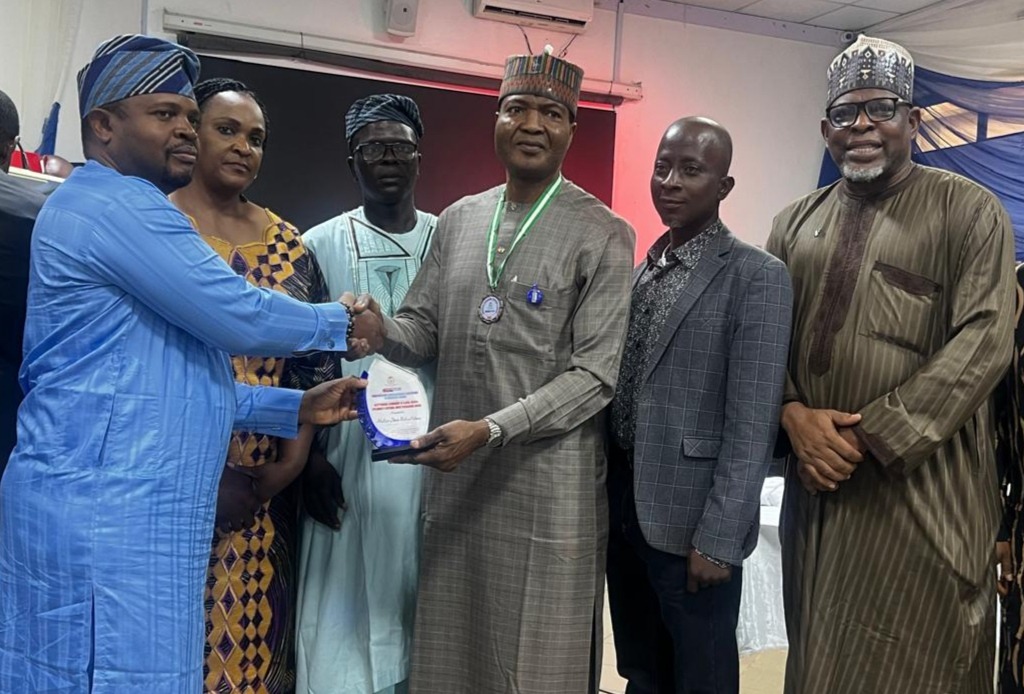
Nigeria’s Minister of Information and National Orientation, Mohammed Idris, has called on journalists and media practitioners to uphold professionalism, credibility, and ethical reporting as the nation confronts the growing challenges of misinformation and disinformation in the digital era.
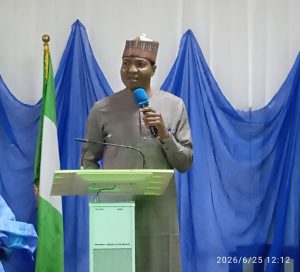
The Minister, represented by the Director-General of the Voice of Nigeria (VON), Mallam Jibrin Baba Ndace, made the call at the maiden edition of the Emporium Leadership Lecture and Awards 2026 in Abuja.
Speaking on the theme, “From Clicks to Credibility: Digital Media’s Role in Deepening Nigerian Democracy,” Idris stated that the responsibility of journalists has become more vital than ever as social media platforms continue to shape public opinion and influence national discourse.
“We are in the age of misinformation, disinformation, and sometimes outright lies against individuals, countries, and brands. What will set us apart as professionals is our ability to create text, derive content from that text, and provide crucial context,” he said.
The Minister stressed that whilst digital platforms have democratised access to information, professional journalists must distinguish themselves through accuracy, verification, and responsible reporting.
“If someone takes a picture and shares it without context, people can attach any meaning to it. That is the difference between those who merely post on social media and professionals who advance national unity and development through responsible journalism,” he stated.
Idris also cautioned journalists against ethnic and religious profiling in crime reporting, describing the practice as contrary to professional ethics.
“You cannot write a story about a criminal and emphasise the person’s religion or ethnic background. No religion or ethnic group sends someone to commit a crime. A criminal is a criminal,” he said.
The Director-General of the Voice of Nigeria, who was also an award recipient, commended the Publisher of Emporium Magazine, Mr Lukman Lale Babalola, for sustaining the publication over the past decade despite the challenges facing the Nigerian media industry. He noted that building a successful media brand requires patience, sacrifice, and resilience.
“If you want to build a brand within the media space, you should know it is not a sprint; it is a marathon. People will appreciate your work, but support may not always come. I commend you for staying the course despite the difficulties,” he noted.
He further praised Emporium Magazine for creating a platform that promotes excellence in journalism and encourages discussions on the future of media practice in Nigeria. Describing the lecture theme as timely and thought-provoking, he noted that the media remains critical to promoting accountability, strengthening democratic institutions, and shaping informed public discourse.
“I commend Mr Lukman Lale Babalola and his team for their commitment to excellence in journalism and for creating a credible platform that celebrates outstanding leadership whilst advancing meaningful conversations on the future of the media profession in Nigeria,” he said.
Also speaking, the Executive Secretary of the National Human Rights Commission (NHRC), Dr Anthony Okechukwu Ojukwu, SAN represented by the Director of Corporate Affairs and External Linkages, Mrs Fatimah Agwai—said a vibrant and responsible media remain critical to strengthening democratic institutions and advancing human rights.
Whilst congratulating Emporium Magazine on its decade-long contribution to journalism and public enlightenment, he described the anniversary celebration as a testament to resilience, professionalism, and commitment to democratic ideals.
“A vibrant and responsible media plays a critical role in strengthening democratic institutions, amplifying citizens’ voices, promoting accountability, and fostering respect for human rights and the rule of law,” she said on his behalf.
Ojukwu added that recognising outstanding individuals and institutions through the award ceremony would encourage excellence and inspire others to contribute positively to national development.
On her part, the chairman of the Nigeria Union of Journalists (NUJ), FCT Council, Grace Ike, described the publisher as a symbol of humility, transparency, and accountability. She noted that the 10th anniversary of Emporium Magazine represented a significant milestone in credible journalism.
“Ten years of consistency is no joke. Credible journalism is no small feat. It is a testament to resilience, vision, and an unrelenting commitment to the values that define our noble profession,” she said.
Speaking on the lecture theme, Miss Ike emphasised that credibility remains the bedrock of democratic governance.
“The speed of information often outpaces its accuracy, but credibility remains non-negotiable. It is the foundation upon which democracy is built and sustained,” she stated.
Delivering the keynote lecture, media scholar and communication expert Abdullahi Haruna examined the opportunities and challenges presented by digital media in modern democratic societies.
Haruna observed that whilst digital platforms have expanded citizens’ participation in governance and public discourse, they have also enabled the spread of misinformation and reduced professional gatekeeping.
“Today, democracy and digital media have become inseparable companions. The smartphone has become the new ballot companion, and social media platforms have become the new public square,” he said.
He, however, warned that the rise of untrained content creators and online influencers poses a serious challenge to professional journalism.
“We are witnessing a revolutionary moment where ordinary citizens have become publishers. Whilst this has democratised information, it has also democratised misinformation. Digital media can either deepen democracy or diminish it. The determining factor is credibility,” he stressed.
He also criticised the growing trend of sensationalism driven by online traffic and revenue generation.
“We now live in an attention economy where attention has become currency. Unfortunately, truth does not always generate attention; outrage does,” he said.
Speaking earlier, the Publisher and Chief Executive Officer of Emporium Magazine, Mr Lukman Lale Babalola, said the lecture was conceived to stimulate meaningful conversations on the future of journalism and democratic development in Nigeria.
Babalola noted that although digital media has expanded opportunities for civic engagement and accountability, it has equally created challenges associated with misinformation, disinformation, sensationalism, and declining public trust.
“Beyond chasing clicks and online engagement, the media must continue to uphold the values of truth, accuracy, fairness, and professionalism,” he said.
He explained that the lecture brought together policymakers, media practitioners, regulators, security agencies, civil society organisations, and other stakeholders to explore ways of strengthening democracy through responsible communication.
The publisher added that the Emporium Leadership Awards were designed to recognise individuals and institutions that have distinguished themselves in governance, public service, security, media development, human rights advocacy, youth empowerment, and national development.
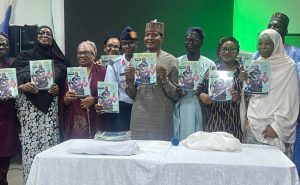
The event also featured the unveiling of Emporium Magazine‘s special 10th-anniversary commemorative edition and the presentation of awards to notable Nigerians for their contributions to nation-building.
Participants agreed that as Nigeria’s digital media ecosystem continues to evolve, journalists and media organisations must prioritise credibility, professionalism, and ethical standards to safeguard democracy and promote national cohesion.


[…] READ ALSO: Media Must Fight Disinformation to Save Democracy-Information Minister […]