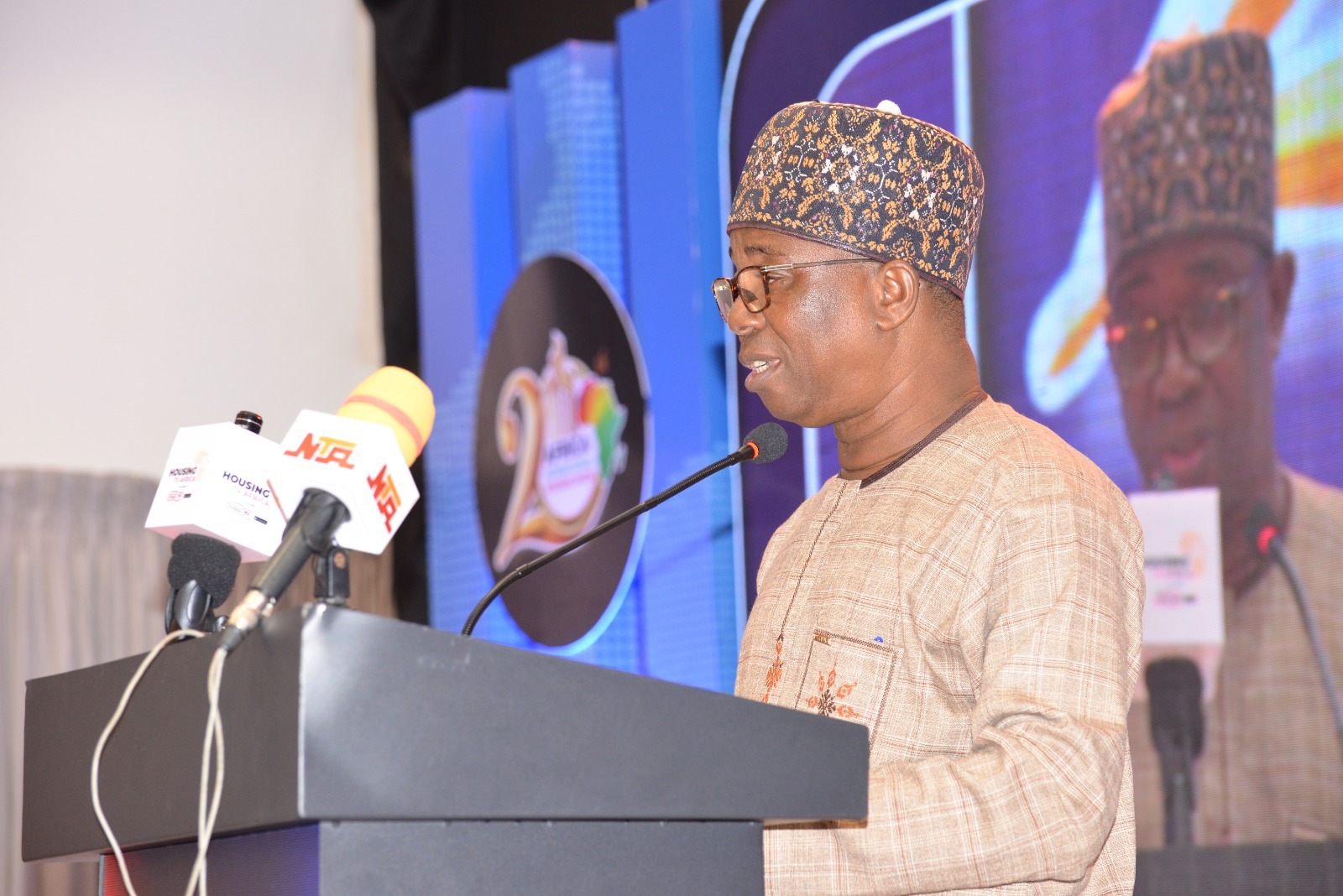
The Nigerian Minister of Housing and Urban Development, Dr Muttaqha Darma, has stated that the reform initiative on land administration currently being undertaken by the ministry was aimed at making land a primary tool for delivering affordable housing to low-income earners and informal workers across Nigeria and Africa.
Speaking at the side event of the ministry at the ongoing 20th Africa International Housing Show, the minister, who was represented by the director of public building and housing development, Pemi Temitope, said no affordable housing policy can succeed without an efficient, transparent, and secure land administration system.
“Across Africa, rapid urbanisation is outpacing housing supply. This has created growing deficits and expanding informal settlements that disproportionately affect artisans, traders, transport operators, farmers, market women, young entrepreneurs and other small-scale business owners,” he stated.
“They form the productive backbone of our economies, yet they are least served by conventional housing finance and formal land processes,” he said.
Darma highlighted some of the key reforms of the ministry under the Renewed Hope Agenda to include the Nigerian Land Titling, Registration and Documentation Programme (NLTRDP).
The programme aimed at expanding land registration and improving tenure security, modernising land administration systems and reducing transaction costs. It’s also targeted at unlocking the economic value of land assets and improving access to housing finance.
READ ALSO: Gombe State Land Reforms Boost Growth, Investment
He noted that implementation will be done in close collaboration with state governments, in recognition of their constitutional responsibility under the Land Use Act. The federal government’s role will focus on policy coordination, technical support, common standards, and digital frameworks.
“The ministry is also advancing digital transformation through Geographic Information Systems, digital cadastral mapping, electronic land records, and a centralised lands repository management system to cut processing time and build public trust,” he said.
Regular Income Patterns
Darma called for housing models that reflect the realities of low-income households, including cooperative housing schemes, site-and-services programmes, incremental housing development, rent-to-own initiatives, and finance products designed for irregular income patterns.
He urged African governments to place land administration reform at the center of their housing strategies, describing secure land rights and digital land management as “powerful tools for poverty reduction, wealth creation, and inclusive national development”.
“Our vision is an Africa where every family has the opportunity to own or access decent housing; where women, youth and vulnerable groups enjoy equitable access to land; and where housing serves as a catalyst for economic growth and social stability,” he remarked
The minister assured that the Federal Ministry of Housing and Urban Development will continue to work with state governments, development partners, the private sector, and stakeholders to transform Nigeria’s housing landscape and contribute to Africa’s sustainable urban development agenda.
While speaking, the Permanent Secretary of the Ministry, Dr. Shuaib Belgore, represented by the Director Urban and Regional Development, Margaret Adejobi said that the Ministry is committed to making land a central tool for delivering affordable housing to low-income earners and informal workers in Africa.
He stated that accessible, secure, and well-documented land remains the foundation for solving Africa’s housing deficit and driving inclusive economic growth.
Dr Belgore noted that millions of Africans, especially those in the informal sector such as artisans, traders, farmers, and transport operators, continue to face barriers in accessing decent and affordable housing.
”Part of key challenges identified include difficult access to land, lengthy title registration processes, high transaction costs, multiple ownership claims, and weak land documentation. These constraints force many citizens into informal settlements and exclude them from formal housing and financial systems,” he stated.
To address this, Dr Belgore said that the ministry is advancing key reforms under the NLTRDP to address those challenges, adding that the ministry is also pursuing digital solutions to make land services more transparent.