The Corps Marshal of the Federal Road Safety Corps (FRSC), Shehu Mohammed, says the role of the agency has evolved beyond traffic enforcement to encompass public health, economic, governance, infrastructure, mobility and sustainable development concerns.
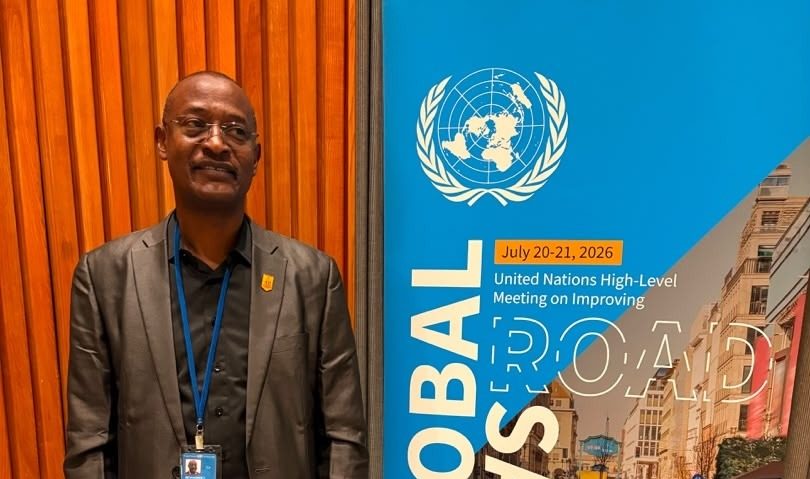
He stated this while presenting Nigeria’s position at the UN High-Level Meeting held in New York, USA, with the theme: “Scaling up and accelerating implementation of commitments to halving road traffic deaths and injuries by 2030.”
Mohammed, in a statement issued by the Deputy Corps Commander and Corps Public Education Officer, Ohaeri Osandu, said the FRSC, established to address Nigeria’s road safety challenges, has progressively evolved into an institution whose work intersects with global road safety governance. He added that Nigeria’s participation at the high-level forum reflects the Corps’ changing strategic identity.
ALSO READ: FRSC Leads Nigeria at UN Road Safety Meeting
“Its responsibilities now extend across enforcement, driver licensing, public education, emergency response, data, technology, road infrastructure safety and inter-agency collaboration,” he said.
According to him, at the UN meeting, he presented Nigeria’s road safety experience as part of the global search for practical solutions to a crisis that claims nearly 1.2 million lives annually and disproportionately affects low- and middle-income countries. He stressed that road crashes remain a leading cause of death among children and young people aged 5–29.
“The presentation therefore placed Nigeria’s road safety realities within a broader international framework, demonstrating that the challenges confronting Nigerian motorists and road users are part of a global road safety crisis requiring shared knowledge, financing, innovation and political commitment,” he said.
Mohammed, who led the delegation, described Nigeria’s participation at the UN High-Level Meeting as a significant political statement on the importance of road safety to national development. He said it also signals confidence in the FRSC as Nigeria’s leading road safety institution and its ability to articulate national priorities at the international level.
“At a time when road crashes continue to impose enormous human and economic costs on nations, the role of the FRSC is becoming increasingly strategic. Every crash prevented protects not only a life but also a family, a workforce, an investment and a component of national productivity,” he said.
The Corps Marshal highlighted institutional reforms, technology-driven enforcement, improved emergency response and public enlightenment initiatives as key elements of Nigeria’s efforts to strengthen its road safety system.
He also drew attention to the Nigeria Road Assessment Programme (NigeriaRAP), developed in collaboration with the International Road Assessment Programme (iRAP), as an example of applying the Safe System Approach to improve road infrastructure safety.
“This is significant because the Safe System philosophy recognises that human beings make mistakes, but those mistakes should not inevitably result in death or serious injury. The approach therefore demands that roads, vehicles, speeds, enforcement systems and emergency services work together to protect human life.” The Corps Marshal said.
He explained that the FRSC’s role within this evolving framework is strategic, as it provides the operational link between policy and road users. The Corps witnesses the consequences of unsafe roads, vehicles and behaviour in real time and maintains a national operational footprint capable of translating international commitments into practical interventions.
The Corps Marshal added that the FRSC’s role in the global space continues to expand, positioning it as both a national institution and an increasingly important participant in international road safety architecture.