


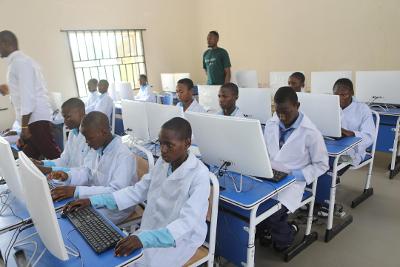
The Nigerian Government has equipped 38 Federal and State technical colleges across the country to expand access to free technical and vocational education, as part of efforts to tackle youth unemployment and poverty.
Under the initiative, beneficiaries receive free tuition, training materials, monthly stipends and starter packs to enable them to establish businesses and become economically self-reliant after completing their training.
National Project Coordinator of the Innovation Development for Effective Acquisition of Skills, IDEAS, Project, Mrs Blessing Ehi Ogwu, disclosed this during an inspection of the IDEAS Project Centre at the Federal Science and Technical College, FSTC, Orozo, Abuja.
READ ALSO: Nigeria Opens Applications for Tuition-Free Technical Colleges Nationwide
Ogwu said the Federal Government, with support from the World Bank, has equipped 20 federal and 18 state technical colleges to strengthen practical skills acquisition and improve employment opportunities for young Nigerians.
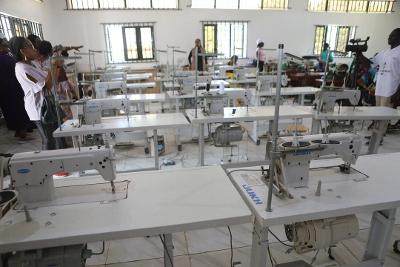
She explained that the investment reflected the government’s determination to reposition technical and vocational education and provide young people with marketable skills rather than relying solely on academic qualifications.
“The Federal Government is interested in TVET education. That is why we have about 38 technical colleges that the Federal Government has funded and equipped like this, all to enhance skills,” she said.
According to her, the institutions provide opportunities for both formal and informal skills training, with the FSTC Orozo serving as the designated federal technical college for the Federal Capital Territory.
Ogwu expressed confidence that the free technical education programme would continue under the current administration, urging Nigerians to support its sustainability.
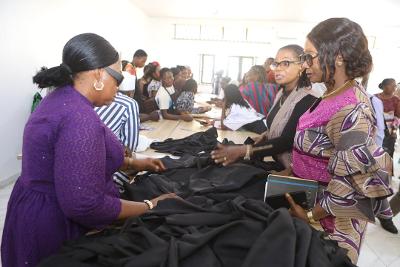
Also speaking, the National Project Monitoring Officer in the Minister’s Office at the Federal Ministry of Education, Mrò5756 Olatunji Odewunmi, said the country has more than 1,000 TVET centres, including about 140 skills training centres spread across the FCT.
He described the IDEAS Project and the Federal Government’s TVET initiative as complementary interventions designed to expand access to practical skills training nationwide.
Odewunmi said the programme was entirely free, with the government covering tuition, training fees, instructional materials and other essential needs of beneficiaries, including accommodation for those in boarding facilities.
He noted that trainees also received monthly stipends, while those who successfully completed their programmes would be provided with starter packs to enable them to establish businesses.
On measures to ensure commitment and discipline among participants, Odewunmi explained that biometric attendance monitoring had been introduced, adding that trainees who failed to meet the required attendance threshold would lose their stipends and eligibility for starter packs.
He said project monitoring officers also visited the centres regularly to assess training activities and ensure that government resources were properly utilised.
Prioritise Practical Experience
The Principal of FSTC Orozo, Dr Stella Uhuegbu, said the college had adopted a training structure that prioritised practical experience, in line with the Federal Government’s revised TVET curriculum.
She explained that the curriculum prescribed a 70 per cent practical and 30 per cent theoretical training ratio, adding that the school had made adequate provisions for instructional materials, equipment and technical instructors to achieve the target.
According to her, the college has more than 1,000 regular students, while its six-month short-term skills programme accommodates over 1,000 trainees across five trades.
The available trades include information and communication technology, automobile mechanics, auto-electrical repairs, catering, garment making and GSM repairs.
Uhuegbu described the IDEAS Project as critical to the success of the TVET programme, noting that the newly constructed and equipped workshops had significantly strengthened the college’s capacity to deliver practical instruction.
One of the trainees, Modupe Osundeyi, who is undergoing catering training, said the programme had equipped her with skills in baking and food production, including the preparation of buns, egg rolls, doughnuts and other products.

