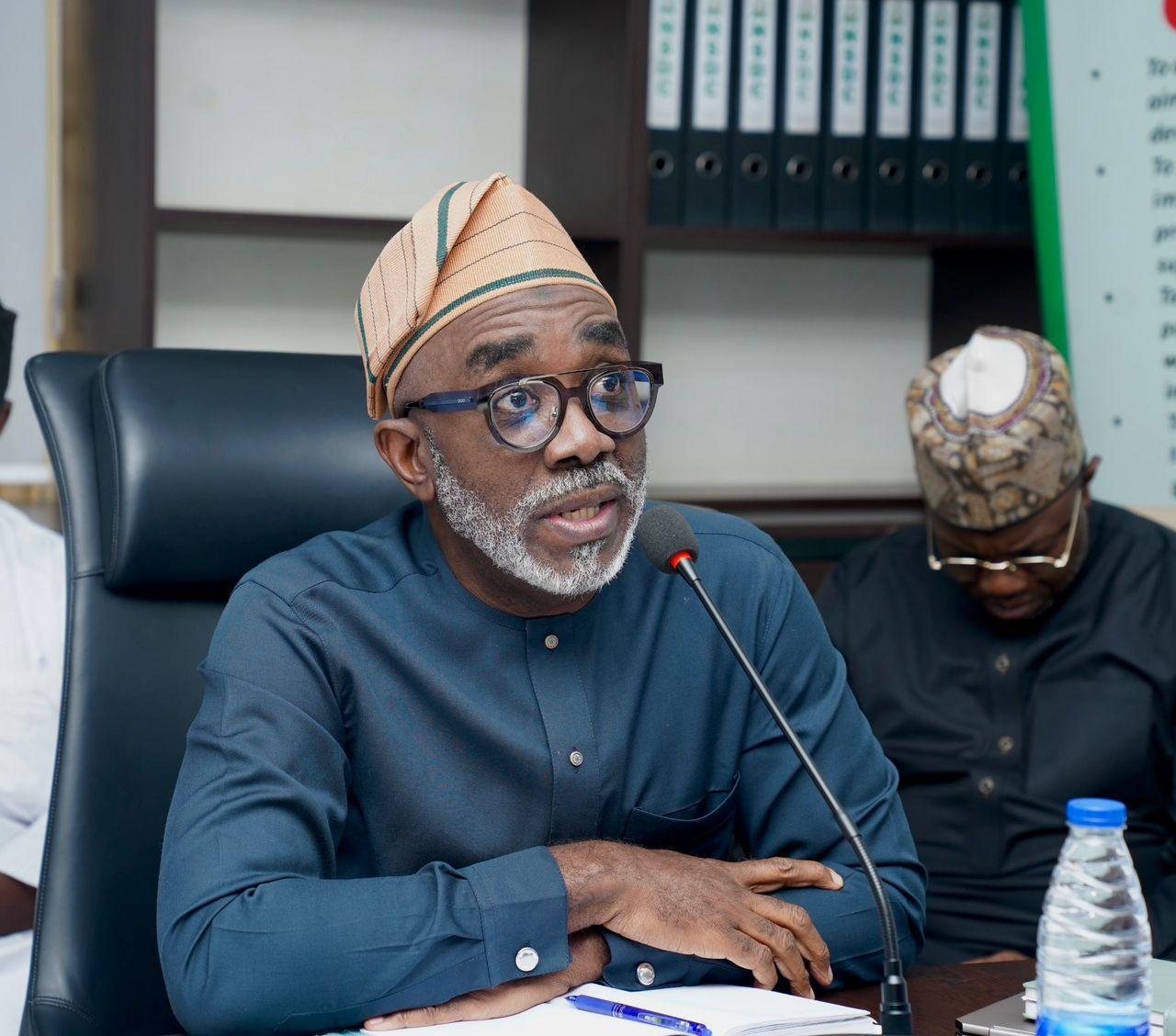
The National Sugar Development Council (NSDC), says Nigeria must urgently slash the cost of power, financing and logistics or risk losing the African market to competing economies.
The Executive Secretary of the NSDC, Mr. Kamar Bakrin stated this while speaking at the technical session of the 17th National Council on Industry, Trade and Investment (NCITI) in Enugu, Sout-east Nigeria.
He said manufacturers pay between two and ten times more than competitors in Asia for critical production inputs, undermining the country’s ability to compete under the African Continental Free Trade Area (AfCFTA).
Mr. Bakrin told the Council that while demand for Nigerian products exists across Africa, excessive production costs remain the country’s biggest obstacle to industrial growth.
“None of this is a demand problem. Nobody on this continent needs persuading to buy what Nigeria makes, It is a cost-of-production problem and that distinction matters because costs unlike demand, are within our power to fix.
“Industrial electricity costs about eight U.S. cents per kilowatt-hour in Vietnam and about 10 cents in China, compared to 15 cents on Nigeria’s national grid, rising to nearly 30 cents when manufacturers rely on diesel-powered generators,” he stated.
He disclosed that Nigerian manufacturers spent an estimated ₦1.34 trillion generating their own electricity last year.
“Every factory in Nigeria is running a second unwanted business as a private power station.”
Bakrin added that manufacturers in Nigeria pay between 27 and 35 per cent for working capital compared to about nine per cent in Vietnam and three per cent in China, while poor logistics continue to weaken industrial productivity.
“Despite Nigeria’s population of over 230 million people and duty-free access to 1.4 billion consumers under AfCFTA, manufacturing contributes only about eight per cent of the country’s Gross Domestic Product, with capacity utilisation falling to 57.7 per cent.”
Highlighting a successful model for industrial transformation, Bakrin cited Nigeria’s urea industry, which expanded from 500,000 tonnes of production capacity in 2005 to 6.5 million tonnes presently, making the country one of the world’s top ten exporters of nitrogen fertiliser.
“The whole lesson is in one sentence,” he said “when a country prices inputs as if it wants industry to live, industry lives”.
Drawing comparisons with Vietnam and Bangladesh, he added “neither of them struck oil. They struck discipline and held it for twenty years”.
Reforms
Bakrin proposed four key reforms to improve Nigeria’s industrial competitiveness.
The proposals according to him include, “dedicated electricity supply to industrial clusters at eight to ten cents per kilowatt-hour, single-digit industrial lending, reduction of port clearance time to less than seven days, and doubling worker productivity by 2030.
“These are not aspirations to admire, they are the line at which a made-in-Nigeria product stops apologising.”
Resolutions
He also urged the Council to adopt four resolutions, including establishing dedicated industrial power arrangements in every State within one year, harmonising taxes and eliminating illegal checkpoints on industrial corridors, introducing an annual State Industrial Competitiveness Index, and enforcing the Nigeria First procurement policy across Federal and State governments.
“Every resolution needs a named owner, a date and a way to measure it. Otherwise it becomes another document that gets filed, framed and forgotten”, he said.
Calling for performance-driven public support for industries, Bakrin maintained that government incentives should only be granted based on measurable outcomes.
“Nothing should be handed out as an entitlement because once it is, it can never be taken back.”
He urged State governments to leverage the Electricity Act 2023 to develop competitive power markets, provide bankable industrial land, streamline taxes and align technical education with industry needs.