
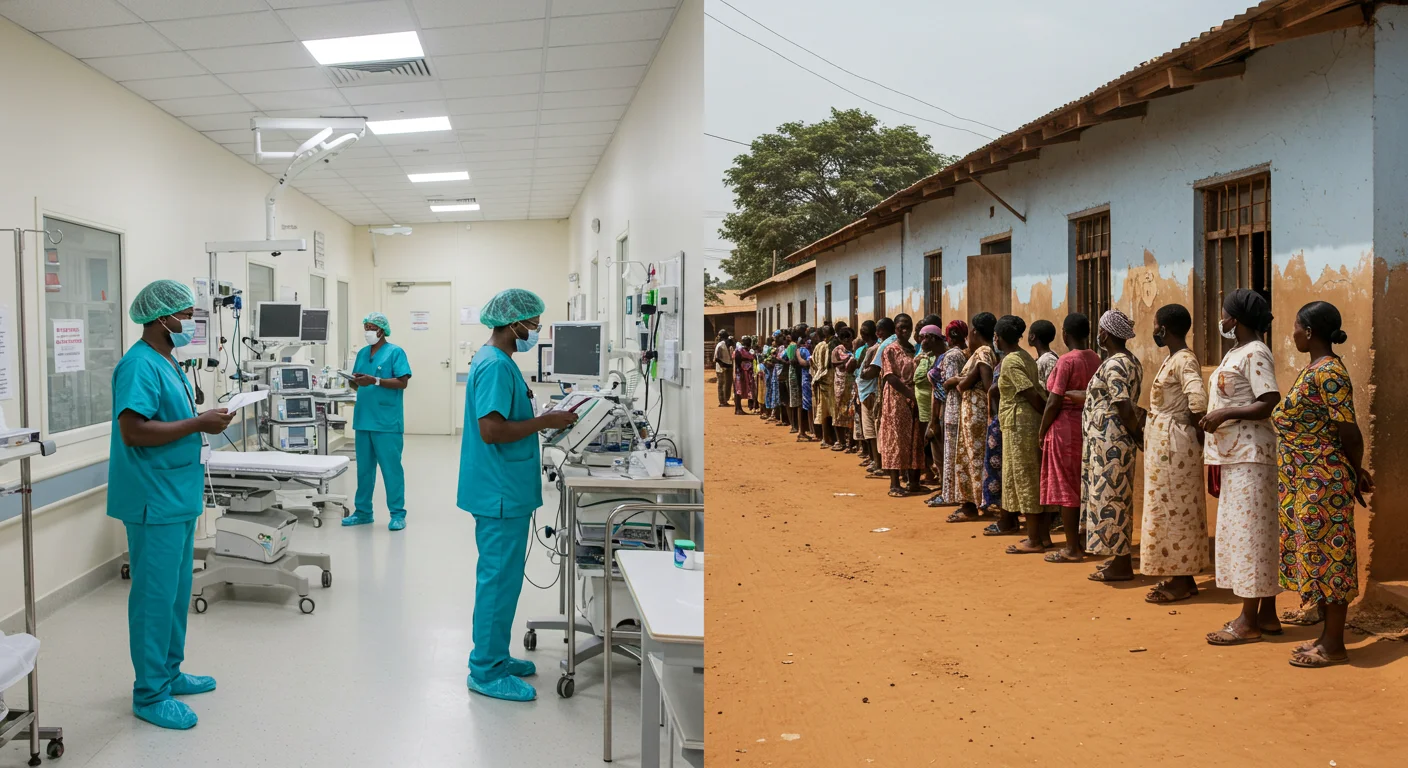
The Institute of Stress Management Nigeria (ISM) has unveiled plans for a nationwide community health outreach programme aimed at expanding access to healthcare, promoting stress management and strengthening grassroots engagement through free medical services and public health education.
The initiative was presented by the Institute’s Founder and Chief Executive Officer, Dr. Fredrick Obidigwe, during a meeting with the Director-General of the Tinubu Support Group (TSG), Dr. Umar Tanko Yakasai, in Abuja.
Obidigwe described the programme as a community-driven intervention designed to take essential healthcare services directly to underserved populations across the country.
“Healthcare must go beyond the walls of a clinic; it must reach people where they live, work and struggle daily,” he said.
He explained that the Institute, a corporate body registered in Nigeria, is committed to promoting stress management through the establishment of health centres, professional training, seminars, workshops, conferences, advocacy campaigns and other public enlightenment initiatives.
According to him, the proposed outreach will provide free medical consultations, stress management counselling, laboratory investigations, eye care services, pharmaceutical support and health education to communities with limited access to healthcare.
“We are not just treating symptoms; we are addressing the total wellbeing of Nigerians—body and mind,” Obidigwe added.
He said the Institute plans to deploy multidisciplinary teams comprising doctors, pharmacists, optometrists, laboratory scientists, nurses and counsellors to deliver the services at no cost to beneficiary communities.
“Our professionals are ready to serve without asking what it will cost the community because the reward is in the impact,” he said.
Obidigwe noted that the Institute would provide the professional manpower required for the outreach free of charge, thereby reducing the overall cost of implementing the programme.
He added that the initiative would go beyond medical interventions by establishing long-term relationships with communities through volunteer networks, follow-up visits and continuous health education.
The ISM founder said the programme would also work closely with traditional rulers, religious leaders, market associations, women and youth groups to encourage wider community participation and ensure sustainability.
“When you carry the traditional ruler, the market woman and the youth leader along, you have already won half the battle for public trust,” he said.
Responding, the Director-General of the Tinubu Support Group, Dr. Umar Tanko Yakasai, commended the Institute for developing what he described as a comprehensive grassroots healthcare proposal.
“This is the kind of grassroots thinking that builds lasting trust between government and the people,” Yakasai said.
He advised the Institute to submit the presentation as a formal proposal, explaining that the organisation is currently compiling strategic recommendations from stakeholders ahead of future campaign activities.
According to him, the proposal would be documented alongside other submissions and considered when the appropriate campaign structures are fully constituted, with viable initiatives presented to relevant authorities and partners for possible implementation.
“We encourage organisations like ISM to keep engaging communities directly because that is where real impact and real trust are built,” he added.
Yakasai also commended the Institute for its commitment to improving public health and encouraging greater grassroots participation in national development.

 has unveiled plans for a nationwide community health outreach programme aimed at expanding access to healthcare, promoting stress management and strengthening grassroots engagement through free medical services and public health education.)