The Economic Community of West African States (ECOWAS has called for institutional reforms across member States to increase women’s participation in Politics and governance.
ECOWAS Heads of State and Government have adopted the Presidential Declaration on Strengthening the Representation of Women in Political Leadership in the ECOWAS Region during its summit in Sierra Leone.
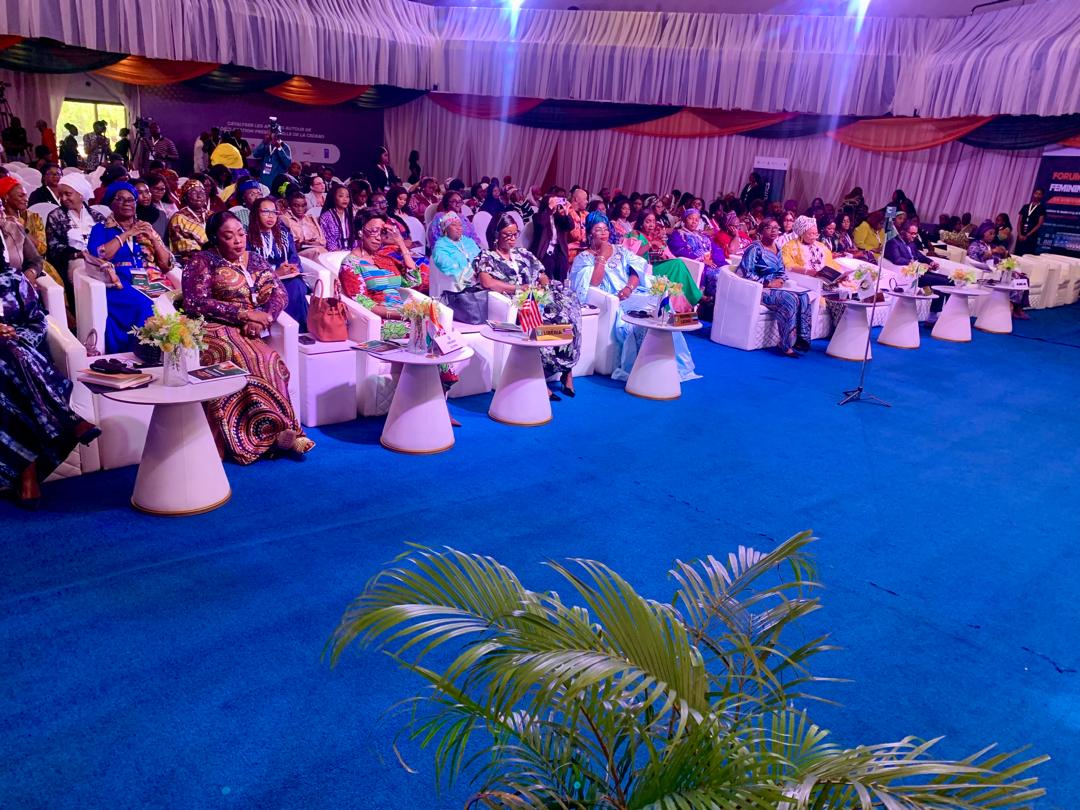
The ECOWAS Vice President, Damtien Tchintchibidja, made the call at the West Africa Women’s Political Leadership Forum in Abuja, Nigeria, with the theme: Accelerating Gender Parity in Political Leadership in West Africa; From Commitment to Action.
She said that the initiative was conceived as part of the legacy of the fiftieth anniversary of ECOWAS, which was commemorated last year.
“It was intended not only to honour five decades of regional cooperation, but also to leave an enduring foundation for the next chapter of our community, one in which the leadership of our region more fully reflects the talents, experiences and aspirations of all our people.”
Mrs Tchintchibidja also said that regional Leaders affirmed an important truth: that the strength of the regional democracies, the quality of governance and the future of regional development depend on the ability of all citizens, women and men alike, to participate fully in shaping the destiny of the region.
READ ALSO: ECOWAS Leaders Reaffirm Commitment to Regional Growth
“The adoption of both the Pact for the Future of Regional Integration and the Presidential Declaration demonstrated the intentionality of our leaders in charting a more inclusive and people-centred course for the future of regional integration,” she added
According to her, the Pact of the Future provides the overarching framework for renewing and strengthening the community, while the Declaration gives practical expression to its commitment to inclusive governance, stressing that both are firmly anchored in the aspirations of ECOWAS Vision 2050 and its promise of an ECOWAS of the People while ensuring Peace and Prosperity for All.
The ECOWAS Vice President said the ECOWAS community has strengthened institutions, supported electoral processes and deepened regional cooperation, adding that these efforts have helped to establish ECOWAS as an important force for peace, stability and democratic governance.
“Yet one significant challenge continues to prevent our democracies from fully reflecting the people they serve: the persistent underrepresentation of women in political leadership,” Mrs Tchintchibidja reiterated.
She said women constitute more than half of West Africa’s population and make indispensable contributions across every sphere of society.
“They lead businesses, sustain families and communities, build peace, drive innovation, and contribute immeasurably to economic and social progress. Yet their presence in the institutions and processes where decisions are made remains far below the scale of their contribution to public life.”
Mrs Tchintchibidja believed that today, women occupy only 15.5 per cent of parliamentary seats across West Africa, well below both the African average of 25 per cent and the global average of 26.5 per cent.
The ECOWAS Vice President said that several ECOWAS Member States have demonstrated commendable leadership through legislative and policy reforms, including gender quotas and parity laws, aimed at opening political space and expanding opportunities for women’s participation and leadership. These reforms mark important progress and offer valuable lessons for the region.
“Strengthening women’s political leadership is not only about correcting a longstanding imbalance. It is also central to the economic and social progress of our region.” She added
According to the ECOWAS Vice President, the International Monetary Fund estimates that closing the gender gap could increase economic output by 10 to 35 per cent, depending on national circumstances. Behind those figures are real possibilities.
The World Bank similarly estimates that countries lose approximately 14 per cent of their human capital wealth when women are unable to participate fully in economic and public life.
Enabling Environment
Mrs Tchintchibidja said the Declaration provides a regional framework for action and calls for sustained engagement by Member States, ECOWAS institutions and all sectors of society: it calls upon Member States to strengthen constitutional, legal and policy frameworks that create an enabling environment for women’s political participation and leadership.
It encourages political parties to review their nomination processes, internal structures, and leadership practices so that women have genuine opportunities to compete for elected office and participate in decision-making within their parties.
It calls for greater investment in leadership development, mentorship, capacity-building and networks of support for women seeking public office, it recognises political financing as a major barrier and calls for measures that improve women’s access to campaign resources and other forms of political support and it further emphasises the need to address restrictive social norms through education, advocacy and constructive engagement with civil society organisations, academia and the media.