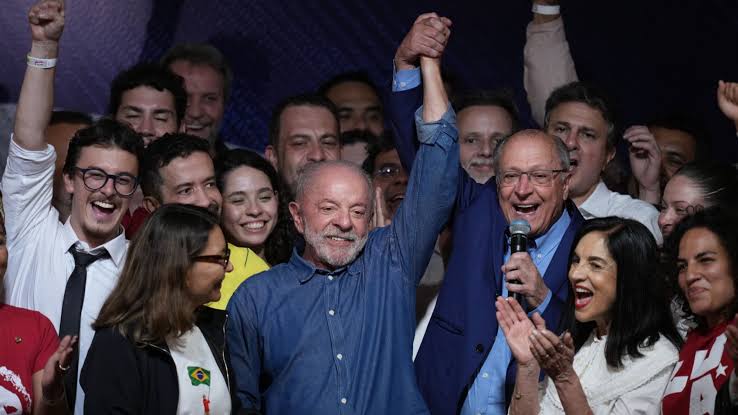
Brazilian President Luiz Inácio Lula da Silva has won an unprecedented fourth term, according to the country’s electoral court.
The victory came on Sunday, defying opinion polls and a regional trend of right-wing electoral victories.
His opponent, Senator Flávio Bolsonaro, son of former President Jair Bolsonaro, rejected the outcome and vowed to seek its annulment, citing a Supreme Court ruling that extended voting by two hours.
Lula defeated Bolsonaro by more than four million votes, despite the latter leading in the first round.
Analysts consider annulment unlikely, noting that Bolsonaro’s campaign had also requested an extension because of rainfall in conservative southern Brazil.
Latin America analyst Mario Braga said potential protests were unlikely to change the outcome, stating that, “it’s very improbable that it will lead to the reversal of the result.”
A Remarkable Political Comeback
The 80-year-old Lula’s victory marks another comeback in his long political career. After serving prison time on corruption charges that were later overturned, he returned to power by defeating Jair Bolsonaro in 2022.
READ ALSO: Brazil Cancels Final Election Debate Ahead of Sunday Vote
His campaign focused on reducing poverty and inequality, expanding social welfare and protecting Brazil’s sovereignty.
Late-campaign promises, including free weekend public transport and increased welfare payments, also boosted his support.
Lula’s victory is expected to disappoint US President Donald Trump, whose administration had supported efforts to return the Bolsonaro family to power.
Former Lula foreign minister Celso Amorim described the president-elect’s regional significance, saying Lula “would be very important for establishing a point of balance in Latin America. Lula is that balance.”
Economic and Political Challenges Ahead
Despite his victory, Lula faces a difficult fourth term, with Brazil’s most conservative Congress since the country’s return to democracy in the 1980s.
Opposition parties aligned with Bolsonaro are expected to command substantial majorities in both legislative chambers, potentially obstructing Lula’s agenda.
Economic concerns include sluggish projected growth of 2.3 per cent next year, rising public debt exceeding 82 per cent of GDP, high interest rates and mounting household debt.
Financial markets reacted negatively to Lula’s victory, with a Brazil-tracking exchange-traded fund in Tokyo falling nearly 15 per cent in Asian trading.
Lula’s next term will therefore depend on his ability to manage economic pressures, negotiate with a conservative Congress and deliver on promises to improve living standards.
Reuters