

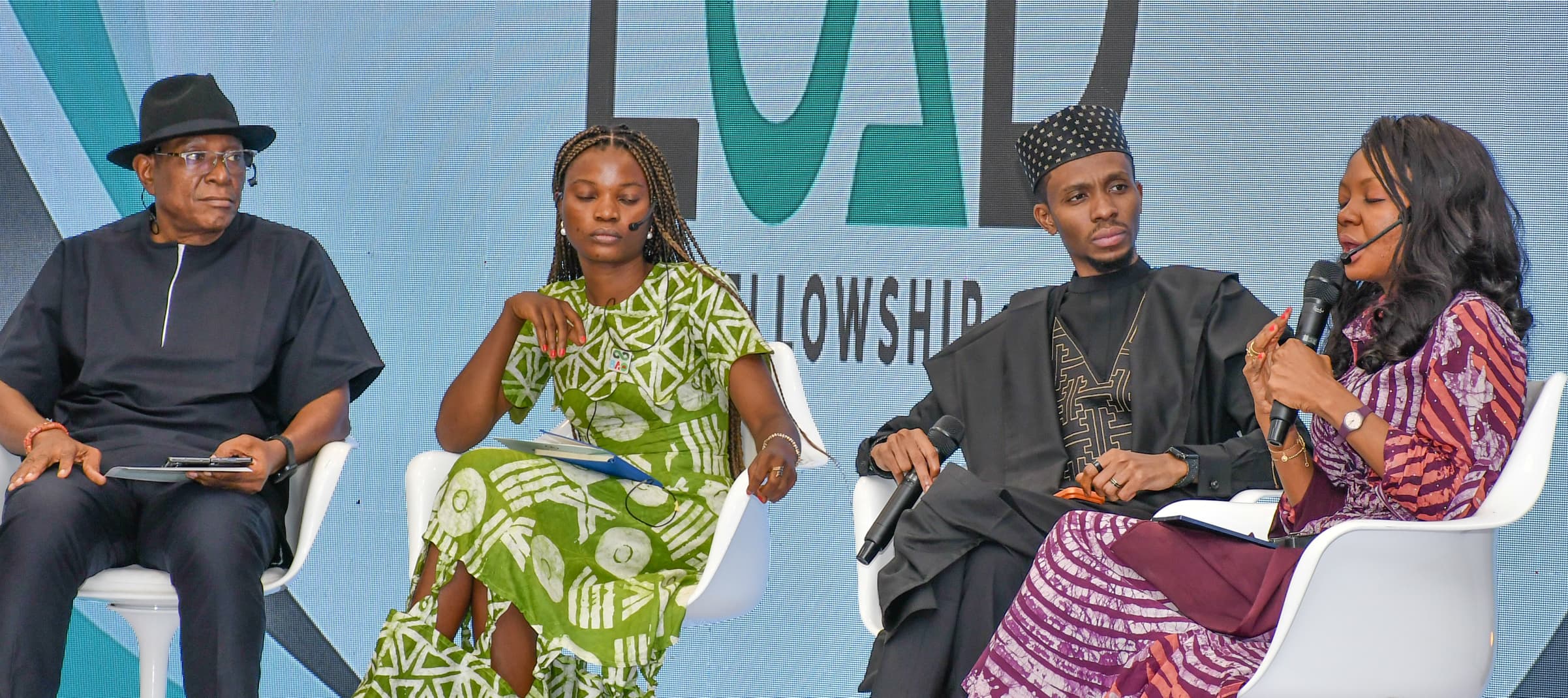
The Director-General of the National Institute for Legislative and Democratic Studies (NILDS), Prof. Abubakar Sulaiman, says Nigeria’s democracy can only be strengthened through deliberate investment in ethical leadership long before individuals assume public office.
Prof.Sulaiman made the disclosure at the launch of the Leadership for
Equity, Advocacy and Development (LEAD) Fellowship organised by the Gender Mobile Initiative through the Speaker’s office, in Abuja.
Represented by Dr Shuaibu Danwanka, Professor Suleiman described the fellowship as a bold national investment in ethical leadership, democratic resilience and inclusive governance, saying “it responds to the critical question of who will lead Nigeria in the future and how the country is preparing its young people for that responsibility.’
“Today’s event represents far more than the unveiling of another fellowship programme. It is the launch of a bold national investment in ethical leadership, democratic resilience and inclusive governance,” he said.
According to him, the fellowship aligns with NILDS’ mandate of developing competent leaders, strengthening democratic institutions, advancing evidence-based policymaking and promoting inclusive governance for sustainable national development.
Professor Suleiman said that “Nigeria is at a defining stage in its democratic journey and requires leaders whose competence is matched by integrity, whose ambition is guided by service and whose authority is exercised with accountability.”
“I have consistently maintained that strong democracies are built not merely by strong institutions but by leaders who possess the intellectual capacity, ethical discipline, emotional intelligence and patriotic commitment to strengthen those institutions,” he stated.
The NILDS Director-General said the institute has expanded beyond legislative research to become a national centre for democratic capacity development, policy innovation, leadership development, youth engagement, gender inclusion and institutional reform.
He noted that through partnerships with the National Assembly, universities, civil society organisations and international democratic institutions, NILDS has continued to strengthen legislative research, evidence-based policymaking and democratic governance.
According to him, “leadership development should begin in classrooms, student unions and civic organisations where young people first learn to lead, build consensus and represent diverse interests.”
He warned, however, that those same environments could also breed patronage, intolerance, exclusion, abuse of authority and weak accountability if ethical values were not deliberately nurtured.
“Unless we intentionally nurture ethical leadership, democratic values and a culture of service at this formative stage, we risk producing future leaders who replicate these negative practices in our public institutions rather than reforming them,” he said.

He reaffirmed NILDS’ commitment to supporting the initiative through research, democratic education, legislative capacity development and strategic partnerships, expressing confidence that the fellowship would produce a new generation of ethical leaders capable of strengthening democratic governance and advancing Nigeria’s development.
On her part, the Executive Lead of Gender Mobile Initiative, Ms. Omowumi Ogunrotimi, said that the initiative was conceived to address the growing disconnect between student leadership and opportunities for meaningful participation in governance after graduation.
Ms Ogunrotimi said that the fellowship is being implemented in partnership with the Office of the Speaker of the House of Representatives, the National Institute for Legislative and Democratic Studies (NILDS), the Office of the Senior Special Assistant to the President on Student Engagement, with support from the Open Society Foundations.
She noted that the idea for the fellowship was inspired by the experience of a female student leader who questioned what opportunities awaited ethical student leaders after graduation.
According to her, “the student recounted the challenges of navigating campus politics marked by political gatekeeping, transactional practices and attacks on personal integrity.”
She noted that while young Nigerians are already practising governance and organising movements on campuses, society has ignored systemic shortcomings that threaten the country’s democratic future.
According to her, Nigeria faces what she described as a “democratic formation deficit,” where early leadership experiences often reflect transactional politics, patronage, exclusion, abuse of influence and the normalisation of expediency over principle.
She also identified a “transition deficit,” explaining that many exceptional student leaders are left without structured pathways into governance, policymaking and democratic leadership after leaving school.
“As a result, civic talent is often disconnected from the very institutions that need it most,” she said.
Ms. Ogunrotimi explained that the LEAD Fellowship was designed as an institutional response to both challenges by providing structured leadership training, mentoring and exposure to democratic institutions.
She said the programme seeks to cultivate a new generation of leaders whose approach to public service would be defined by ethics, constitutionalism, evidence-based decision-making, inclusion and an unwavering commitment to service.
“We are intentionally incubating 1,000 student leaders across 10 pilot institutions. Our ambition is to cultivate women and men whose exercise of leadership will be defined by ethics, constitutionalism, evidence, inclusion and an unwavering commitment to service because democratic stewardship does not emerge by accident,” Ms. Ogunrotimi said.
The Executive Lead described the fellowship as more than a leadership programme, urging stakeholders to see it as a strategic investment in national security, human capital development and democratic renewal.
She said participants would undergo structured learning, engage with policymakers, academics and civil society leaders, and participate in policy conversations designed to bridge the gap between civic leadership and public institutions.
Ms. Ogunrotimi called on government institutions, development partners and civil society organisations to support the initiative, expressing confidence that it would produce a generation of ethical leaders capable of strengthening democratic governance and improving public institutions in Nigeria.
The Leadership for Equity, Advocacy and Development (LEAD) Fellowship is an 18-month leadership programme aimed at grooming 1,000 student leaders across 10 tertiary institutions for ethical leadership and public service.

, Prof. Abubakar Sulaiman, says Nigeria.)