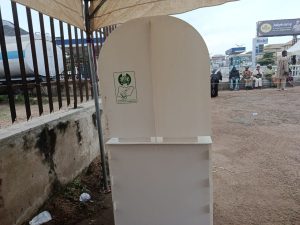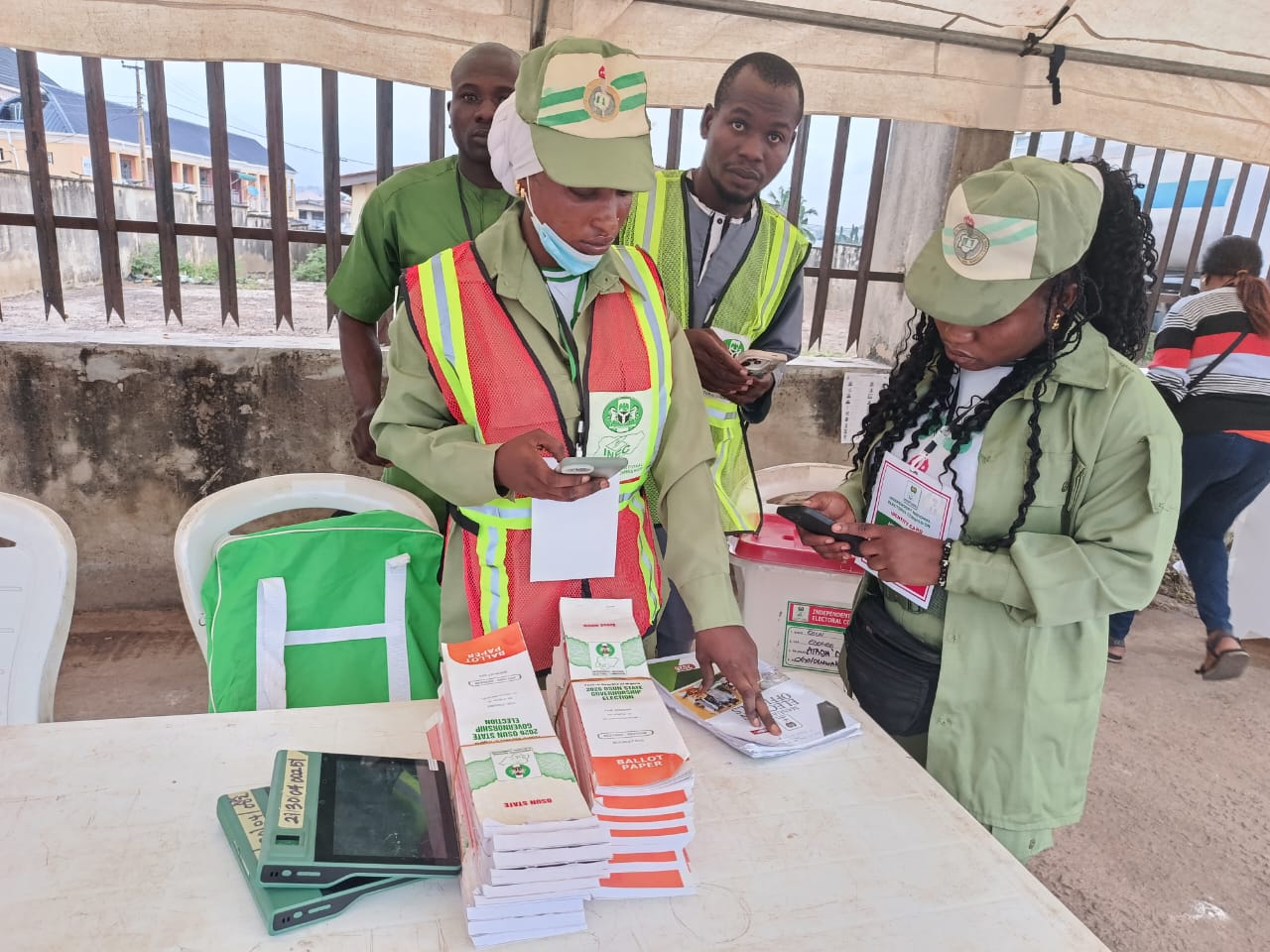
Voters across Osun State are heading to the polls today, Saturday, August 15, to elect a governor for the next four years in an election that has attracted significant public interest.
The governorship election is being closely watched by major stakeholders, including the Independent National Electoral Commission (INEC), political parties and candidates, security agencies, election observers, the media and the electorate.
The poll is also the last off-cycle governorship election before the 2027 general elections, giving it added significance for Nigeria’s electoral process.
1.9 Million PVCs Collected
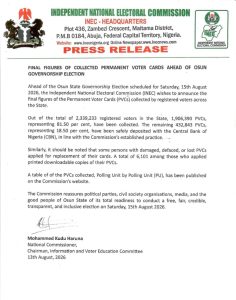
INEC says 1,906,390 Permanent Voter Cards (PVCs) have been collected by registered voters ahead of the election.
The figure represents 81.50 per cent of the 2,339,233 registered voters in the state.
A total of 432,843 PVCs, representing 18.50 per cent of the registered voters, remain uncollected. INEC has deposited the uncollected cards with the Central Bank of Nigeria for safekeeping.
The high level of PVC collection has increased expectations ahead of the election, with more than 1.9 million registered voters having completed the process required to participate in the poll.
Osun also recorded the highest number of new registrations during the last Continuous Voter Registration (CVR) exercise, with 208,357 new voters.
Polling Arrangements
The election is being conducted across the 30 Local Government Areas of Osun State and the Modakeke Area Office.
The exercise covers 332 Registration Areas, also known as wards, and 3,763 Polling Units across the state.
Fifteen political parties are participating in the governorship election following the addition of the Social Democratic Party (SDP) candidate to the ballot.
Among the prominent contenders are the incumbent governor and Accord candidate, Ademola Adeleke; the All Progressives Congress (APC) candidate, Bola Oyebamiji; and the African Democratic Congress (ADC) candidate, Najeem Salaam.
Other candidates include those representing the Action Alliance (AA), African Action Congress (AAC), Action Democratic Party (ADP), Action Peoples Party (APP), Boot Party (BP), New Nigeria Peoples Party (NNPP), Peoples Redemption Party (PRP), Social Democratic Party (SDP), Young Progressive Party (YPP) and Zenith Labour Party (ZLP).
Security Arrangements
The Nigeria Police Force has deployed 15,000 personnel, including Commissioners of Police, Assistant Inspectors-General of Police, Police Mobile Force operatives and other specialised units, to provide security before, during and after the election.
The Osun State Police Command has also restricted vehicular movement across the state from midnight until 6:00 p.m. on election day.
The restriction covers intra-state and inter-state movements and applies to private and commercial vehicles, trucks, tricycles and motorcycles.
The police have directed officers deployed for election duties to maintain professionalism and impartiality and comply strictly with the law, including the Code of Conduct for Security Personnel on Electoral Duty.
The Commissioner of Police in charge of Election Security in Osun State, Samuel Etaifo Erale, warned politicians, security personnel and electoral officials against actions capable of undermining the electoral process.
He specifically warned against vote buying, ballot snatching, violence, voter intimidation and other forms of electoral malpractice, stressing that anyone found engaging in electoral offences would be arrested and prosecuted.
Erale said the election was a federal electoral process and that anyone arrested for electoral offences could be transferred to the Force Headquarters outside the state for further investigation and prosecution.
Election Observation
An election observation coalition supported by the European Union has deployed 843 observers across Osun State to monitor and document the conduct of the poll.
The observers are drawn from the Centre for Media and Society, the International Press Centre, TAF AFRICA Disability Hub, formerly known as The Albino Foundation, the Nigerian Women’s Trust Fund, the Kukah Centre and Yiaga Africa.
The coalition is expected to monitor the election across the state and document the conduct of the electoral process.
Peace Accord
Political parties and their candidates had earlier signed a peace accord organised by the National Peace Committee at an event presided over by its convener, Matthew Kukah, the Catholic Bishop of Sokoto Diocese.
The accord brought together governorship candidates, their running mates, political party leaders, security chiefs, traditional rulers, civil society organisations and other stakeholders.
INEC has urged political parties and their candidates to honour the peace accord and commit themselves to a peaceful election.
The outcome of the poll will determine who governs Osun State for the next four years and will also be closely watched as Nigeria prepares for the 2027 general elections.