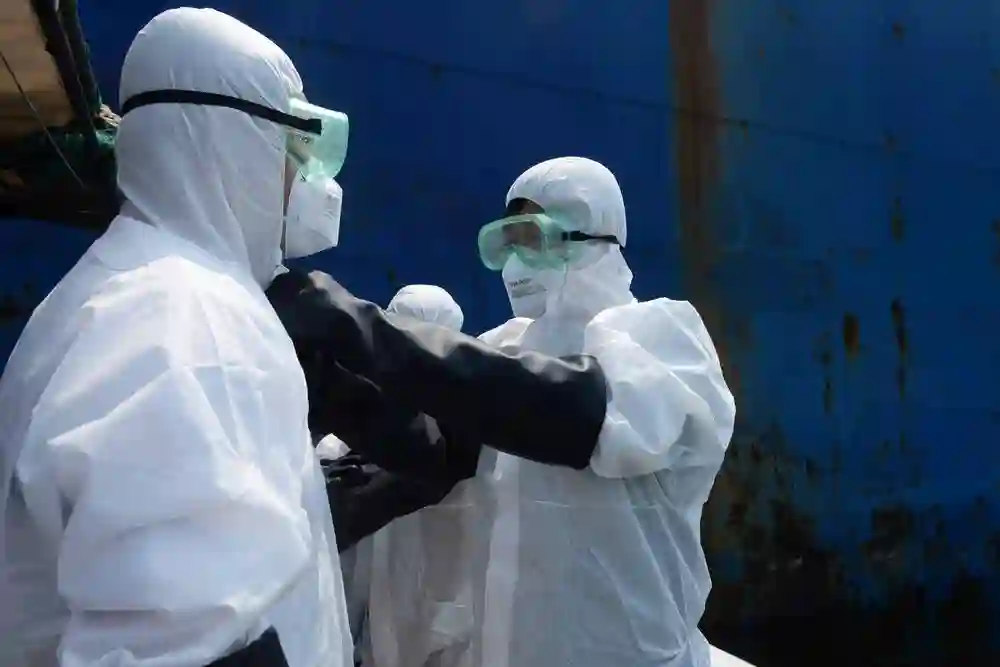
Doctors Without Borders (MSF) has called for a massive scale-up to contain the fastest-spreading Ebola virus outbreak in eastern DR Congo.
The deadly virus has spread so rapidly, and so widely that it’s outpacing health authorities’ ability to respond, Doctors Without Borders emergency coordinator, Trish Newport said.
He stressed that “We should be able to circumscribe the outbreak to go and do preventative activities all around where the outbreak has not yet started. So that zones, health zones, health areas, and the Ministry of Health are ready to be able to respond. But we don’t have the capacity today.”
Congo’s fast-moving Ebola outbreak has now killed over 2,300 people and has become the deadliest outbreak of the disease on record in the Central African nation.
READ ALSO: WHO Urges Vaccine Trial to Curb Spread of Ebola
The outbreak unfolding in one of Congo’s most vulnerable regions is the fastest-growing Ebola outbreak ever, with 4,945 cases including 2,325 deaths, according to government data released overnight into Monday.
“Here, the speed and growth and spread of this outbreak is much, much bigger. It’s much faster and spreads much bigger than the outbreak in 2014 or the outbreak in 2018. This is extremely concerning,” she said.
This is Congo’s 17th and largest Ebola outbreak. The toll eclipses that of the country’s 2018-2020 outbreak when 2,299 deaths out of 3,481 cases were recorded. The latest data shows 101 new cases and 33 deaths reported in the previous 24 hours.
Over 1,000 people have recovered, while 730 remain in hospitals or isolation.
Newport said that community engagement remained one of the biggest challenges, adding that members need to be more aware of the outbreak, and know what the symptoms are as well as what to do if they fall sick.
“I will say that this outbreak is horrible. It’s horrible. It’s horrible for families. We see family members that come in who have had 15 people in their family die.We rapidly need to scale up to be able to prevent more deaths from happening, more families and communities from being impacted,” she said.
Africanews/Shakirat