The Economic and Financial Crimes Commission (EFCC) has recovered over N1.3 trillion in illicit funds in the past three and a half years, while 234 cases involving Bureau de Change (BDC) operators are under investigation, with 72 convictions secured.
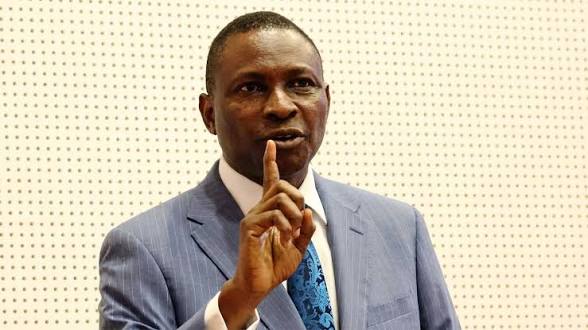
Chairman of the Commission, Mr Ola Olukoyede, disclosed this at a media briefing in Abuja, where he highlighted the achievements of the anti-graft agency over the past three years and above.
Olukoyede said the recoveries spanned multiple currencies and jurisdictions and included assets recovered from foreign entities and individuals.
He explained that the commission had also sustained enforcement in the areas of money laundering, terrorist financing, asset freezing and confiscation, virtual assets and other high-risk sectors.
According to him, the efforts had contributed to improving the integrity of Nigeria’s financial system and addressing deficiencies in the country’s anti-money laundering and counter-financing of terrorism framework.
“The move has equally contributed to improving the integrity of Nigeria’s financial system and sustained enforcement in money laundering, terrorist financing, asset freezing and confiscation,” he said.
Olukoyede described asset recovery as another major pillar of the commission’s stewardship, stressing that the fight against economic and financial crime was not limited to grand corruption.
“The fight against economic and financial crime is not only about grand corruption. Every day, we are protecting citizens, businesses and institutions from fraud, cyber-enabled crime and other forms of economic exploitation,” he said.
He stated that the commission had continued to pursue complex and high-profile cases without regard to status.
“Our high-profile case portfolio spans former governors, ministers and other public office holders, heads of agencies, financial-sector operators and corporate officials,” he said.
The EFCC chairman said the milestones recorded by the commission over the past three years would not have been possible without the support of its partners.
“Organised crime is increasing in sophistication and cuts across national borders and jurisdictions, thus requiring the cooperation of international law enforcement organisations,” he said.
Olukoyede said collaboration remained central to the commission’s mandate, adding that domestically, it worked with law enforcement agencies, regulators, the judiciary, ministries, departments and agencies, as well as state revenue authorities.
He said internationally, the commission’s cooperation extended to partners including the Federal Bureau of Investigation (FBI), the United Kingdom’s National Crime Agency (NCA), the Royal Canadian Mounted Police (RCMP), INTERPOL and other national and international law enforcement agencies.
As part of its internal reforms, the commission, during the period under review, dismissed 40 members of staff over corruption-related offences, while five of them are currently facing prosecution.
He added that, taken together, the outcomes demonstrated that effective anti-corruption enforcement could restore fiscal space, strengthen federal and sub-national revenue, return working capital to institutions, companies and citizens, support financial-market integrity, protect the extractive and digital economies, and strengthen Nigeria’s international credibility.