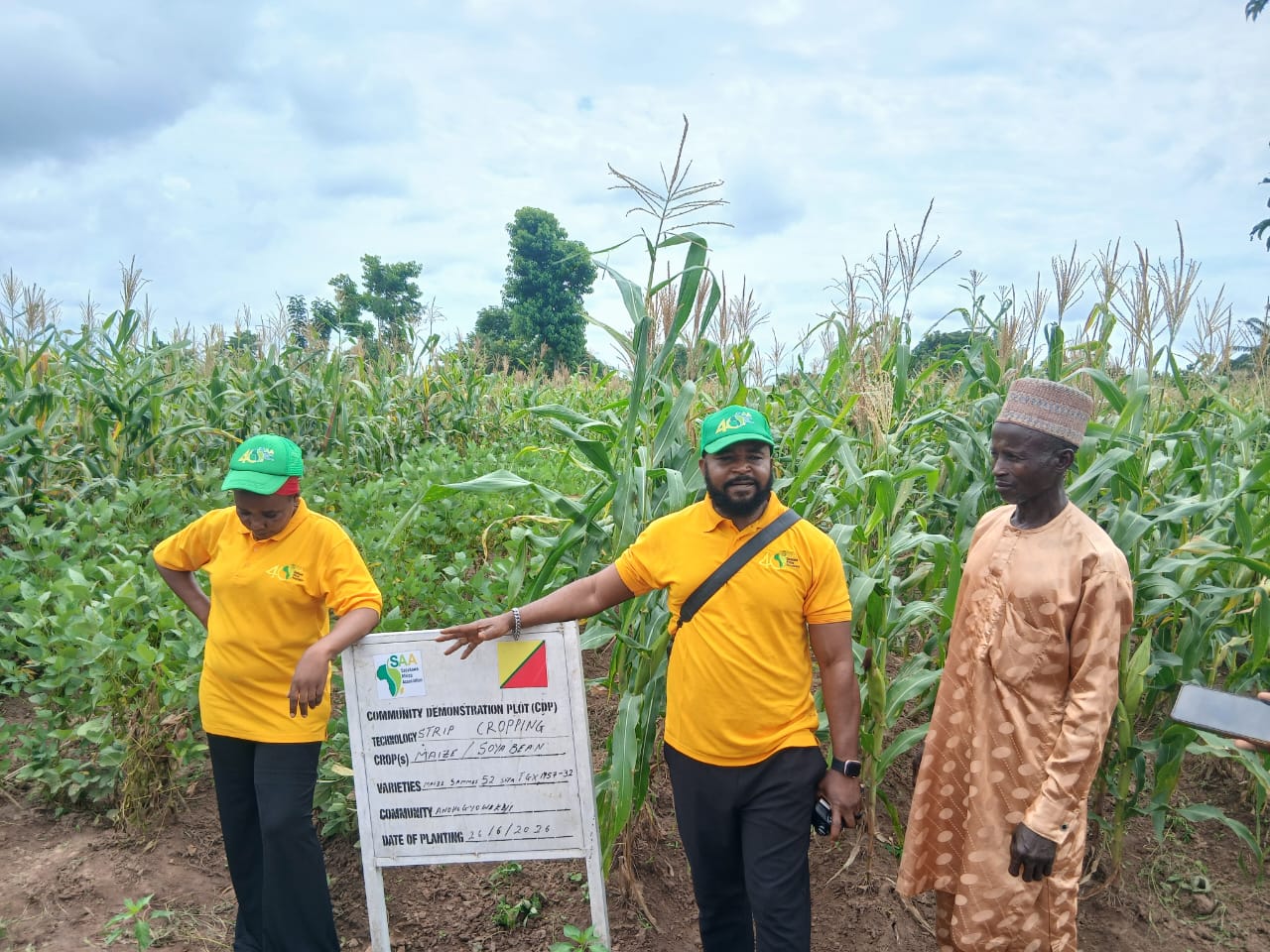
An international non-governmental organisation, the Sasakawa Africa Association (SAA), known for supporting agriculture development in Africa, has introduced climate-resilient agricultural technologies and regenerative soil practices for smallholder farmers in Nasarawa State.
The initiative also includes community-based seed multiplication to support smallholder farmers in the state.
It is also aimed at improving farmers’ productivity, cushioning the effects of climate change and strengthening food security in the state.
Speaking during a field tour across Obi and Doma Local Government Areas of Nasarawa State, SAA Country Director, Dr Godwin Atser, said enhancing farmer productivity remained central to the organisation’s mission.
READ ALSO:Nigerian Government Begins Validation of Soil Management Policy
He said the initiative was also designed to bridge the gap between agricultural research institutes and rural farmers by making improved technologies more accessible.
“For us in the Sasakawa Africa Association, our focus primarily is to see how the productivity of farmers is enhanced. We have tied productivity directly to an increase in income and the improvement of the livelihood of smallholder farmers.
“It is one thing to tell farmers about technologies that improve soil health, but it is another for them to see it practically on the field,” Atser said.
He highlighted the importance of adopting certified, early-maturing crop varieties, particularly in response to changing weather patterns.
Atser explained that breeders develop improved varieties by combining desirable traits such as drought tolerance and disease resistance, stressing that such varieties were distinct from genetically modified organisms (GMOs).
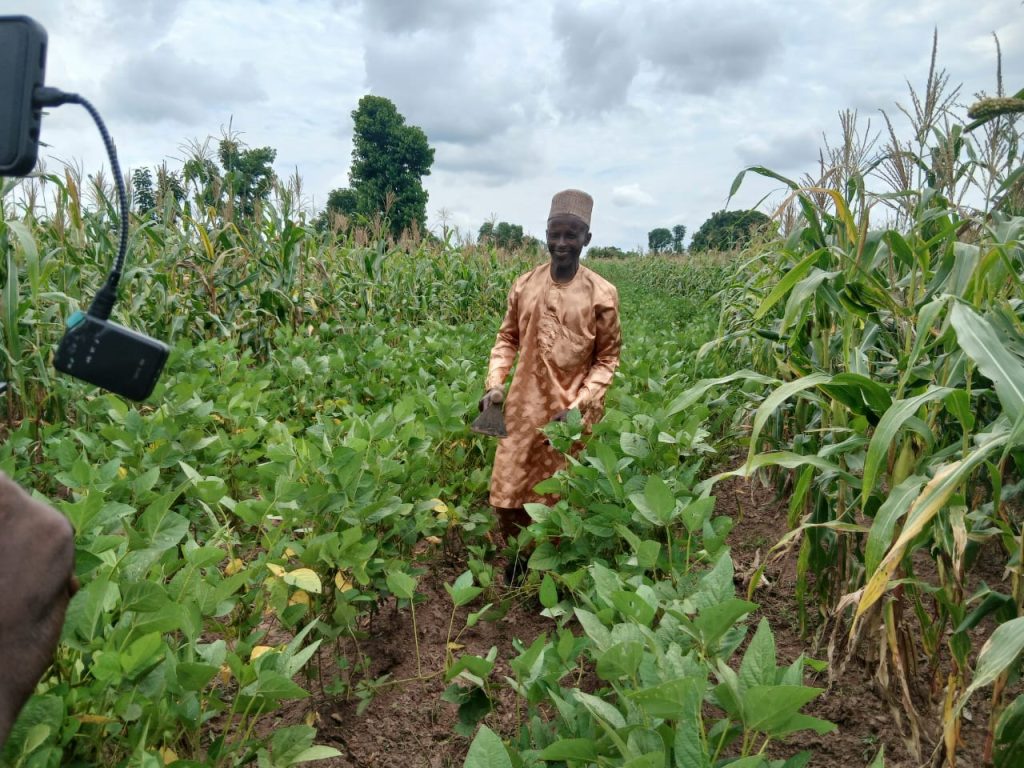
“We are coming up with varieties that mature within a very short span, some within 80 days, rather than the usual 120 days. Even when the rain ceases early, farmers can maximise their production within the rainy season,” Atser said.
He said the seeds being promoted included SAMMAZ 52, a provitamin A, biofortified and high-yielding maize variety, as well as SAMMAZ 27, a quality protein maize (QPM) variety.
According to him, SAMMAZ 27 contains key amino acids, lysine and tryptophan, which support muscle development and provide essential dietary benefits.
He said the varieties were being promoted under SAA’s community seed multiplication model to improve access to quality seeds among farmers.
Dr Godwin Atser was represented by the Technical Coordinator for Climate Resilience and Agrifood Systems, Mr Nathaniel Otene.
SAA Programme Officer for Market-Oriented Agriculture and Agribusiness Development, Jonathan Yassah, underscored the importance of transitioning from the planting of market grains to certified foundation seeds sourced from the Institute for Agricultural Research (IAR), Zaria.
“Seed contributes about 50 per cent of the yield of any crop. The yield of improved seeds increases overall yield by up to 38.7 per cent.
“These foundation seeds can be harvested and replanted for a minimum of three years before needing replacement, making it highly sustainable for our farmers,” Yassah said.
He stressed that the community seed farms were structured as commercial enterprises to promote sustainability.
According to him, rural seed producers would supply neighbouring farmers directly, creating an accessible local agribusiness ecosystem.
Yassah encouraged farmers and other stakeholders to leverage SAA’s Lafia office network to connect with registered community seed producers across the state.
Speaking on the soil management practices, a local farmer and demonstration beneficiary, Jibrin Elayo, said techniques such as biochar application and structured strip cropping represented significant improvements for farmers.
“It’s relatively a new technology, and we are beginning to see the results in terms of moisture retention and helping in the uptake of phosphorus in the soil,” Elayo said.
Another beneficiary, Mr Bashir Ogbole, commended SAA for providing training, improved seeds and regenerative technologies to farmers.
He said precision planting practices, including planting one seed per hole at 25-centimetre spacing, had been introduced to maximise plant population density and output per hectare.