


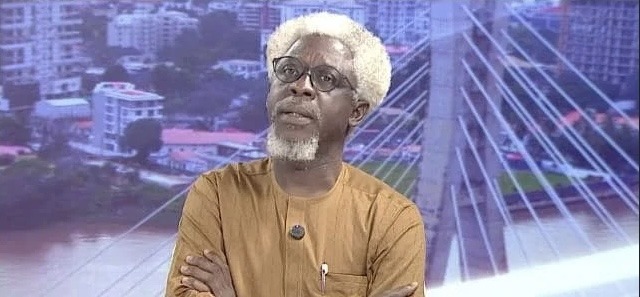
President of the National Association of Theatre Arts Practitioners (NATAP), Makinde Adeniran, has warned that Nigeria’s theatre industry risks losing its role in developing actors and preserving performing arts without deliberate government policies and investment in sustainable structures.
The NATAP president said the theatre remained the foundation for training performers across the creative industry, warning that neglecting it could weaken the wider ecosystem, including the film industry.
Speaking during an interview with ARISE NEWS on Sunday, he described theatre as a training ground where actors could develop and reinvent their craft, arguing that film productions alone could not provide the same learning experience.
“For every performative arts, the theatre is a laboratory. You don’t take care of it, the ecosystem will fall,” he said.
He noted that actors should not depend entirely on film productions to improve their abilities, as directors may concentrate on only specific elements of their performances.
“You want to learn acting? You don’t learn acting in film. Because you may be doing your best acting, right, and the director of film may just be focussing on one button. So learning acting really is on stage. To reinvent yourself as an actor, no matter who you are.”
The NATAP president said Nigeria’s creative industry had significant growth potential but lacked intentional government policies to drive its development.
He maintained that successive administrations had placed too much emphasis on individual projects and infrastructure while failing to create sustainable policies capable of providing long-term direction for the sector.
Adeniran said infrastructure alone could not sustain the creative industry, stressing the need for structures that would ensure long-term benefits from government investments.
“We cannot say building is the life of the industry. You may have infrastructure. I’m not one of those who are quick to say government must throw money. As a matter of fact, I always say, when you throw money first, you are throwing it into open air. Because there’s no structure that will contain the money you are throwing.”
He urged the government to clearly define the creative economy and develop specific policies to regulate and support its various sectors.
“Sometimes when we use this creative economy, I think it’s a carpet. Because under creative economy, there’s so much. So let’s narrow down to what we are doing under it so that we can have a focus, we can build for the future.”
Adeniran also criticised government projects shaped by personal interests instead of broader, long-term national goals.
He noted that the lack of effective preservation systems meant theatrical productions could end without being documented, depriving future generations of valuable materials for research and further development.
“And the fear, for me now, that is the fear as an individual practitioner, that’s the fear I battle with daily. And I say, we just put everything in the air and it’s gone.”
He added that seasoned practitioners had a duty to mentor newcomers to the industry and help them avoid repeating past mistakes.
The NATAP president also highlighted the significance of the 1986 Agiofest festival, which featured four Nigerian plays at the National Theatre and contributed to the establishment of the association.
According to him, the event brought together young theatre practitioners who recognised the need to unite and safeguard their shared interests.
He described the gathering as a defining moment for both the practitioners and the National Theatre.
Adeniran said the association would continue to address the industry’s challenges through policy engagement and annual gatherings.
He added that the 40th-anniversary reunion of Agiofest could provide another opportunity to continue discussions on the future of Nigeria’s theatre sector.

