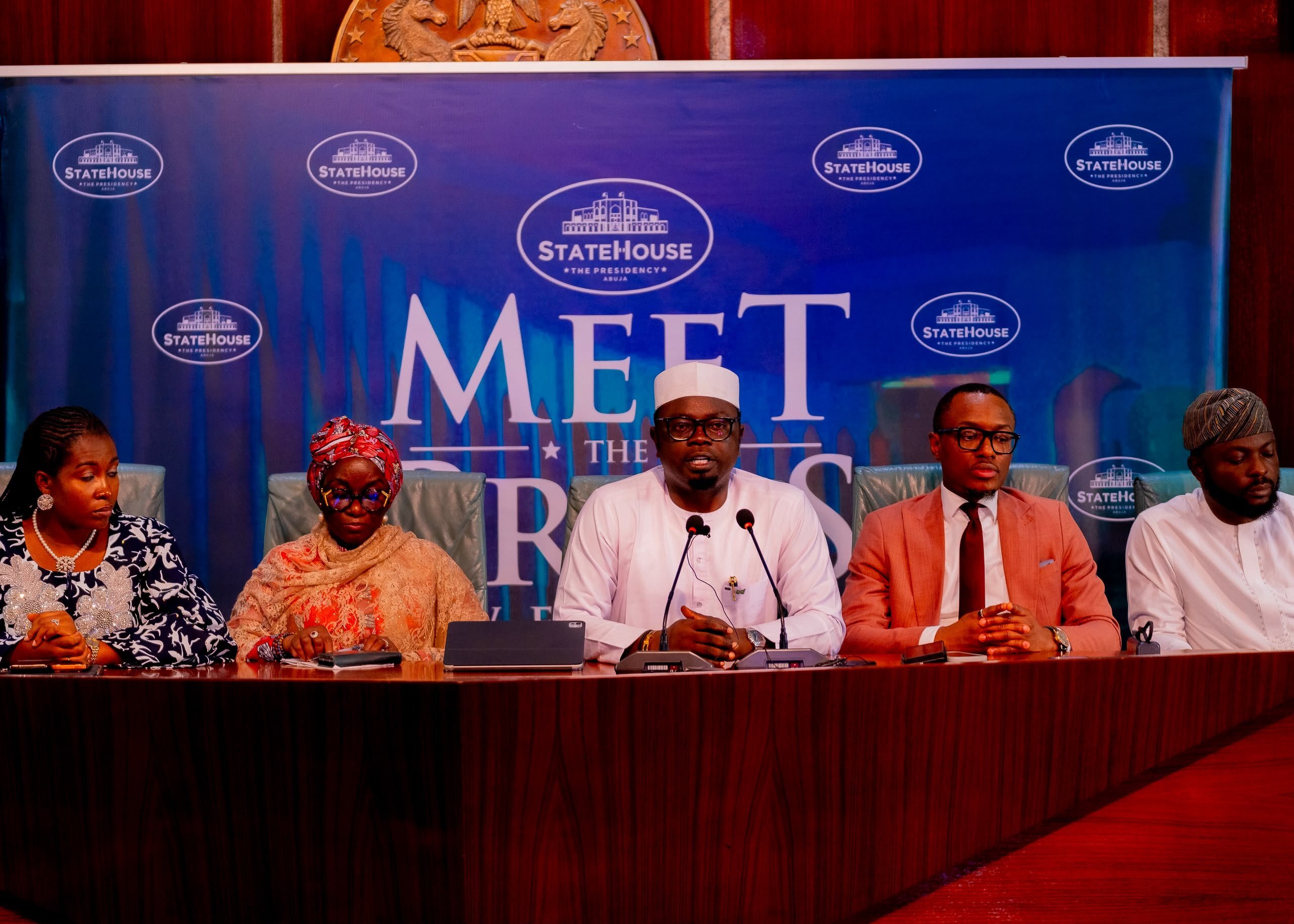
The National Youth Confab 2026 will begin in October, giving young Nigerians a platform to develop practical solutions, influence policy, and take greater ownership of decisions that will shape and secure their future.
Minister of Youth Development, Ayodele Olawande, announced this on Thursday at a press conference in Abuja, heralding the National Youth Confab 2026, themed “Next Gen Nigeria: Crafting Solutions, Owning the Future”.
Olawande said the Federal Government recognises that Nigeria’s future cannot be discussed without the active participation of young people, stressing that their ideas, experiences and involvement are essential to national development.
“I must emphasise that this is not intended to be another youth conference where speeches
are delivered, reports are produced, and nothing changes. It is an opportunity to listen, engage, cooperate and move from conversation to concrete action.”
Read Also:
The Minister assured that politicians will not be allowed to influence the selection of delegates for the National Youth Confab 2026.
Olawande emphasised that the 360 youth delegates who will physically participate in the conference in Abuja would be selected through an online portal opened for young Nigerians to register and participate.
He explained that the two-week Confab would combine a nationwide virtual consultation with a physical conference in Abuja, giving young Nigerians at home and in the diaspora opportunities to contribute ideas and policy proposals.
Today, at the Presidential Villa in Abuja, I addressed a press conference to herald the much-anticipated National Youth Conference 2026, scheduled to hold in October.
With the theme, “Next Gen Nigeria: Crafting Solutions, Owning the Future,” the two-week Confab will begin with a… pic.twitter.com/FwRqAR5ZOi
— Ayodele Olawande (@ayowisdom_) September 17, 2026
According to the Minister, the first week will involve a virtual consultation for Nigerians between the ages of 18 and 35, while a dedicated online portal will receive memoranda, ideas and policy proposals that will help shape discussions and outcomes at the physical conference.
The second week will bring together one youth delegate from each of Nigeria’s 360 federal constituencies, six delegates representing Nigerians in the diaspora, as well as relevant stakeholders and observers in Abuja.
“Our objective is to convene a Confab that genuinely reflects the diversity, talent, experiences and aspirations of Nigerian youth.”
According to him, the Confab is deliberately structured as a non-monetary process, making it difficult for individuals to influence the selection through financial inducement.
He said, “Politicians should go and face politics. We have elections that are battling front and back, and we have just four months to get to the reef, and politicians are needed in the unit, in the wards and everything.”
Olawande said discussions would focus on six key areas: governance, leadership and political participation; economic transformation, entrepreneurship and job creation; education and skills for the future; technology, innovation and digital transformation; climate change and energy transition; and social harmony and security.
He emphasised that the Confab would go beyond speeches and production of reports, saying mechanisms would be established to support implementation of its recommendations, track commitments and sustain engagement between young Nigerians and decision-makers.
“These pillars reflect some of the most urgent challenges confronting young Nigerians, as well as the promising opportunities available to them and our nation. The conference will enable participants to examine these issues, identify practical solutions and develop clear,
implementable recommendations.
The Confab will be guided by the principles of inclusion, youth ownership, leadership, mutual respect, transparency, accountability, non-partisanship, innovation, value for money and intergenerational solidarity.”
These, he said, would include a Multi-Stakeholder Youth Confab Taskforce, a Youth Confab Impact Index, sustained youth policy dialogues and a youth-led monitoring and accountability framework.
The Minister urged young Nigerians across the 36 states, the Federal Capital Territory and the diaspora to participate actively by submitting ideas, proposing workable solutions and taking ownership of the process.
“To every young Nigerian, whether at home or abroad, the National Youth Confab is an opportunity to engage, contribute and help shape the future of our country.
“The Nigeria we desire cannot be built by the government alone. It requires the energy, creativity, courage, innovation and commitment of our young people. The National Youth Confab 2026 offers us an opportunity to strengthen the relationship between Nigerian youth and the government elected to serve them. It also allows us to reaffirm that young Nigerians are important stakeholders and partners in the Nigerian project as we prepare for the Conference.”
Olawande added that the government was ready to listen and engage young Nigerians, calling on the youths to step forward and contribute towards building the Nigeria they desire.