
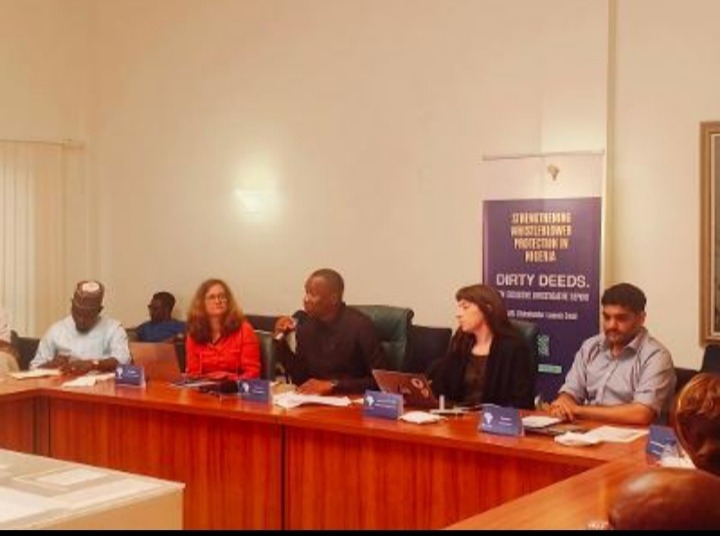
The Platform to Protect Whistleblowers in Africa (PPLAAF), a non-governmental organisation, has urged Nigeria to enact comprehensive legislation protecting whistleblowers and their families, saying stronger legal safeguards are essential to encourage corruption reporting and strengthen accountability.
Speaking during the launch of an investigative report in Abuja, PPLAAF Executive Director Jimmy Kande said corruption’s consequences remain public even when illicit funds move abroad.
“Money does not need a passport, but accountability too often does,” Kande said, stressing the need for international cooperation in investigating suspected illicit financial flows.
Kande emphasised that Nigeria’s proposed whistleblower legislation remained un-enacted, stressing that political will was crucial to protecting people who expose corruption and other wrongdoing.
READ ALSO: House of Representatives to back whistle-blower Policy
“Protecting a whistleblower is the beginning of the process, not the end,” he said, emphasising the need for authorities to investigate disclosures and ensure that evidence leads to accountability.
The PPLAAF executive director cited Senegal as an example, saying its government prioritised whistleblower protection and enacted legislation within a year.
Kande acknowledged initiatives designed to encourage Nigerians to report corruption, including financial incentives.
However, he said rewards alone could not address the fears that discourage potential whistleblowers from coming forward.
He further explained that many people remain reluctant to expose wrongdoing because they fear reprisals, including threats to their personal safety, employment and reputation.
According to Kande, effective whistleblower protection must extend beyond individuals who disclose information to include their families, who may also face risks arising from such disclosures.
He called for a comprehensive legal framework that would provide meaningful protection and encourage greater public participation in combating corruption.
Kande also urged journalists to follow the evidence, civil society organisations to use investigative findings, authorities to investigate and international partners to cooperate.
“Our cooperation must cross borders too,” he said, highlighting the importance of coordinated efforts to address corruption and suspected illicit financial flows.
Investigation conducted
The Director of Investigations at PPLAAF, Sonia Rolley, highlighted the report’s findings, assuring participants that the information was factual and based on an investigation conducted in partnership with the US-based Anti-Corruption Data Collective, ACDC.
“The list is not exhaustive. There are 61 individuals, but we know we can find more properties and people linked to them. We had only a few months to review the property databases in the US,” she said.
Rolley clarified that the findings did not establish that all the properties were purchased with illicit funds, stressing that the report focused on identifying red flags that could justify further investigations.
“We are not saying that all these houses were paid for with unresolved money. That is an important point,” she explained.
She added that for them, it is more about red flags that might justify launching an investigation.

