The Economic Community of West African States, ECOWAS, the West African Economic and Monetary Union (UEMOA) and the Permanent Interstate Committee for Drought Control in the Sahel (CILSS) are meeting in Abidjan,, to review the management of West Africa’s shared water resources, with 28 transboundary river basins covering nearly 71 per cent of the region’s total land area.
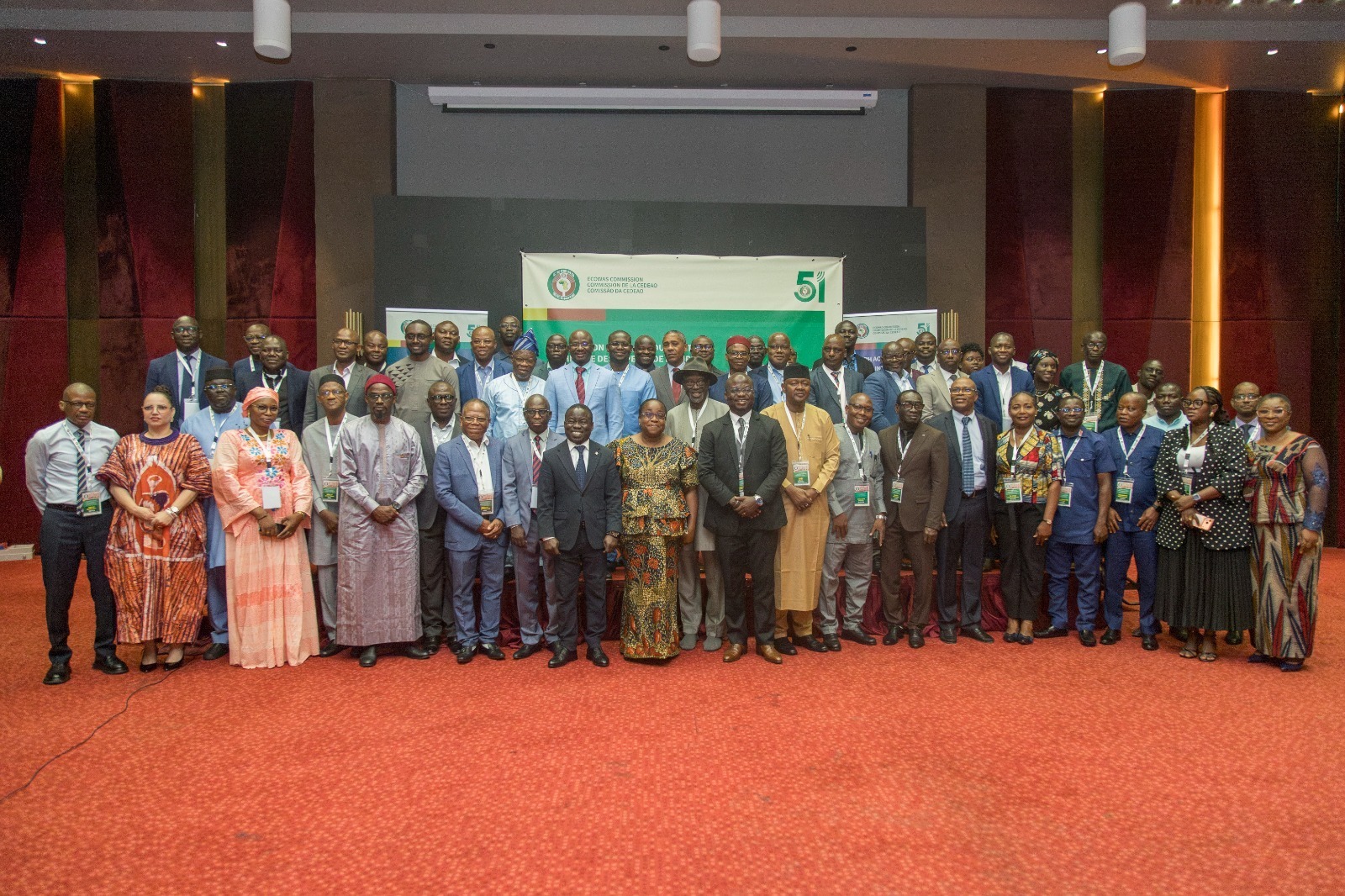
The two-day 13th Ordinary Session of the Technical Experts Committee of the Permanent Framework for Coordination and Monitoring (PCMF) of Integrated Water Resources Management (IWRM) is bringing together national focal points and technical delegations from the 15 West African states, transboundary basin organisations, technical and financial partners and civil society representatives.
The participants are reviewing the implementation of regional resolutions and formulating recommendations for the 6th Ordinary Session of the Ministerial Monitoring Committee.
Declaring the session open on behalf of Côte d’Ivoire’s Minister of Water and Forests, Jacques Assahoré Konan, the Chief of Staff of the Ministry, Conservateur Général Elvire-Joëlle Mailly said” the meeting was part of the country’s broader water governance reform agenda”.
Mailly cited the adoption of a new Water Code in 2023, a revised National Water Policy and a Water Resources Master Plan as evidence of Côte d’Ivoire’s institutional readiness to host the session.
Speaking on behalf of the three co-organising institutions, the Director of the ECOWAS Water Resources Management Centre, Kouassi Kouakou Alexis, said the meeting was taking place against a regional hydrological context marked by climate variability, demographic pressure and ecosystem degradation.
Alexis said; “the factors posed risks to food security, energy development and regional stability”.
“Integrated Water Resources Management is no longer simply a methodological option. It is a necessity for survival and a powerful driver of regional integration,”he said.
Alexis called on technical experts to apply scientific rigour and forward-looking analysis in addressing hydrological risks and strengthening regional cooperation.
At the opening of the technical proceedings, Senegal assumed the chairmanship through Dr Bakary Fatty, while the rapporteurship will rotate among Burkina Faso, Ghana and Cabo Verde.
The technical review is centred on the implementation of the 14 resolutions adopted at the 5th Ministerial Session.
Delegates noted that two regional directives, one on the development of hydraulic infrastructure and another on the management of shared water resources, were adopted by the ECOWAS Council of Ministers in December 2024 but are still awaiting official publication.
The discussions also covered the ongoing revision of the West Africa Water Resources Policy.
Implementation Gaps
Participants identified implementation gaps, including the absence of operational follow-up on the proposed West African Water Fund despite a World Bank-funded feasibility study, as well as the pending signing of a cooperation agreement with Cheikh Anta Diop University of Dakar as the focal institution for regional water centres of excellence.
Among the advances reported was the establishment of the Mano River Transboundary Basin Management Authority, whose legal instruments have received technical and ministerial validation.
The meeting also considered civil society participation in regional water governance.
The President of the Sub-Regional Consultative Council on Water Resources (CRCE), Dr Boluwaji Onobolu called for stronger coordination among the Council’s constituent colleges and greater integration of gender and youth considerations into the Centre’s activities.
The outcomes of the 13th Ordinary Session will provide the technical basis for deliberations at the 6th Ordinary Session of the Ministerial Monitoring Committee on IWRM.
They will also feed into the First West Africa Regional Water Forum, scheduled for September 24 to 25, 2026, in Abidjan, under the theme, “Valuing Water to Transform West Africa.”