
Nigeria has set machinery in motion to overhaul its 23-year-old Child Rights Act with reforms designed to make child protection more enforceable through dedicated funding, specialised justice structures, digital safeguards, family-based care and stronger accountability.
The proposed reform was presented at the National Stakeholders’ Engagement on the Review and Amendment of the Child Rights Act, 2003, in Abuja, where stakeholders from the 36 states are examining the draft to strengthen protection for children and improve implementation.
Presenting an overview of the draft, Lead Technical Review Team member Mr Polycap Okorie said the proposed law expands the existing 278 sections to 444, introducing new provisions on child-friendly justice, diversion, digital safety, family-based care, institutional coordination, funding and oversight.
READ ALSO: CRA Stakeholders Target Stronger Child Protection System
He said detention should remain a last resort, supported by stricter remand thresholds, regular judicial review and non-custodial alternatives.
“We need to tighten the remand threshold; in other words, before a child is remanded, there should be stricter criteria for remanding a child.”
The draft also raises the minimum age for child justice administration from seven to 12 years, provides for one-stop justice centres, strengthens family courts, regulates care facilities and establishes supervision services in every state.
It further proposes a Child Protection Fund, while requiring ministries, departments and agencies to make budgetary provisions for their respective responsibilities under the law.
Representing the Justice Research Institute, Mrs Foluso Idumu said the review must respond to emerging threats in the digital environment.
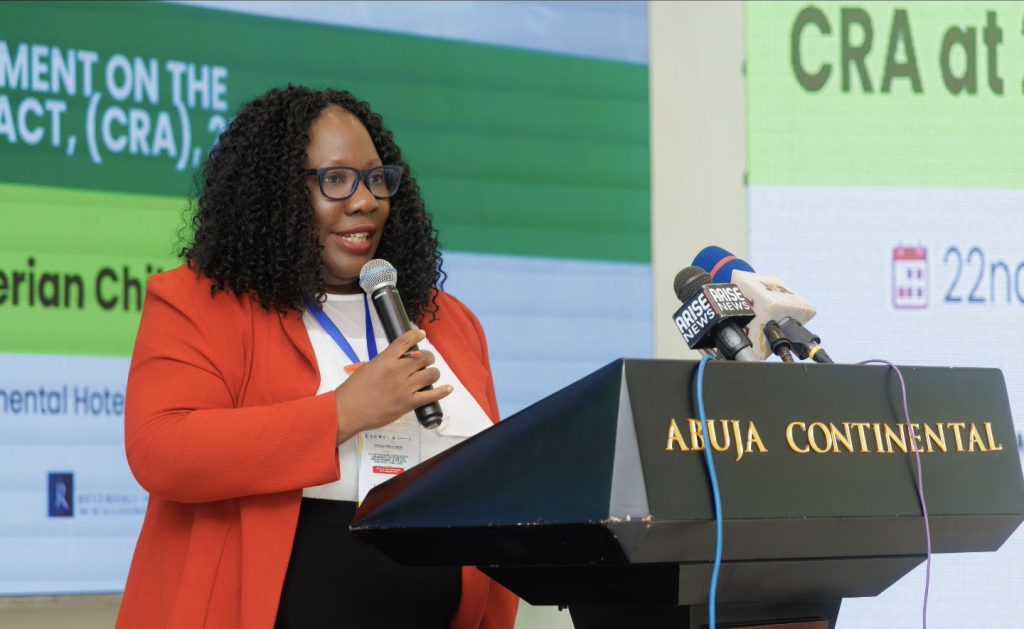
Idumu said the 2003 Act predates digital platforms and artificial intelligence systems increasingly shaping childhood, calling for stronger protection of children’s data, privacy, image, voice and likeness, as well as safeguards against online exploitation and harmful digital design.
“A child is not a data source, and a child is not a product,” she said.
Women Advocates Research and Documentation Centre (WARDC Africa), represented by Emmanuela Azu, called for survivor-centred provisions addressing girls impregnated through rape or incest and children born from such violations.
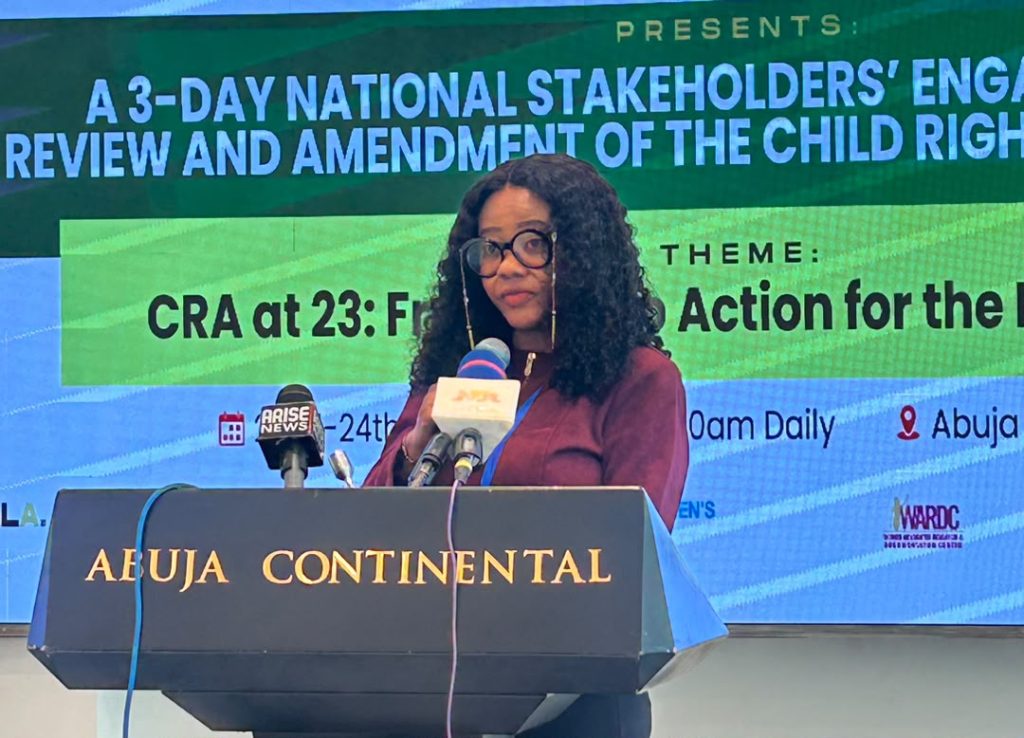
Azu advocated confidential reporting, psychosocial and medical support, education re-entry, legal clarity and properly resourced Family Courts, alongside stronger protection for children affected by conflict, displacement, trafficking and other vulnerabilities.
Gender Mobile Initiative’s Omowunmi Ogunrotimi said the ultimate test of the reform must be its impact on children’s everyday lives because;
“A child does not experience rights as sections, subsections and paragraphs.”
She said children experience rights through safety in school, protection from violence and exploitation, inclusion of children with disabilities, access to justice and institutions equipped to act.
Ogunrotimi urged stakeholders to bring “candour, technical rigour and a shared commitment to the best interests of the child” to the review.
Stakeholders at the engagement are interrogating the draft to ensure that the amended law does not merely expand Nigeria’s legal framework, but establishes practical mechanisms capable of translating children’s rights into measurable protection.
The convergence of the recommendations places implementation at the centre of the reform, linking legal rights with funding, specialised justice, family support, digital protection, monitoring and accountability.