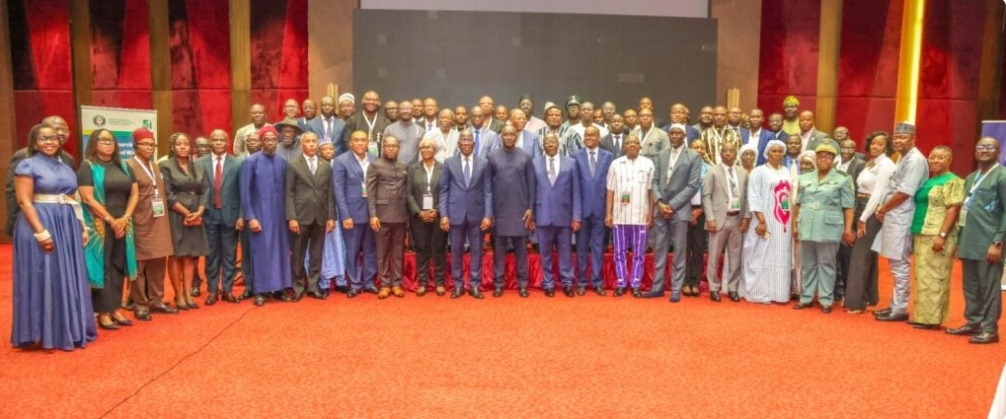
West African Ministers responsible for water resources have reaffirmed their collective commitment to Integrated Water Resources Management, IWRM and adopted a set of strategic resolutions aimed at consolidating regional water governance.
They also plan to strengthen transboundary cooperation, accelerating the transition towards a more resilient, water-secure and climate-adaptive West Africa.
The decisions adopted in Abidjan reflect a renewed regional determination to position water not merely as a natural resource, but as a strategic asset for regional integration, economic transformation, human security and sustainable development.
The Conference was convened under the auspices of the Economic Community of West African States, ECOWAS, the West African Economic and Monetary Union, WAEMU and the Permanent Interstate Committee for Drought Control in the Sahel, CILSS.
READ ALSO: ECOWAS Leaders Reaffirm Commitment to Regional Cooperation
The 6th Ordinary Session of the Ministerial Monitoring Committee on the IWRM provided a high-level platform for assessing progress in the implementation of regional commitments, reviewing emerging challenges affecting shared water resources and defining strategic priorities for the next phase of regional cooperation in the water sector.
In his opening remarks, the ECOWAS Commissioner for Infrastructure, Energy and Digitalisation, Mr. Amin Sulemani, underscored the “centrality of water to regional stability, food security, energy production and socio-economic transformation.”
He stressed that the increasing frequency of climate-related shocks, coupled with environmental degradation, demographic pressures and competing demands on water resources, “requires a strengthened framework for collective action and deeper regional solidarity in the management of shared water systems.”
Chairing the session, Minister of Water and Sanitation of the Republic of Senegal and President of the African Ministers’ Council on Water, AMCOW, Cheikh Tidiane Dièye, emphasised that “water governance has become a strategic imperative for resilience, sovereignty and regional integration”.
He called for a renewed commitment to implementation, accountability and results, while urging Member States to articulate a common regional voice in advancing the African Water Vision 2063 and preparations for the 2026 United Nations Water Conference.
The Committee also benefited from the contributions of regional institutions, technical and financial partners and stakeholder representatives.
On behalf of the WAEMU Commission, participants reiterated the importance of aligning regional water governance with broader development and integration objectives.
Speaking on behalf of technical and financial partners, Mr. Jacques Somda of the IUCN highlighted the urgent need to scale up investments, strengthen innovative financing mechanisms and promote nature-based solutions capable of enhancing resilience while protecting ecosystems and livelihoods.
The Chairperson of the Sub-Regional Consultative Council on Water Resources, Dr. Boluwaji Onobolu, advocated “stronger stakeholder engagement and called for enhanced participation of women, youth and civil society actors in shaping the future of water governance across the region”.
Building on recommendations submitted by the 13th Ordinary Session of the Technical Experts Committee, Ministers endorsed a comprehensive set of strategic actions covering the revision of the West African Water Resources Policy, the operationalisation of the African Water Vision 2063 at regional level, the strengthening of water information and knowledge systems, the promotion of sustainable financing mechanisms, the institutionalisation of the West Africa Regional Water Forum, FREAO and the reinforcement of regional cooperation to address transboundary water pollution and other emerging environmental challenges affecting shared river basins.
The meeting further “reaffirmed the importance of evidence-based decision-making, stronger accountability mechanisms and enhanced coordination among Member States, river basin organizations, regional institutions and development partners in order to ensure that regional commitments translate into tangible and measurable outcomes for communities across West Africa”.
The ministerial deliberations followed the 13th Ordinary Session of the Technical Experts Committee, during which experts, national focal points, basin organisations and development partners reviewed progress in the implementation of the regional IWRM agenda and formulated recommendations for ministerial consideration.