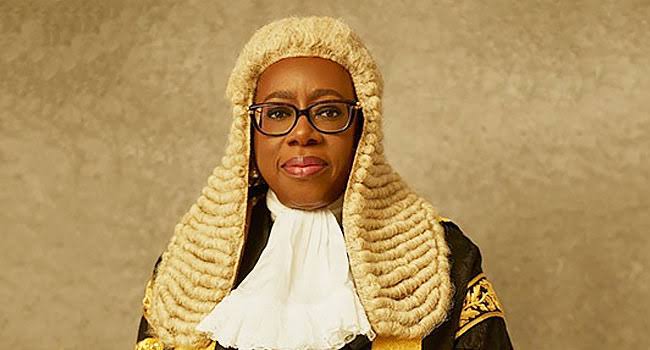
The Chief Justice of Nigeria, Justice Kudirat Kekere-Ekun, has called for stronger judicial independence, professional accountability and institutional reforms to strengthen the administration of justice.
She warned that intimidation of judicial officers and abuse of court processes could undermine public confidence in the justice system, particularly as the country approaches another electoral season.
Speaking at a special session of the Supreme Court of Nigeria in Abuja to mark the commencement of the 2026/2027 Legal Year and the swearing-in of 68 new Senior Advocates of Nigeria, Kekere-Ekun urged judges and lawyers to uphold the Constitution, resist political pressure and safeguard the integrity of the judicial process.
“The administration of justice cannot be left to anger, intimidation or trial by social media,” she said, stressing that judges must be able to decide cases according to law without fear of personal retaliation.
- READ ALSO: CJN urges Nigerians To Uphold Rule Of Law
The CJN also cautioned against the use of social media to turn professional disagreements into personal attacks, threats and harassment.
She urged members of the public to use established channels to challenge judgments, report professional misconduct and raise complaints against judicial officers and legal practitioners.
Addressing the coming electoral season, Kekere-Ekun urged judicial officers to maintain political neutrality and avoid conduct that could create an appearance of partiality.
She also warned lawyers against forum shopping and instituting multiple proceedings seeking similar reliefs, saying “such practices could generate conflicting orders and undermine the orderly administration of justice.”
She said political litigation should not overwhelm the courts at the expense of other cases awaiting determination, stressing that lawyers must disclose related proceedings and respect the jurisdiction of other courts.
The CJN said the Supreme Court began implementing the Nigerian Case Management System (NCMS) on July 1, 2026, alongside new practice directions requiring electronic copies of court processes, records of appeal and other documents.
She said the initiative was designed to strengthen case management, improve the security of judicial records and reduce administrative delays.
Reviewing the Supreme Court’s performance during the 2025/2026 Legal Year, the CJN said; ‘the Court handled 2,456 matters, compared with 2,280 in the preceding year.’
The matters comprised 1,179 general civil motions, 573 criminal motions, 13 Sharia-related motions and 676 appeals, including civil, criminal, political and Sharia appeals, as well as originating summons.
She said the Court delivered 411 judgments during the period, compared with 369 judgments and rulings in the preceding Legal Year.
To address delays, the Court scheduled 1,385 matters for regular sittings between March 23 and December 17, 2026. These included 1,021 motions and 364 appeals, with 733 older matters prioritised for hearing.
The Court also disposed of 178 dormant matters in chambers and removed 125 concluded cases from its active docket.
Special panels were established to handle 141 matters involving Sharia cases, the Economic and Financial Crimes Commission, the Asset Management Corporation of Nigeria, the Federal Inland Revenue Service and the Legal Practitioners Disciplinary Committee.
Kekere-Ekun highlighted the Judiciary’s role in prosecuting corruption, money laundering and other financial crimes, commending the Corruption and Financial Crimes Cases Trial Monitoring Committee for improving coordination among courts and relevant institutions.
She also cited Nigeria’s removal from the Financial Action Task Force’s increased-monitoring list in October 2025, describing it as an important milestone in strengthening the country’s anti-money laundering and counter-terrorist financing framework.
According to the CJN, the EFCC reported 2,842 convictions during the period under review, while the Independent Corrupt Practices and Other Related Offences Commission filed 53 cases and secured 33 convictions.
Of the naira recoveries, approximately ₦397.26 billion represented direct recoveries for the Nigerian Government, while ₦836.34 billion was recovered on behalf of state governments, ministries, departments and agencies, private companies and individual victims.
The CJN said recovered assets could protect public resources, restore funds to rightful owners and support legitimate economic and social activities.
However, she stressed that the Judiciary’s responsibility extended beyond securing convictions and forfeiture orders.
“Our constitutional responsibility is to ensure that every case is determined fairly, impartially and according to law,” she said, warning that public sentiment must never dictate the pace or outcome of judicial proceedings.
Kekere-Ekun called for predictable and timely releases of funds appropriated for the Judiciary, warning that delays could stall projects, disrupt procurement and erode the value of budgetary allocations through inflation.
She acknowledged improvements in budgetary provisions for the Federal Judiciary but said approved funding must translate into functioning courts, modern technology, adequate facilities and effective administration.
The CJN urged judges, lawyers and judicial staff to uphold the dignity of the profession and strengthen public trust through impartiality, professionalism and respect for due process as the Judiciary begins another legal year.