The Nigerian Government has unveiled a costed national strategy to tackle child marriage, strengthen child protection and keep girls in school.
The strategy places implementation, sustainable financing and measurable accountability at the centre of Nigeria’s renewed campaign to protect the girl child.
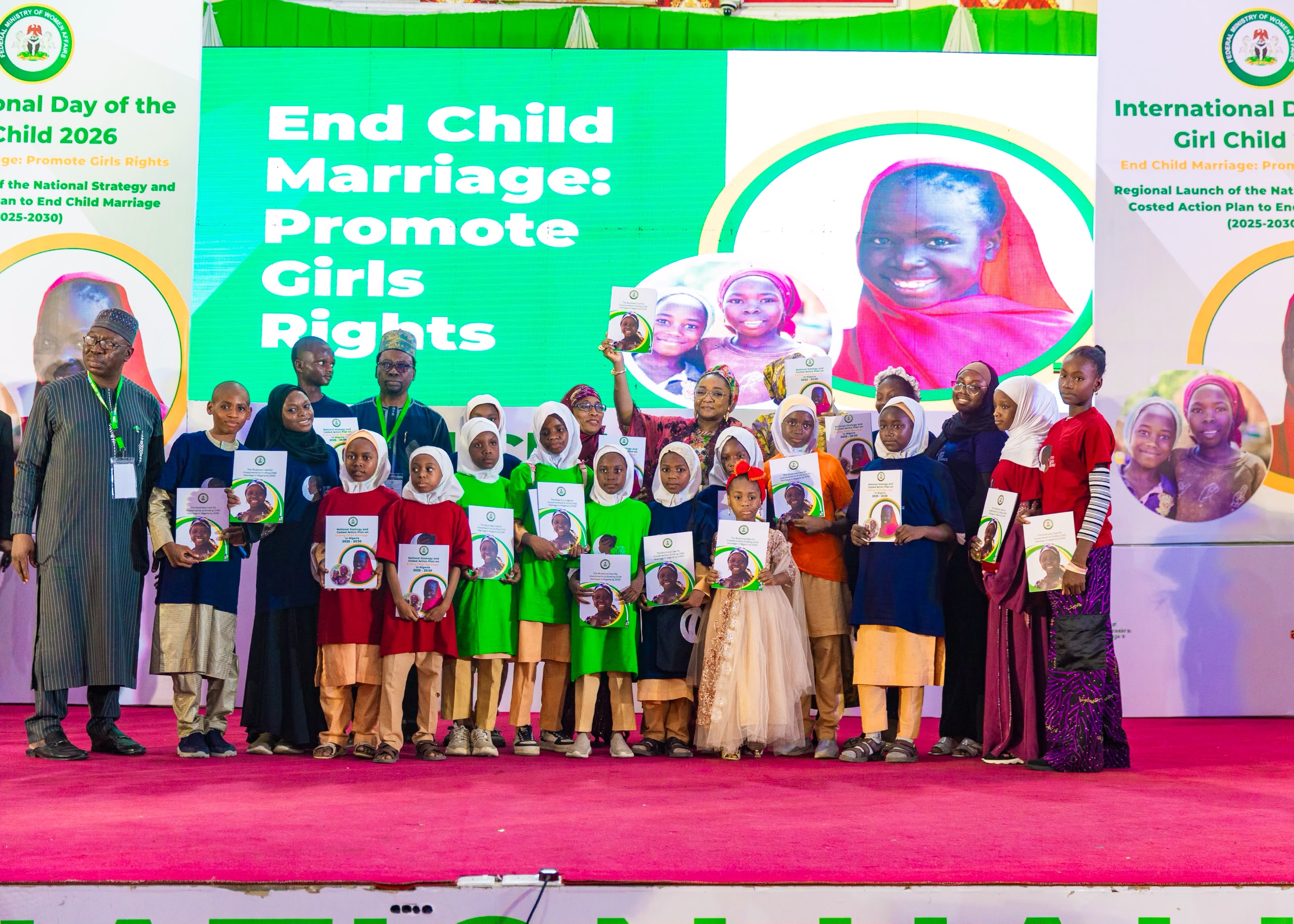
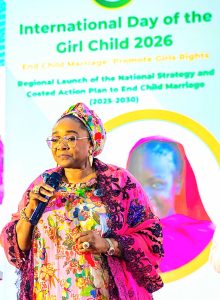
The Minister of Women Affairs and Social Development, Hajiya Imaan Sulaiman-Ibrahim, unveiled the policy document in Kano at the 2026 International Day of the Girl Child commemoration and launch of the National Strategy and Costed Action Plan on Ending Child Marriage in Nigeria (2025–2030).
The initiative targets the North-West and North-East geopolitical zones, with a call for coordinated action by federal and state governments, traditional institutions, religious leaders, civil society organisations and development partners.
READ ALSO: UNICEF Seeks Stronger Action To End Child Marriage
Sulaiman-Ibrahim said the strategy represents a shift from policy commitments to structured implementation, backed by funding, monitoring and institutional accountability, with its success to be judged by its impacts.
She said, “Let me be clear about how we will judge success. It will be measured by the number of girls who stay in school or return to it; the number of communities that adopt protective practices; the quality and reach of support services; the resources committed and actually released; and the measurable reduction in the conditions that keep a girl from completing her secondary education and leave her exposed to child marriage.”
The Minister said the initiative aligned with President Bola Ahmed Tinubu’s declaration of 2026 as the Year of the Family and Social Development, stressing that the national agenda could not be fully realised while girls were denied opportunities to complete their education.
She identified poverty, insecurity, school exclusion, gender discrimination, harmful traditional practices and inadequate social protection as factors sustaining child marriage.
According to her, early marriage disrupts education, exposes girls to early pregnancy and associated health risks, increases vulnerability to domestic violence and restricts economic independence, perpetuating poverty across generations.
She urged Ministries, Departments and Agencies, state governments and local councils to integrate the strategy into their respective mandates, linking prevention efforts with education, healthcare, social welfare and family support.
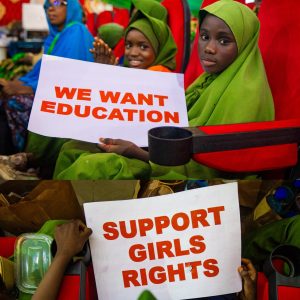
“Laws that protect children must be more than words in official documents. They must be understood by communities, enforced by responsible institutions, and backed by accessible reporting, referral and response mechanisms,” she said.
Clear Intervention Pathways
Sulaiman-Ibrahim called for clear intervention pathways for girls at risk, school re-entry opportunities for those whose education had been interrupted, confidential support for survivors of violence and livelihood assistance for vulnerable families.
She stated that the Nigerian Government was strengthening implementation of the Child Rights Act, 2003, including a review of its provisions, to support effective child protection across the federation in line with constitutional responsibilities.
Describing girls’ education as an investment in national productivity, the Minister said excluding girls from learning deprived Nigeria of human capital needed to drive economic growth and development.
Sulaiman-Ibrahim commended Kano State Governor Abba Yusuf for scholarships, free bus transport for girls and the domestication of re-entry guidelines for married adolescent girls, urging other states to adopt similar interventions.
She also advocated improved school retention, safer learning environments, adequate sanitation and menstrual health facilities, alongside vocational training and support for girls whose education had been interrupted.
The Minister urged stakeholders to ensure that the strategy reached communities and households where girls faced the greatest barriers.
She said the launch must translate into “accelerated, coordinated and adequately resourced national action” towards a Nigeria where every girl was safe, educated, empowered and able to fulfil her potential.