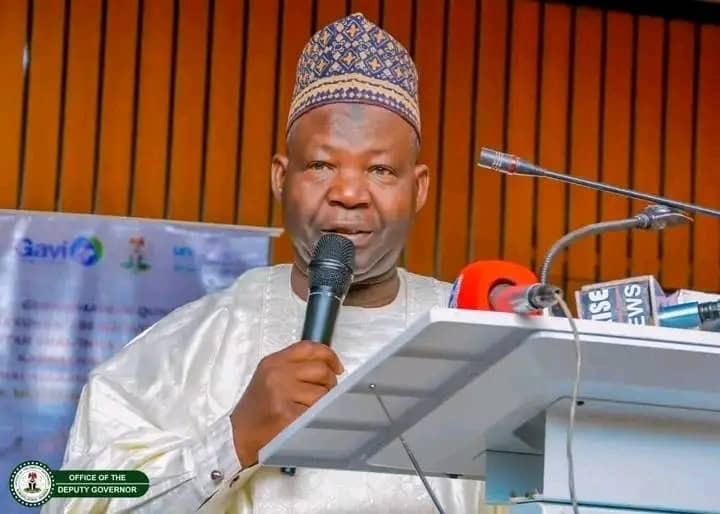
The Sokoto State Government says it has strengthened disease surveillance, emergency response systems and isolation facilities to prevent and manage any potential outbreak of Ebola Virus Disease (EVD), assuring residents that the state remains at low risk.
The Commissioner for Health, Dr. Faruk Umar Abubakar Wurno, gave the assurance on Tuesday in Sokoto after a stakeholders’ meeting to assess the state’s preparedness and response capacity.
Wurno said the Nigeria Centre for Disease Control and Prevention (NCDC) had classified Sokoto as a low-risk state, urging residents to remain calm while health authorities intensified preventive measures.
READ ALSO: Ebola Contacts Rise to 53 in Nigeria
“Sokoto is a low-risk state as declared by the NCDC. There is no cause for alarm,” he said.
He explained that the government had strengthened disease surveillance, epidemiological monitoring and emergency response mechanisms to ensure the prompt detection and management of any suspected case.
The commissioner identified the Illela border crossing and the state airport as key entry points requiring close monitoring. He noted, however, that the airport currently handles only domestic flights.
Wurno said the Infectious Disease Hospital (IDH) in Amanawa had also been prepared to isolate and manage suspected or confirmed Ebola cases should the need arise.
According to him, the facility has personal protective equipment (PPE) and other essential resources required for infection prevention and effective case management.
“The level of readiness is intact and ready for any eventuality,” the commissioner said, adding that health officials and epidemiologists were monitoring developments to ensure a timely response to emerging threats.
He said the stakeholders’ meeting brought together public health officials and relevant partners to review existing preparedness measures, improve coordination and strengthen public awareness of the disease.
On diphtheria, Wurno reported a significant reduction in cases across the state, noting that fewer than 20 patients remained on admission in the three designated treatment centres.
He identified the centres as Specialist Hospital Sokoto, with a 45-bed capacity; Amanawa, with 100 beds; and another facility with five beds.
The commissioner said each centre currently had fewer than 10 patients on admission, adding that treatment and case management were progressing satisfactorily.
He expressed confidence that the strengthened surveillance system, prepared isolation facility and coordinated emergency response arrangements would enable the state to respond effectively to any public health threat.