


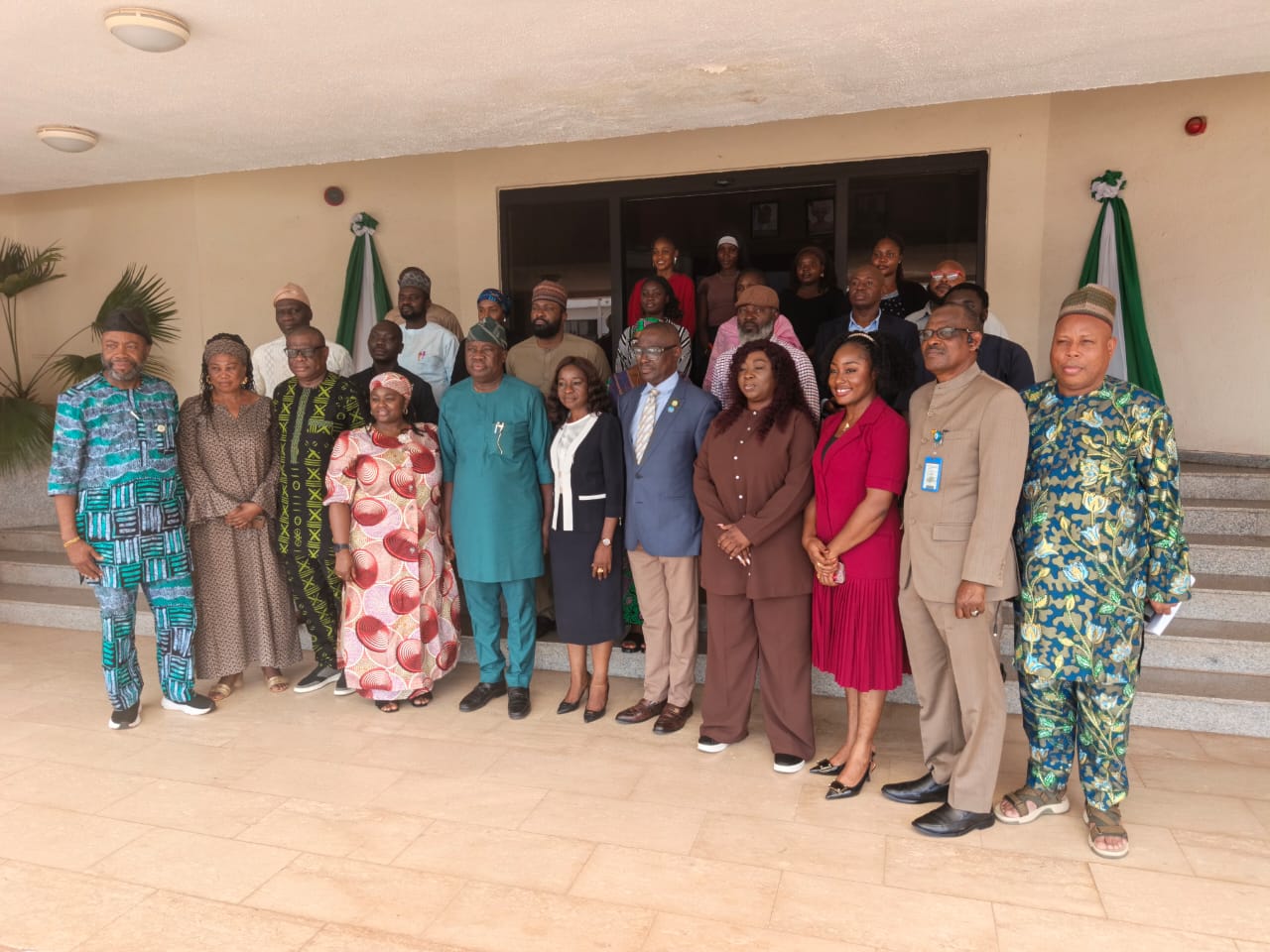
The Institute for Peace and Conflict Resolution (IPCR) has called for stronger community participation, collaboration and grassroots initiatives to prevent and counter violent extremism in Nigeria.
The Director-General of the Institute, Joseph Ochogwu, made the call in Abuja at a one-day roundtable on Preventing and Countering Violent Extremism (PCVE) in Nigeria, with the theme, “Strengthening Community Resilience Against Violent Extremism in Nigeria.”
Ochogwu said “violent extremism remained one of the most pressing challenges confronting the country, undermining peace, destabilising communities and threatening national cohesion.”
He noted that although military and security interventions were important in addressing the menace, they were insufficient to defeat extremist ideologies without sustainable, community-driven solutions.
According to him, “lasting solutions must be rooted in communities where resilience, trust and social cohesion can be strengthened.”
The IPCR Director-General highlighted some of the Institute’s previous interventions in preventing and countering violent extremism, including the publication of a book on PCVE, the production of audio and video messages to counter extremist narratives, and a roundtable on the implementation of the 2017 Policy Framework and National Action Plan for PCVE.
He also cited a research study on community capacity to prevent violent extremism in Mangu Local Government Area of Plateau State.
Ochogwu explained that the roundtable provided an opportunity for policymakers, security agencies, civil society organisations, religious leaders, youths and women’s groups to explore practical strategies for empowering communities, strengthening early warning systems and building inclusive platforms to resist extremist narratives.
He reaffirmed the Institute’s commitment to supporting national and state frameworks for preventing and countering violent extremism, stressing that investment in community resilience would not only prevent radicalisation but also promote peace, development and national unity.
In her keynote address, Dr Grace Atim described the roundtable as “a call to collective action against violent extremism, which she said was rooted in complex socio-economic, political and religious factors.”
She identified Boko Haram, the Islamic State West Africa Province (ISWAP), bandits and Lakurawa among groups responsible for violent attacks, including bombings, kidnappings and massacres in different parts of the country.
Atim said violent extremism threatened fundamental freedoms and national values enshrined in the Nigerian Constitution, while endangering the safety and prosperity of citizens, neighbouring countries and the international community.
She stressed that communities must occupy a central position in efforts to address insecurity because they are the primary spaces where the effects of security challenges are experienced.
According to her, forests, nature reserves and border areas have increasingly been exploited by armed groups as sources of funding, resources and territorial expansion, as well as entry points for imposing alternative systems of governance on local populations.
While acknowledging some positive results from military and other security operations, the keynote speaker cautioned that state-led interventions alone could not achieve sustainable results without complementary community-based approaches.
She also expressed concern that the widespread stigmatisation of Fulani communities had aggravated grievances and heightened tensions among different groups, particularly in the North-West and North-Central regions.
Atim defined community resilience as the ability of people within a community to take meaningful, deliberate and collective action to address threats such as violent extremism.
She emphasised the need to identify the specific threats confronting individual communities and understand the factors that enable them to resist and overcome such challenges.
Highlighting critical areas for strengthening resilience, she called for greater community ownership of prevention initiatives, collaboration across sectors and increased investment in youth engagement through education, employment opportunities and civic participation.
She maintained that families, schools, religious institutions and local organisations must be empowered to identify early warning signs and respond appropriately to prevent the spread of extremist ideologies.
Atim also underscored the importance of the whole-of-government and whole-of-society approach promoted by the Policy Framework and National Action Plan for PCVE, noting that no single institution or stakeholder could effectively tackle violent extremism in isolation.
She further referenced the Global Initiative Against Transnational Organised Crime (GI-TOC) Community Resilience Framework, which identifies social capital, community capacity, economic capital, state support and the role of women as five important building blocks of resilient communities.
Citing practical interventions, Dr Atim highlighted the Community Action and Response Team (CART), an ActionAid Nigeria project supported by the Global Community Engagement and Resilience Fund (GCERF), which has strengthened community participation in PCVE efforts across 24 communities in Kaduna and Kogi States.
She also cited the Women-Led Peacebuilding Initiative in Sokoto, implemented by Caritas Nigeria and the United Nations Interregional Crime and Justice Research Institute (UNICRI), which has trained more than 200 internally displaced persons, most of them women, in peacebuilding and psychosocial support.
According to her, “the initiative demonstrates the importance of transforming women from victims of violent extremism into active agents of peacebuilding and community resilience.”
She urged stakeholders to invest in community-led initiatives, strengthen trust between citizens and institutions, and build networks of resilience that promote unity rather than division.
Atim said the outcomes of the roundtable would contribute to mainstreaming peacebuilding into efforts to address the economic and social consequences of violent extremism, while supporting the rebuilding and stabilisation of conflict-affected communities across Nigeria.
The roundtable brought together stakeholders from relevant government institutions, security agencies, civil society and other sectors to deliberate on practical approaches to strengthen community resilience against violent extremism.

