


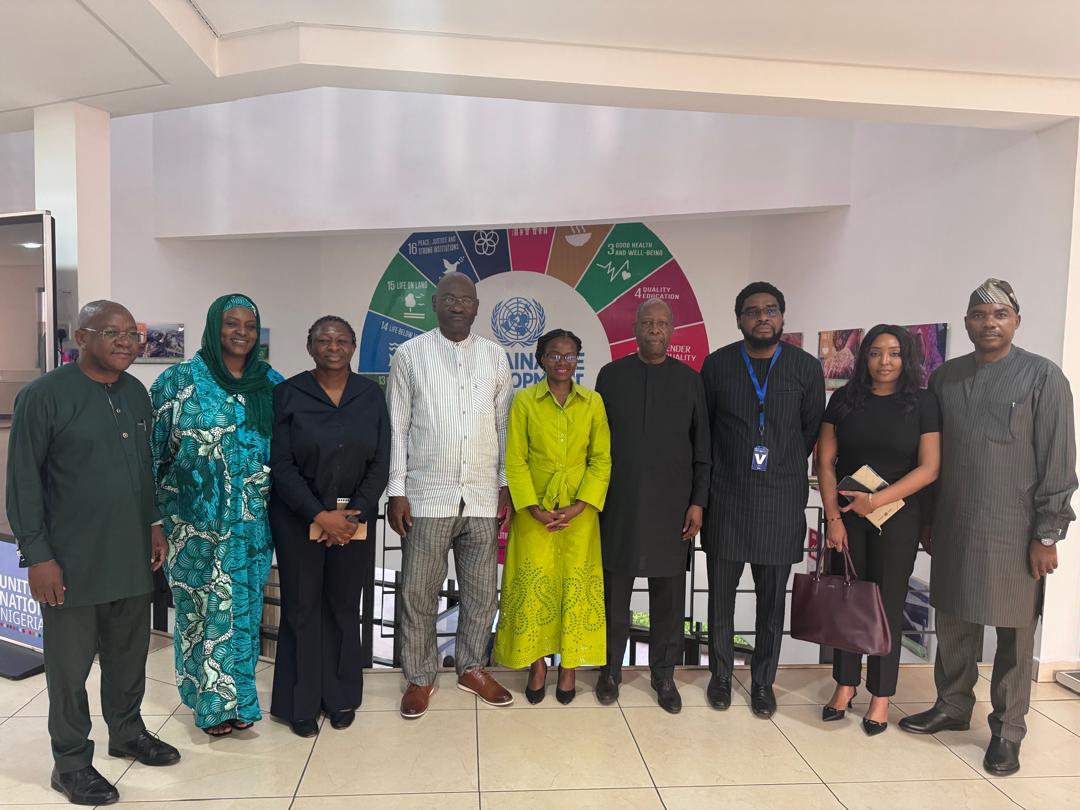
United Nations Special Representative of the Secretary-General, Leonardo Santos Simão, has met with the Director-General of the Institute for Peace and Conflict Resolution (IPCR), Dr. Joseph Ochogwu, to discuss strategies to prevent electoral violence and ensure peaceful, free, fair, and credible general elections in Nigeria in 2027.
Simão, who is in Nigeria on a working visit as part of a pre-election assessment, engaged key stakeholders on the country’s preparedness for the forthcoming elections and the need to strengthen mechanisms to prevent violence before, during and after the polls.
During his engagement with the IPCR Director-General, discussions centred on emerging threats to electoral peace, including political violence, election-related tensions, misinformation, disinformation and the growing influence of technology in shaping political narratives.

The meeting also examined practical measures to de-escalate tensions and ensure that the outcome of the 2027 elections is legitimate, acceptable to Nigerians and reflective of the people’s will.
Ochogwu, while assessing the country’s preparedness, expressed confidence in the capacity of the Nigerian state to prevent and manage election-related violence.
He said the country’s law enforcement agencies, military and intelligence services possessed the institutional capacity to respond to threats and prevent isolated incidents from escalating into widespread violence.
He stressed the need to strengthen existing early-warning, prevention and response mechanisms rather than allow political tensions to degenerate into violence.
READ ALSO: Osun: Police Assures Residents of Peaceful Election
A major concern raised during the engagement was what Ochogwu described as the need for “de-weaponisation of hunger” by political actors.
He observed that opposition parties could be tempted to exploit the economic difficulties confronting Nigerians, including inflation and the rising cost of living, to mobilise public anger against the government.
He, however, stressed that the government must also acknowledge the impact of economic hardship on citizens and sustain efforts to cushion the effects of the prevailing economic situation.
According to him, the politicisation of economic hardship could deepen social tensions and create an atmosphere in which legitimate public grievances are transformed into instruments of political mobilisation and conflict.
He called for greater vigilance among political parties, security agencies, civil society organisations, technology platforms and other stakeholders to prevent digital platforms from becoming instruments of electoral destabilisation.
The IPCR Director-General also highlighted the growing tension between established authority, traditional political structures and democratic values, warning that political actors could exploit such divisions to promote narratives that undermine public confidence in democratic institutions.
He urged political parties and other stakeholders to exercise restraint and avoid inflammatory rhetoric capable of weakening democratic values or portraying political competition as a zero-sum contest in which opponents must be completely destroyed.
Ochogwu further advocated conciliatory politics and greater accommodation among competing political interests, insisting that the 2027 elections should not become a trigger for prolonged political hostility.
He said both the ruling and opposition parties had responsibilities to maintain a peaceful political environment and ensure that their supporters did not resort to inflammatory rhetoric, violence or other actions capable of destabilising the electoral process.
He also emphasised the importance of sustaining political stability beyond election day, noting that governance and democratic institutions must continue to function effectively after the polls.
As the country approaches another major electoral cycle, the discussions underscored the need for political actors to place national stability above partisan interests and work collectively to ensure that the struggle for political power does not undermine Nigeria’s democratic development.

