


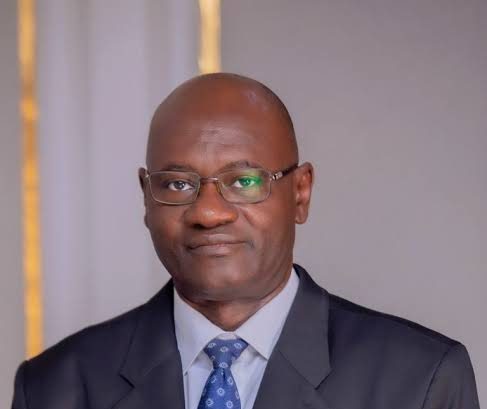
The Director-General of the Institute for Peace and Conflict Resolution (IPCR), Joseph Ochogwu, has called for inclusive governance, impartial security responses and stronger institutional accountability to protect freedom of religion and belief in Nigeria.
Ochogwu said addressing religious intolerance, insecurity and identity-based conflicts required collective commitment from government, religious leaders, traditional institutions, civil society organisations and other stakeholders.
He made the call in Abuja during the Quarterly Policy Review Dialogue of the Network of Policymakers and Religious Leaders to Support Peace, Security and Reconciliation in Nigeria (NPMRL), held at the IPCR headquarters.
The dialogue was themed, “Moving Beyond ‘Us’ and ‘Them’: Strengthening Local Governance, Security and Foreign Relations to Protect Freedom of Religion and Belief in Nigeria.”
READ ALSO: UN, IPCR Call for Peaceful 2027 Elections
The IPCR Director-General said the theme was particularly relevant amid concerns over attacks on Nigerians and communities because of their religious identities, as well as international attention following Nigeria’s designation as a Country of Particular Concern (CPC) by the United States.
While acknowledging concerns about religious intolerance and the protection of vulnerable communities, Ochogwu called for factual, balanced and evidence-based public discourse to prevent further divisions.
He warned that exaggerated or polarising narratives that presented complex security challenges exclusively through religious identities could reinforce mistrust and undermine national cohesion.
“We must therefore distinguish between legitimate advocacy for the protection of religious freedom and narratives that inadvertently or deliberately reinforce an ‘Us versus Them’ mentality,” the Director-General said.
Ochogwu stressed that alleged violations of religious freedom required constructive responses, with victims receiving justice and protection, while public discussions should promote national understanding rather than deepen polarisation.
He noted that Nigeria had constitutional, legal, policy and institutional frameworks to guarantee the fundamental rights of citizens, irrespective of their religious beliefs or affiliations.
According to him, the Constitution guarantees freedom of thought, conscience and religion, prohibits the adoption of a state religion and protects citizens against religious discrimination.
He, however, maintained that protecting freedom of religion required more than constitutional provisions and diplomatic explanations, stressing the need for effective governance, impartial security responses, accountability for violations and consistent application of the law.
The IPCR chief identified local governance, security governance and foreign relations as three critical areas requiring stronger policy interventions.
On local governance, he called for more responsive local government administrations, traditional rulers, religious leaders and community institutions capable of addressing grievances, preventing religious discrimination and strengthening community-based conflict resolution.
The IPCR Director-General said accessible platforms for addressing grievances were necessary to prevent disputes from escalating into violence.
On security, Ochogwu urged security institutions to protect all citizens without discrimination, ensure accountability for human rights violations and strengthen community trust through improved early-warning and response mechanisms.
He stressed that security interventions must be professional, intelligence-driven and impartial, while remaining consistent with constitutional guarantees and human rights standards.
On foreign relations, he called for stronger alignment of Nigeria’s diplomatic engagements and international partnerships with its constitutional and international commitments to freedom of religion and belief.
He said constructive international cooperation was important in strengthening confidence in Nigeria’s human rights commitments and addressing religious intolerance and identity-based conflicts.
Ochogwu also acknowledged the contributions of religious leaders and faith-based organisations to interfaith understanding, reconciliation, conflict prevention and social cohesion.
He described them as important partners in governance, social mobilisation, early warning and conflict resolution, noting that their grassroots influence provided opportunities to strengthen community dialogue and preventive peacebuilding.
The Director-General commended KAICIID for its sustained partnership with the Institute in facilitating the Network since its establishment in 2022.
He said the collaboration had helped sustain the platform, deepen interreligious and intercultural dialogue and strengthen the relationship between religious leadership and public policy.
Ochogwu urged Network members to translate recommendations from previous dialogues into institutional programmes and practical interventions at the community level.
The dialogue featured a lead presentation by Professor Shehu Abdullahi Zuru, SAN, while Reverend John Joseph Hayab served as the expert discussant.
Ochogwu expressed confidence that their contributions would enrich deliberations on the constitutional, governance, security and international relations dimensions of religious freedom in Nigeria.
He urged participants to develop practical recommendations that would strengthen government policies, institutional coordination and the contributions of religious and community leaders to national peacebuilding.
“The challenge before us is not simply how to manage religious differences but how to build a society in which such differences do not become sources of exclusion, discrimination, insecurity or violent conflict,” he said.
The IPCR Director-General maintained that every Nigerian deserved equal protection, justice, dignity and opportunities, irrespective of religious identity or belief.
He said protecting religious freedom was a shared responsibility requiring responsible leadership, inclusive governance, institutional accountability, constructive religious engagement and evidence-based public policy.
Ochogwu added that the Network’s success would ultimately be measured by the extent to which its recommendations influenced institutional decisions, public policies and community-level actions.

