


By: Margaret Ebeshi
The Director-General of the Nigerian Meteorological Agency (NiMet), Professor Charles Anosike, has called for stronger regional cooperation to improve weather observations and ensure the sustainability of National Meteorological and Hydrological Services (NMHSs).
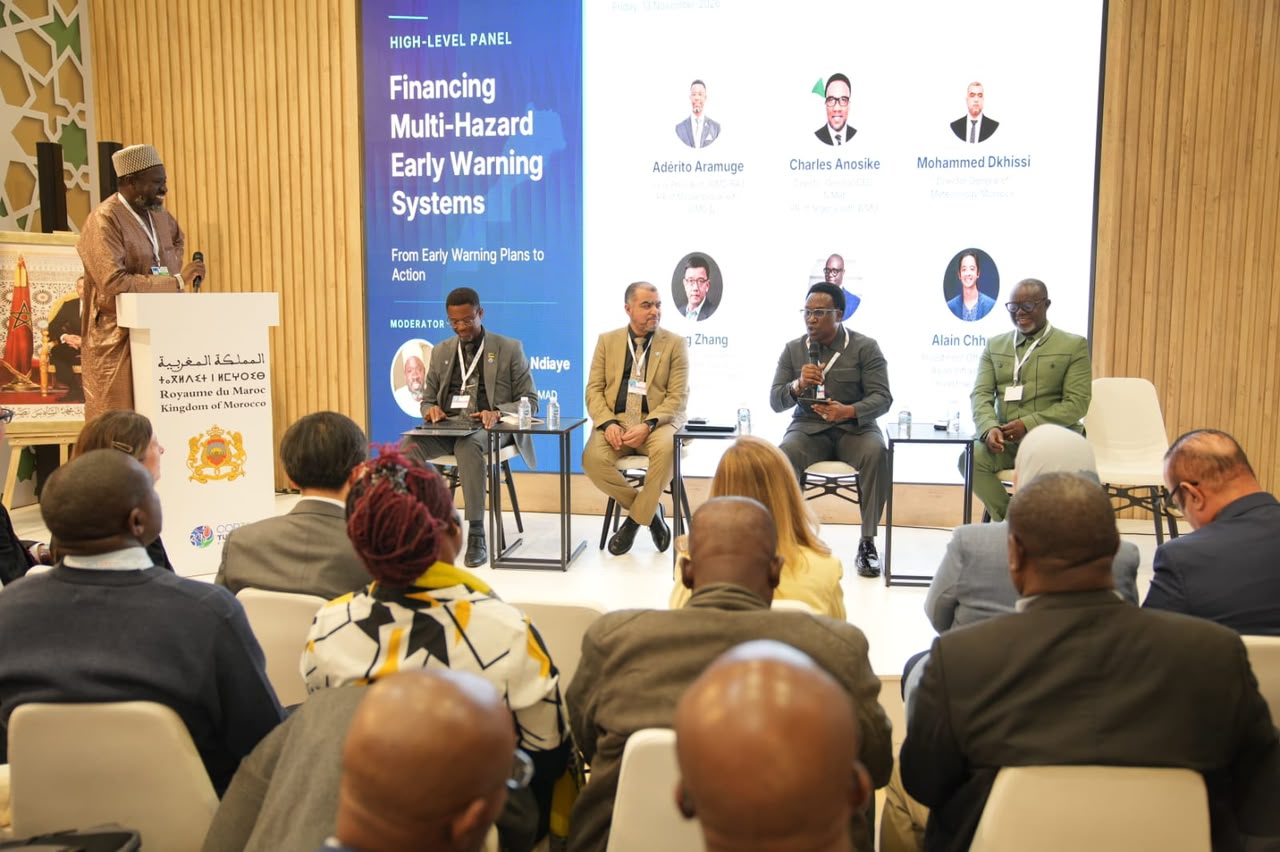
Anosike made the call at the ongoing 31st United Nations Climate Change Conference (COP31) in Antalya, Türkiye, during a high-level side event at the Morocco Pavilion, organised by Morocco’s General Directorate of Meteorology (DGM) in collaboration with the Ministry of Equipment, Water and Forests.
Speaking at a panel session on Financing Multi-Hazard Early Warning Systems, the NiMet chief identified three key priorities for mobilising resources: investment in workforce development and staff welfare, expansion of meteorological observation networks and systems, and strengthening partnerships to translate climate data into actionable information for Nigerians and the economy.
READ ALSO: Nigeria Recommits To Regional Cooperation on Water Resources
He acknowledged the importance of government funding but stressed that private sector participation was critical to the long-term sustainability of meteorological services.
According to him, “physical climate risk has a price,” making it necessary for meteorological agencies to develop business portfolios that would attract private sector investment and participation.
He said that NiMet was engaging private insurance companies on ways to share climate-related risks and reduce the long-term costs of climate-induced damages.
Anosike further noted that no country could independently shoulder the financial and technical demands of generating and disseminating climate information, stressing that effective weather forecasting requires cross-border collaboration and the sharing of meteorological data.
He called for regional frameworks that would enable countries to pool resources, harmonise processes and reduce the cost of maintaining weather observation infrastructure.
The NiMet Director-General also advocated increased support for regional and continental institutions, particularly the African Centre of Meteorological Applications for Development (ACMAD), noting their importance in harmonising frameworks and improving access to climate financing.
The event attracted representatives of the Moroccan Government, the World Meteorological Organisation (WMO), and partners of the Early Warnings for All (EW4All) initiative, including the United Nations Office for Disaster Risk Reduction (UNDRR), International Telecommunication Union (ITU) and International Federation of Red Cross and Red Crescent Societies (IFRC).
Also in attendance were Permanent Representatives with WMO, directors of African meteorological and hydrological services, multilateral development banks, climate funds, development partners, UN agencies, regional institutions, scientific organisations and private sector stakeholders.

, Professor Charles Anosike, has called for stronger.......................)