


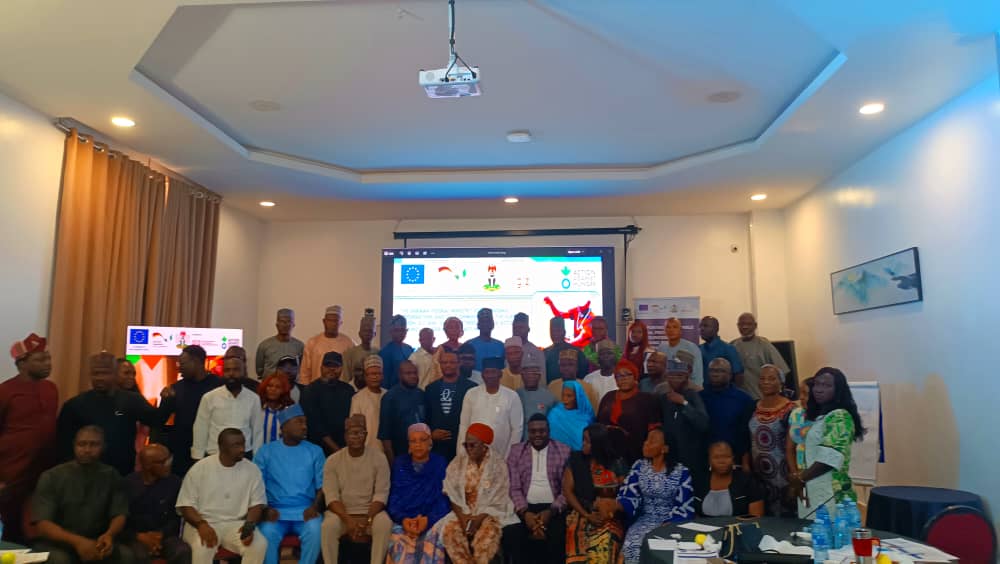
Stakeholders in Nigeria’s social protection sector have called for stronger institutional coordination, transparent beneficiary verification and improved accountability to ensure that vulnerable households benefit from government intervention programmes.
The call was made at the National Social Protection Knowledge and Learning Forum 2026 and Lessons-Learned Workshop, held from November 23 to 25, in Abuja.
The Minister of Humanitarian Affairs and Poverty Reduction, Dr Bernard Doro, reaffirmed the Nigerian government’s commitment to building a stronger, coordinated and sustainable social protection system.
The Minister represented by the Director of Social Development in the Ministry, Akwa Bassey, described the forum as an opportunity to review progress, exchange experiences and develop practical recommendations for improving interventions.
He commended the German development agency, GIZ, the European Union, Action Against Hunger and other development partners for supporting social protection initiatives, particularly in Borno and Adamawa States, through the Supporting Sustainable Social Protection, Participation and Economic Resilience in Northeast Nigeria (SEPIN SUSI) Programme.
The Minister highlighted the development of social protection strengthening tools, expansion of Social Registries and improved institutional collaboration as key achievements.
He also disclosed that the One Humanitarian-One Poverty Response System (OHOPRS), recently approved by the Federal Executive Council, would strengthen coordination, improve beneficiary targeting, reduce duplication and link humanitarian assistance with long-term recovery and economic opportunities.
Speaking in an interview, the Executive Secretary of the Adamawa State Health Insurance Agency, Dr Ujulu Peter, commended the European Union and Germany for supporting the development of the state’s social protection policy, law and implementation framework. READ ALSO:
Nigerian Government Targets Informal Workers for Social Protection
He said the intervention had helped address fragmented social protection activities by harmonising programmes, including social health insurance and conditional cash transfers, to ensure that vulnerable residents receive appropriate support.
Dr Peter added that the passage of the state’s social protection law would provide a sustainable framework for protecting vulnerable populations, including internally displaced persons and returnees affected by insurgency in the Northeast.
Also speaking, a senior official of the National Social Safety Nets Coordinating Office (NASSCO), Dr Mohammed Dikko Bala, called for human-centred storytelling and greater media engagement to improve public confidence in social intervention programmes.
He explained that beneficiaries of the Federal Government’s conditional cash transfer programme were selected from the National Social Register, which contains information on poor and vulnerable households identified and validated through community-based processes.
Bala clarified that registration in the National Social Register does not automatically qualify an individual for every intervention, as programmes have specific eligibility requirements.
He added that verification measures, including National Identification Numbers, residential geo-coordinates and financial identity linked to bank accounts or debit cards, were used to strengthen transparency and address concerns about ghost beneficiaries.
On the impact of the cash transfer programme, he said the ₦75,000 support, paid in three instalments of ₦25,000, was designed to provide immediate financial relief to vulnerable households.
He cited a beneficiary in Adamawa State who used the assistance to pay school fees for his five children, at ₦3,000 each, noting that documenting such experiences would help demonstrate the real-life impact of social protection interventions.
Bala assured journalists that NASSCO would facilitate access to State Programme Managers across the federation to enable reporters to interact directly with beneficiaries and independently document the impact of government interventions.
The Minister urged stakeholders to sustain the achievements of the SEPIN SUSI Programme by integrating developed tools, strengthened institutional capacities, expanded Social Registries and partnerships into existing government structures.
He also called for actionable recommendations, clear responsibilities and continuous knowledge sharing to ensure that the forum contributes to a more transparent, coordinated and sustainable social protection system capable of reaching Nigeria’s poorest and most vulnerable populations.

