


The House of Representatives Ad Hoc Committee on Telecommunications Service Quality has urged telecommunications subscribers to remain law-abiding and refrain from street protests while the investigation continues, assuring that their complaints would receive the necessary legislative attention.
The advice is as the committee received a petition against the Chief Executive Officers (CEOs) of telecommunications operators over persistent poor quality of network services across the country.
The Committee also insisted that no arm of government could prevent another from exercising its constitutionally assigned responsibilities, maintaining that the National Assembly has the powers to investigate the activities of telecommunications operators and the regulatory decisions of the Nigerian Communications Commission (NCC).
The position followed a petition presented by the Association of Telephone, Cable TV and Internet Subscribers of Nigeria (ATCIS-Nigeria) before the Committee, accusing the NCC and mobile network operators of failing to adequately address persistent complaints about poor services.

The association is demanding that operators provide verifiable evidence to substantiate their claims that 75,099,942 subscribers affected by network failures between November 2025 and February 2026 were compensated.
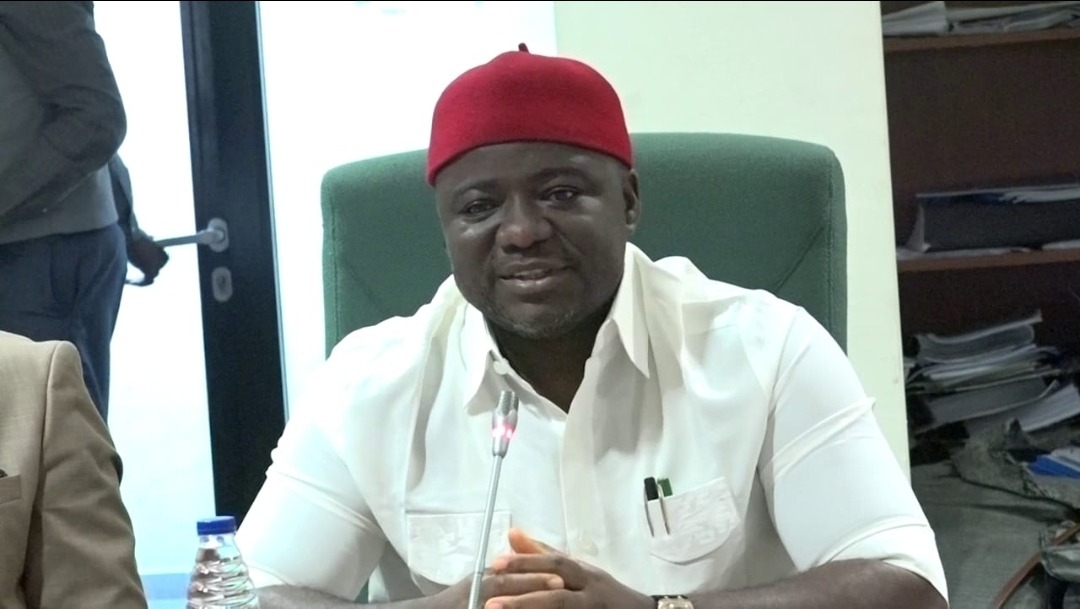
The meeting, which was presided over by Mr. Sunday Umeha on behalf of the Committee Chairman, Mr. Olumide Osoba, took place against the backdrop of a lingering disagreement between the House and the Association of Licensed Telecommunications Operators of Nigeria (ALTON) over the authority of lawmakers to summon telecommunications companies.
Presenting the petition, ATCIS-Nigeria Vice-President, Sidikat Nasiru, said that t”he association continued to receive complaints from subscribers across the country, particularly over dropped calls, unstable internet connections and inadequate network coverage.”
She explained that” many Nigerians working remotely and operating businesses online had been adversely affected by unreliable internet services, adding that subscribers were yet to receive satisfactory explanations or compensation for the poor services.”
Nasiru specifically questioned the compensation figures announced by the operators, which indicated that 75,099,942 subscribers had benefited from compensation following widespread network failures.

According to the figures presented to the Committee, Airtel claimed to have compensated 42,961,014 subscribers, MTN 26,790,091 and Globacom 5,306,737.
However, she said the association had been unable to independently verify the figures or establish the identities of subscribers who received the reported compensation.
“We have not seen success stories, even on social media, and we keep receiving complaints. We want to know the modality. Were there independent auditors during the whole process?” Nasiru asked.
She further disclosed that the association had written to the NCC and held a meeting with the regulator to raise its concerns but had yet to receive a formal response.
According to her, letters were also sent to the headquarters of MTN, Airtel and Globacom in Lagos, but the association received no satisfactory response beyond the publicly announced compensation figures.
Nasiru said the failure to obtain adequate explanations from the regulator and the operators informed the decision to seek the intervention of the National Assembly.
She disclosed that ATCIS-Nigeria had more than 25 million members nationwide, with representatives covering the northern and southern parts of the country.
Responding to questions from lawmakers on the evidence backing its complaints, she explained that the association relied on subscribers’ experiences gathered through radio programmes, telephone interactions and physical complaints at its Lagos office.
Nasiru, however, acknowledged that the association did not have a verified list of individual subscribers who received the reported compensation.
The association also maintained that poor network complaints had persisted beyond the period covered by the compensation claims, with subscribers still experiencing service disruptions, including occasions when data services became completely unavailable.
Nasiru urged the National Assembly to ensure that the NCC and telecommunications operators addressed the concerns rather than allowing subscribers to continue bearing the consequences of poor services.
She added that the association had consistently discouraged its members from resorting to street protests, preferring lawful channels to seek redress.
Responding, Umeha assured the petitioners that the Committee would thoroughly examine their submissions and confront both the regulator and telecommunications operators with the allegations.
He said the Committee had received several other petitions and complaints from individuals and organisations over poor telecommunications services, adding that all submissions would be considered alongside the responses of the operators before a report was presented to the full House.
“We will look at the complaints of the petitioners and the response from the telecommunications operators. We will come up with a report and lay it before the full House,” he said.
The lawmaker strongly defended the constitutional authority of the National Assembly to investigate the activities of telecommunications operators and the regulatory decisions of the NCC.
Citing Sections 88 and 89 of the 1999 Constitution, Umeha maintained that the legislature was empowered to investigate matters within its legislative jurisdiction, including the implementation of laws regulating the telecommunications sector.
He explained that the Nigerian Communications Act, which established the NCC and empowered it to issue licences to telecommunications operators, was enacted by the National Assembly.
Consequently, he argued that the legislature retained the responsibility to examine how the powers conferred on the regulator were being exercised, particularly where such decisions had implications for millions of Nigerians.
“The NCC’s power to issue licences was given by the National Assembly. We have the right and powers to investigate the exercise of those powers by the NCC in the conduct of its oversight functions,” he said.
Umeha also dismissed suggestions that the possibility of litigation could prevent the Committee from carrying out its constitutional responsibilities, insisting that no arm of government could stop another from exercising its constitutionally assigned duties.
He said the House would not abandon its oversight responsibilities over the telecommunications sector, stressing that the investigation was aimed at protecting subscribers and ensuring accountability among service providers.
The lawmaker commended ATCIS-Nigeria for approaching the National Assembly rather than organising street protests, urging the association and subscribers across the country to remain peaceful and law-abiding.

