


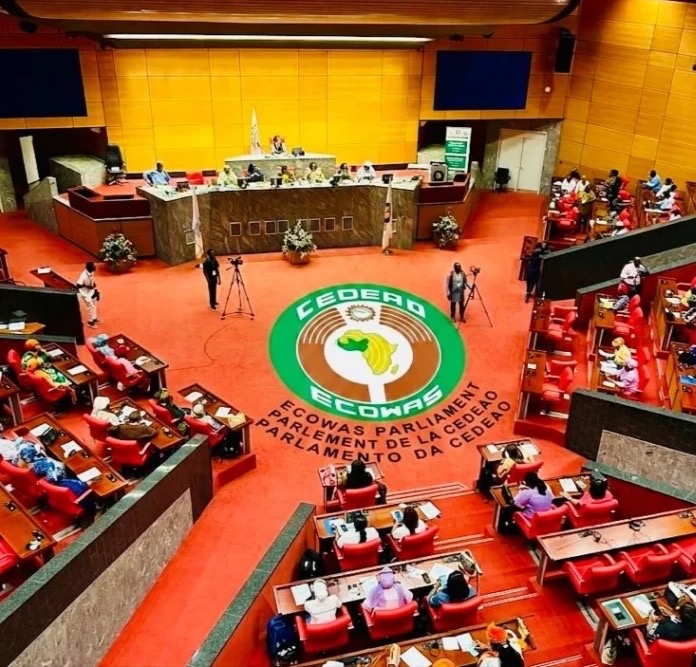
The ECOWAS Parliament has called for stronger legislative and oversight powers for the regional legislature to enable it to play a more influential role in shaping policies and addressing challenges confronting West African citizens.
The Speaker of the ECOWAS Parliament, Hajia Memounatu Ibrahima, made the call while declaring open the Second Ordinary Session of the ECOWAS Parliament for 2026 in Abuja, Nigeria’s capital.
She urged Community institutions to strengthen collaboration in tackling security threats, economic uncertainties and political challenges across the region, stressing that Parliament must become a stronger voice for the people.
“The ECOWAS Parliament must therefore not remain a mere observer of the ongoing transformations. It must establish itself as a strong and legitimate political voice of the people; an influential actor; and a powerful instrument for bringing institutions closer to citizens,” she said.
READ ALSO:ECOWAS, Nigeria Strengthen Talks on Regional Security
Describing the region as being at a crossroads, Ibrahima said geopolitical and strategic developments had exposed the economic, security, social, climate and technological vulnerabilities of member states.
She assured the President of the ECOWAS Commission, retired General Birame Diop, and other Community institutions of Parliament’s readiness to work together to advance regional integration.
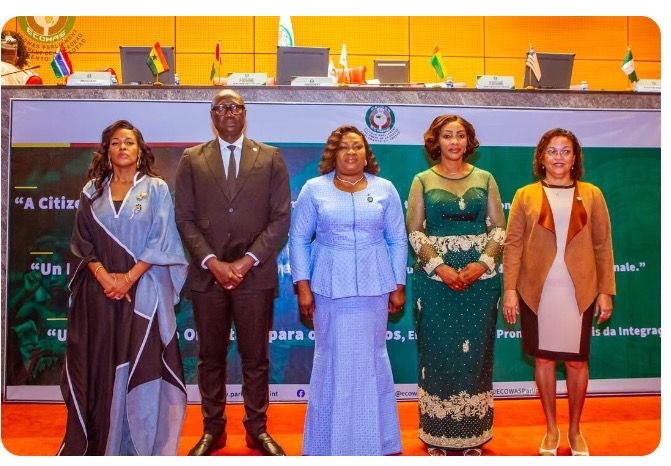 The Speaker also welcomed the Lungi Declaration, which reaffirmed ECOWAS leaders’ commitment to strengthening Parliament’s legislative and oversight responsibilities.
“There can be no sustainable regional integration without legitimate institutions. There can be no legitimacy without the trust of citizens, and no lasting trust without an unwavering commitment to the rule of law, democracy and justice,” she stressed.
She commended Cabo Verde for the peaceful conduct of its November 15 electoral process and congratulated President José Maria Neves on his re-election. She also expressed hope that upcoming elections in The Gambia and Nigeria would be peaceful and democratic.
On the session’s agenda, Ibrahima said lawmakers would consider the ECOWAS Commission President’s Strategic Plan, the Report on the State of the Community, country reports and findings from parliamentary oversight missions.
She said the proposed 2027 Community Budget would also receive attention, urging transparency, accountability and prudent management of regional resources amid mounting economic pressures and challenges associated with the remittance of the Community Levy.
“Every allocation must address a clearly established need; every expenditure must be justified by its relevance and impact; and the selection of priorities must be guided by the demands of efficiency, performance and tangible results for the benefit of our populations,” she said.
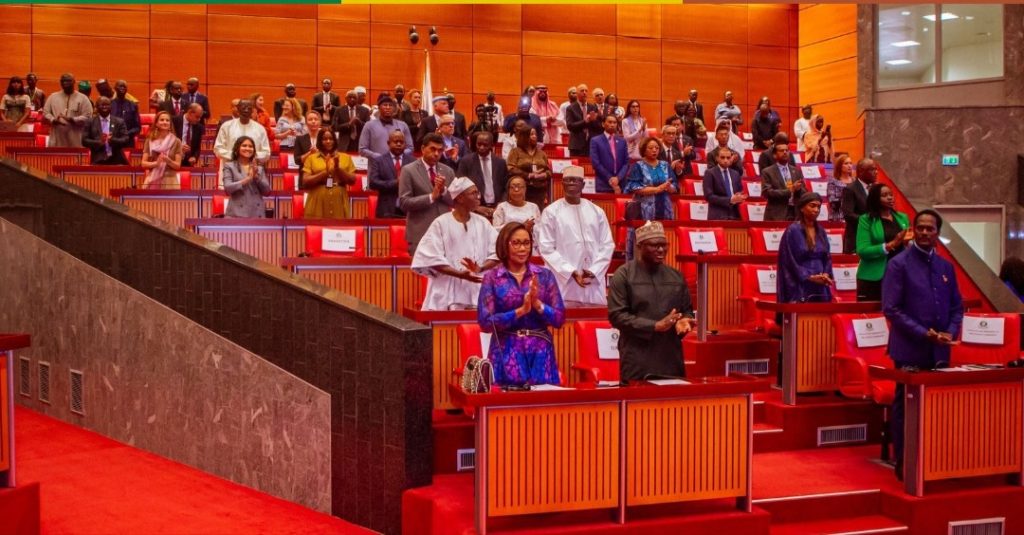
Meanwhile, the President of the ECOWAS Commission, retired General Birame Diop, called for renewed regional solidarity and stronger parliamentary diplomacy to address security and economic challenges.
He identified terrorism and insecurity in the Sahel, including their spillover effects on coastal countries, as major threats requiring coordinated regional responses.
Diop also advocated renewed engagement with international partners, particularly the United States, to strengthen security cooperation and border safety.
On economic development, he said West Africa’s population of more than 400 million, abundant natural resources and entrepreneurial potential offered significant opportunities for transformation.
He stressed the need for interconnected markets, trade liberalisation, improved customs procedures, digitalisation, industrialisation and regional value chains to boost economic growth.
He urged lawmakers to support the proposed ECOWAS Agenda 2050, particularly in peace and security, economic integration, sustainable development, human capital development, gender inclusion and digital transformation.
In her goodwill message, the President of the ECOWAS Community Court of Justice, Justice Charlyne M. Brumskine, called for stronger cooperation between the Court and Parliament to promote justice, accountability and human rights.
Describing the two institutions as complementary pillars of regional integration, she said Parliament gives citizens a voice through its legislative and oversight functions, while the Court provides remedies for human rights violations.
“This House gives our citizens a voice; the Court gives them a remedy!” she declared.
Brumskine stressed that the credibility of the Court depended on the enforcement of its judgments by member states.
The Court President also called for adequate and predictable funding, describing investment in regional justice as essential to peace, good governance, human rights and sustainable development.
The session is expected to provide an opportunity for lawmakers and Community institutions to review regional priorities, assess institutional performance and strengthen cooperation towards building a more integrated, peaceful and prosperous West Africa.

