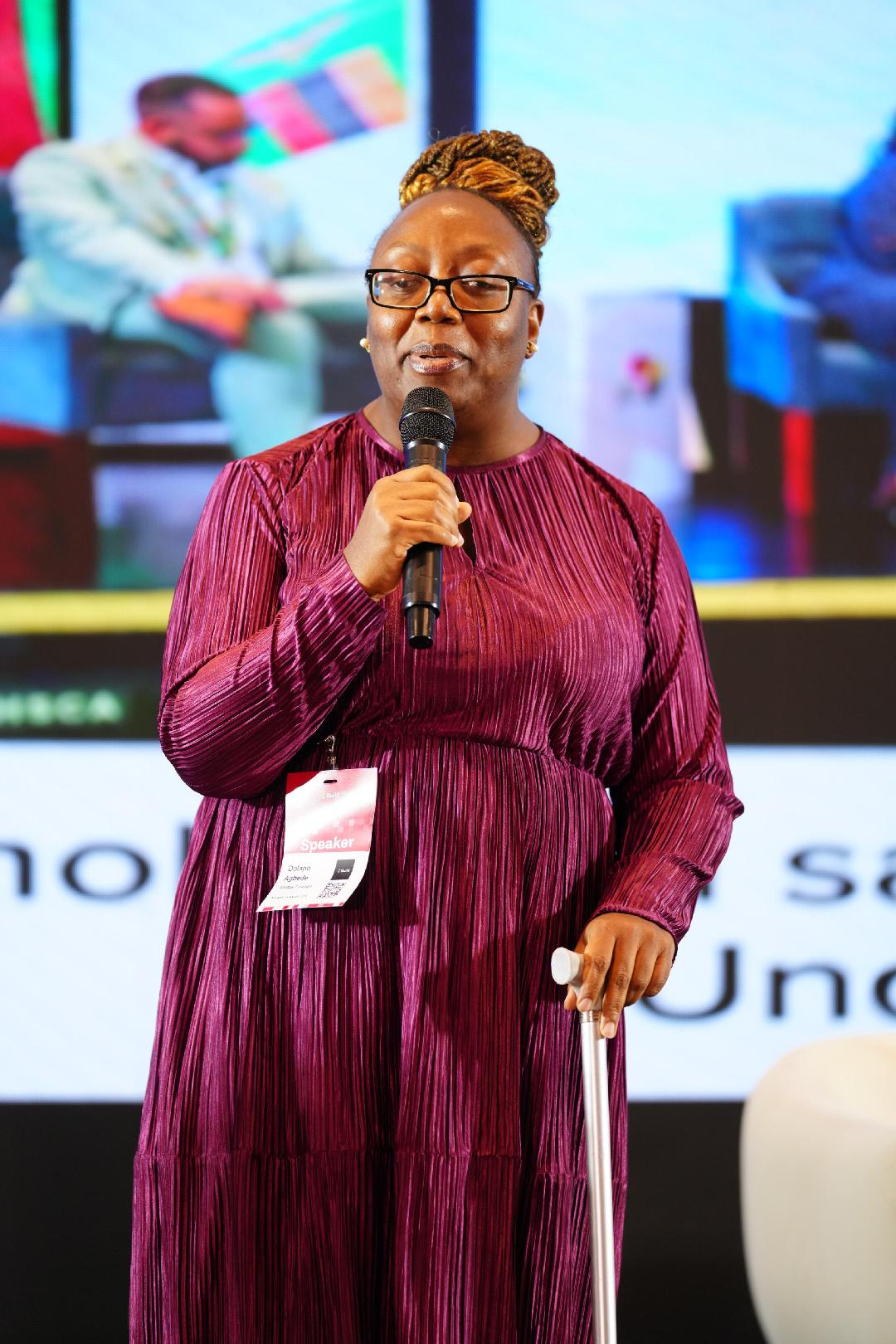
An inclusion advocate, Dolapo Agbede, says Nigeria’s artificial intelligence (AI) ambitions must extend beyond bringing underserved people into the room to ensuring their voices are heard, their perspectives considered and their participation made safe.
Agbede, who “identifies as a blind woman”, is urging technology developers and other stakeholders to embrace “patient participation” as a foundation for inclusive AI design, warning that hurried engagements could silence valuable contributions from people whose experiences and needs are often overlooked.
Addressing BUILD 2026 Conference stakeholders and participants in Abuja, as a member of the Nigeria AI Collective, she emphasised that psychological safety and “patient participation” were essential to meaningful participation, particularly for persons with disabilities and people from underserved communities.
Agbede, who said she lost her sight due to glaucoma nearly twenty years ago, told Voice of Nigeria in an exclusive interview that impairment should not prevent anyone from contributing meaningfully to society.
“I model the fact that an impairment does not take away your opportunity to fully participate and to make spaces safe for all participation to be welcome,” she said.
She explained that although underserved people might accept invitations to participate, social barriers and unfamiliarity with public speaking could still prevent them from expressing their views.
“From the point of view of technology design, building, and adaptation, we are very quick, quick, quick. But meanwhile, there might be situational social constructs that have impeded voice and agency,” she said.
Agbede called on facilitators to create different avenues for participation, noting that some people might prefer written contributions or individual conversations rather than speaking before an audience.
“We’re saying, find a way to make everyone feel safe to contribute because they’ve already shown up,” she said.
She urged technology builders to recognise the varied circumstances of persons with disabilities and avoid assumptions about their experiences or capacity to participate.
“Everyone is an incident away from an impairment, whether it’s through an accident, an incident, misdiagnosis, wrong diagnosis, or late diagnosis. But whatever it is, an impairment should never be a barrier,” she said.
Agbede, who leads conversations at Will Way Paradigm, also challenged prevailing perceptions of impairment as defining a person’s life, describing it instead as a transition that calls for new ways of contributing.
Her intervention underscores a key development concern for Nigeria’s AI ecosystem: inclusion must extend beyond representation to the practical conditions that enable people, particularly those whose perspectives are often overlooked, to shape the technologies intended to serve them.