The Executive Chairman of the Adamawa State Primary Healthcare Development Agency, Dr Suleiman Saidu Bashir has called for sustainable government funding, improved remuneration and stronger integration of Nigeria’s community health workforce to expand access to healthcare.
Bashir made the call in an interview with the Voice of Nigeria on the sidelines of the National Consultation on Advancing Nigeria’s Community Health Workforce Agenda in Abuja.
He identified recruitment, financing, remuneration, supervision, integration, role definition and digital inclusion as major challenges facing the community health workforce.
Bashir urged governments to move away from donor-driven and project-based financing towards predictable budgetary allocations to sustain the workforce.
“In terms of funding, we want to move away from a project that is donor driven or project approach to funding. We want to see the role of government budgeting coming in place, particularly in areas that have to do with making the remuneration adequate, predictable and regular,” he said.

READ ALSO: President Tinubu Praises Minister for Driving Healthcare Investments
Bashir said the revised framework had clarified the roles of Junior Community-Based Health Workers and Assistant Community-Based Health Workers, while providing pathways for their integration, certification, accreditation and career progression.
He also advocated stronger supervision through Primary Healthcare Development Agencies, saying the agencies were best positioned to coordinate appointments, promotions, transfers and disciplinary matters within the primary healthcare system.
On digital transformation, he called for interoperable platforms that would enable government to have a comprehensive view of workforce data across public, private and other health systems.
Bashir stressed that remuneration should go beyond stipends to include performance management and workplace wellbeing, particularly in view of the security challenges facing health workers in some parts of the country.
Also speaking, the Health Sector Lead, CARE International in Nigeria, Dr Amina Ahmed Abdullahi, described community health workers as the grassroots layer of the health system and critical to reaching vulnerable populations.
“Community health workers form the grassroots layer of the health system in very many communities. They are the first point of contact between community members, particularly women and girls, with the health system,” she said.
Abdullahi called for unified systems for financing, training, payment and supervision, noting that fragmented vertical programmes had created inefficiencies in the sector.
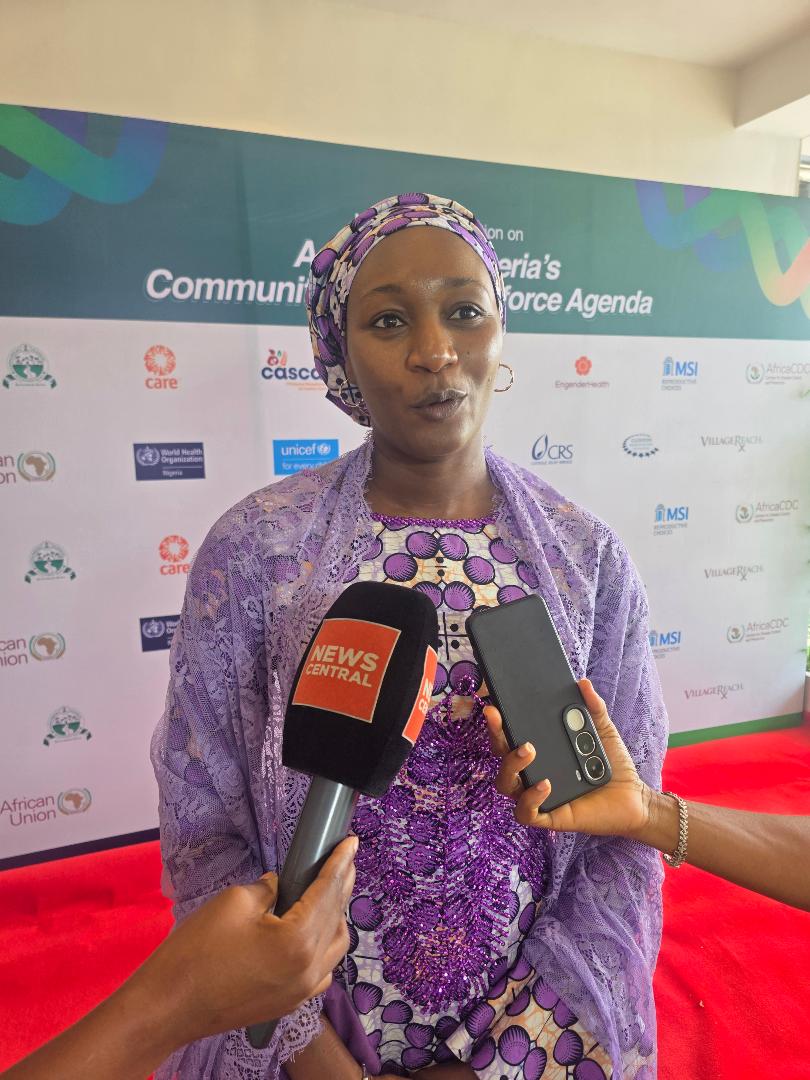
Similarly, the Senior Programme Officer, Nigeria Governors’ Forum, Dr Fatima Kumo, called for greater national ownership of the community health workforce agenda.
“Advancing Nigeria’s community health workforce agenda is our responsibility. While external support is important, we must, as a nation, take ownership of the challenges, invest in our workforce, and build a strong, protected and sustainable community health system,” she said.
The Katsina State Primary Healthcare Development Agency representative, Dr Aminu Lawal Danmusa, said continuous training was essential to maintaining an effective community health workforce.
“A strong community health system cannot rely on one-time training. We need a workforce that is continuously learning, adapting and equipped with the latest knowledge to meet changing community health needs,” he said.
Representing the Federal Ministry of Health and Social Welfare, the Director and Head of Health Planning, Research and Statistics, Dr John Ovuoraye, said the government was committed to bringing health-sector stakeholders together to build a workforce capable of delivering services at community and primary healthcare levels.
The stakeholders agreed that accelerating Nigeria’s community health workforce agenda would require closing recognition and financing gaps, aligning the workforce with continental standards and developing a costed national acceleration plan.