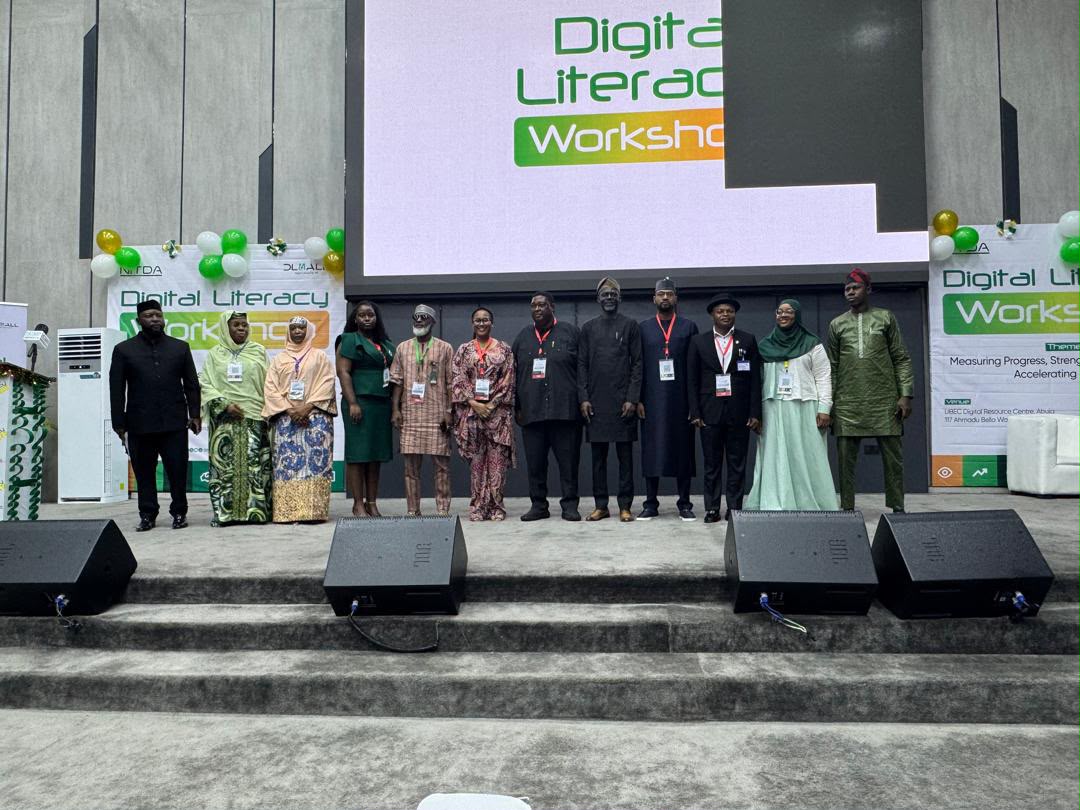
The National Information Technology Development Agency (NITDA) has unveiled the National Digital Literacy Dashboard to strengthen coordination, improve accountability and track progress towards Nigeria’s target of achieving 95 per cent digital literacy by 2030.
The initiative was announced by NITDA Director-General Kashifu Inuwa Abdullahi, at the National Digital Literacy Workshop in Abuja themed “Measuring Progress, Strengthening Partnerships, Accelerating Impact.”
Abdullahi said the dashboard would provide a common platform for stakeholders to report digital literacy interventions, identify underserved communities and guide the strategic allocation of resources.
READ ALSO: NITDA, NDPC Reaffirm Commitment to Data Protection
According to the latest snapshot prepared for the workshop, 248 organisations are reporting on the platform, with submissions recording approximately 2.76 million training achievements since January 2022 while reported activities cover all 36 states and the Federal Capital Territory.
More Inclusive Interventions
The Director-General however, noted that female participation accounted for approximately 32.9 per cent of recorded participation, stressing the need for more inclusive interventions that adequately reach women, rural communities and persons with disabilities.
The NITDA chief said the dashboard was more than a technology platform, describing it as a tool for evidence-based human capital development and improved national coordination.
“The dashboard helps us track interventions and participation. We must complement it with credible assessments of what Nigerians can actually do.
“We must understand what competencies people acquired. We must examine how they apply those competencies and we must increasingly understand the value created in their lives and communities,” he said.
Abdullahi emphasised that recorded training achievements should not automatically be regarded as proof of digital proficiency, stating that credible assessments were necessary to establish whether beneficiaries had acquired and could apply the required competencies.
“We must increasingly ask what they can do differently because of the training,” he said, highlighting the need to measure outcomes beyond the number of people trained.

He noted that the Digital Literacy for All (DL4ALL) initiative, launched in 2024, seeks to translate the framework into practical interventions through formal education, workforce development and informal-sector training.
Digital Literacy Agenda
He said the national digital literacy agenda targets 70 per cent literacy by 2027 and 95 per cent by 2030.
Abdullahi stated that achieving these goals would require coordinated action from federal and state governments, educational institutions, industry, development partners and civil society organisations.
The DG urged organisations implementing digital literacy programmes to register on the dashboard, report eligible interventions and provide credible supporting information to minimise duplication and improve resource allocation.
Also speaking, the Acting Permanent Secretary of the Federal Ministry of Communications, Innovation and Digital Economy, Adetunji Adeyemo, commended NITDA and its partners for advancing the country’s digital transformation agenda.
Adeyemo described digital literacy as a fundamental requirement for meaningful participation in the modern economy and society.
He noted that the Nigerian government’s targets reflected its determination to make Nigerians active and productive participants in the digital economy rather than mere consumers of technology.
Adeyemo acknowledged NITDA’s efforts in developing the National Digital Literacy Framework, mobilising stakeholders and establishing the dashboard to strengthen reporting of interventions across the country.
He also emphasised that progress should be measured not only by the number of people trained but by their confidence, demonstrated digital proficiency and ability to apply acquired skills to improve their livelihoods.
According to him, “Our success must ultimately not be measured only by the numbers of people trained, but by the confidence Nigerians acquire in how effective they apply those skills to improve their lives. This is why today’s emphasis on measurement is particularly important.
“We must progressively strengthen the credibility of national data, distinguish training practises from demonstrated digital proficiency, and build a reliable basis for assessing programmes towards our targets.”
The Acting Perm Sec called for stronger collaboration among state governments, educational institutions, development partners, technology companies, civil society and the private sector, stressing that achieving the national targets was a shared responsibility.
He further urged stakeholders to improve the quality of programme data and ensure that interventions adequately reached women, persons with disabilities, underserved communities and other vulnerable populations.