


Nigeria’s former Vice President Atiku Abubakar has urged the couuntry to prioritise human capital development, technological innovation and artificial intelligence (AI) to prepare its growing population for emerging economic opportunities.
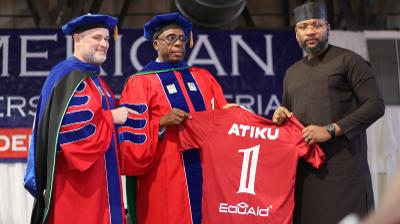
Atiku made the call at the 18th Founders’ Day celebration of the American University of Nigeria (AUN), Yola, Adamawa State capital, North eastern Nigeria.
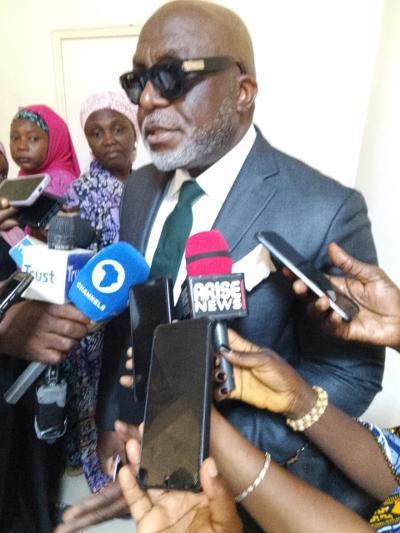
Represented by former Rivers State Governor, Rotimi Amaechi, Atiku said Nigeria’s ability to achieve sustainable development would depend largely on how effectively it educates, equips and empowers its citizens, particularly young people.
He argued that the country’s major development challenge was not a lack of talent or natural resources but its inability to adequately harness its human potential.
In an address titled The Future We Choose: Human Capital, Artificial Intelligence, and Nigeria’s Renewal, the former Vice President warned that Nigeria must urgently prepare its young population for an increasingly technology-driven global economy.
He said failure to invest in education, relevant skills and employment opportunities could turn the country’s growing population into a source of unemployment, insecurity, poverty and social instability.
READ ALSO: Atiku Pledges Major Reforms Ahead of 2027 Elections
Atiku noted that artificial intelligence, robotics, automation, biotechnology and digital technologies were rapidly changing the global economic landscape, with significant implications for agriculture, healthcare, education, journalism, manufacturing, banking and other sectors.
He cautioned that Africa risked falling further behind if its young population remained consumers of technological innovations rather than developing the capacity to create, improve and apply such technologies.
The former Vice President therefore called for an education system that equips students with the knowledge and practical skills to develop solutions to Nigeria’s developmental challenges.
He identified agriculture, public healthcare, electricity supply, access to clean water, education in underserved communities and small business development as areas where locally developed technologies could make significant contributions.
Atiku also advocated a shift from an education system that places excessive emphasis on academic certificates to one that develops practical competence, entrepreneurial ability, ethical judgment and social responsibility.
He challenged universities to expand their responsibilities beyond classroom teaching and examinations by promoting research, innovation, entrepreneurship and community development.
According to him, universities must produce graduates who can create employment, solve practical problems and contribute meaningfully to national development.
Atiku particularly urged AUN to use its strategic location in North-East Nigeria to demonstrate how academic excellence, research and innovation could address the challenges facing communities in the region.
He also called for greater access to quality education, stressing that financial difficulties should not prevent talented students from disadvantaged backgrounds from pursuing higher education.
Stronger Collaboration
The former Vice President further proposed stronger collaboration among government, the private sector, universities, the diaspora and citizens to accelerate human capital development.
He said government must provide reliable electricity, affordable internet access, security and transparent regulations, while businesses should invest in skills development, internships, technology transfer and local innovation.
He also urged Nigerians in the diaspora to contribute their expertise, investments, mentorship and international connections towards national development.
Addressing young people, Atiku encouraged them to embrace lifelong learning and technological change, noting that their contributions to society should go beyond personal achievements to include the problems they solve and the institutions they help strengthen.
Okonkwo Commends Atiku
Also speaking at the celebration, Professor Obiora Okonkwo, commended Atiku Abubakar for his sustained investment in education and the establishment of AUN.
Delivering the Founders’ Day lecture titled Purposeful Education and the 21st-Century University: Leadership, Innovation and Social Responsibility, Okonkwo described Atiku as a visionary institution builder whose commitment to education had created lasting opportunities for human development.
Earlier, the President of AUN, Dr DeWayne Frazier, described the university’s groundbreak founding vision, 23 years ago, as an effort to make education a practical instrument for transforming individuals and communities.
He emphasised the importance of mentorship, student leadership, extracurricular activities and community engagement in developing well-rounded graduates.
The university president highlighted AUN’s Feed and Read initiative, which provides meals and learning support in reading and basic mathematics to children in Yola through the involvement of student volunteers.
He disclosed that some “Almajiri” (displaced or homeless) boys participating in the programme would have opportunities to receive full scholarships at AUN after completing their junior and senior secondary education, subject to the university’s selection arrangements.
A major highlight of the occasion was the announcement of Dr Abdullahi Alkali Abba as the founding Dean of the university’s Medical School.
Frazier described the proposed medical school as a significant step towards strengthening medical education, research and healthcare delivery in North-East Nigeria.
He said the institution would focus on research into infectious diseases and community health challenges while preparing medical professionals to respond to the healthcare needs of the population.
The AUN president also announced that the university had recorded nearly 1,700 students, representing all 36 states of Nigeria and more than 20 countries.
He said the growing student population reflected the institution’s commitment to diversity, academic excellence and international engagement.
Frazier expressed confidence in the university’s future, pledging to strengthen its contributions to education, research and community development.
The 18th Founders’ Day celebration brought together perspectives on the role of education, leadership and technological innovation in shaping Nigeria’s future.
While Atiku emphasised the need to invest in people and prepare young Nigerians for the emerging global economy, Okonkwo challenged universities to translate knowledge into innovation, enterprise and social transformation.

