
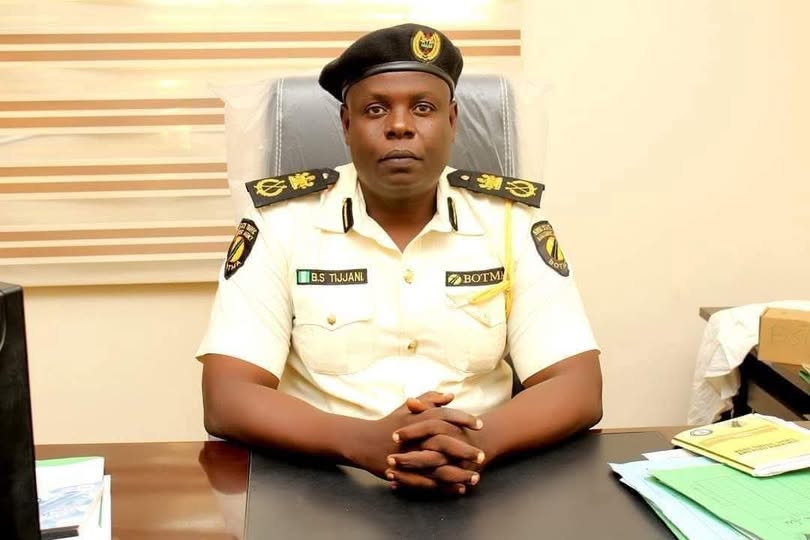
The Borno State Traffic Management Agency (BOTMA) says it has registered about 25,000 tricycles and recruited 300 youths since its establishment in 2020 to strengthen traffic management and promote safer roads across the state.
The General Manager of BOTMA, Baba Shehu Tijjani, disclosed this in an interview with the Voice of Nigeria in Maiduguri.
Tijjani said the agency was established to address transportation management challenges arising from the increased use of tricycles, popularly known as Keke NAPEP, following restrictions on motorcycles amid security concerns in the state.
He explained that the growing dependence on tricycles made it necessary to establish a reliable system for registering and identifying owners and operators.
“The increasing reliance on Keke NAPEP made it necessary to have a proper system of registration and identification of owners and operators,” Tijjani said.
According to him, the agency has registered about 25,000 tricycles operating in Maiduguri and Jere Local Government Areas.
He said the registration database captures information on owners and operators, their residential areas and next of kin.
Tijjani said the database had proved useful in tracing lost property and supporting investigations into complaints and allegations involving tricycle operators.
“The database has proved useful when a passenger reports losing an item inside a tricycle, and also in cases involving allegations against operators,” he said.
He said the Borno State Government, under Governor Babagana Umara Zulum, further strengthened the agency by approving the recruitment of 300 youths.
The recruits, he explained, underwent training at a police college before being deployed, while the government also provided operational vehicles to enhance their effectiveness.
“The recruitment has strengthened our capacity and, at the same time, created employment opportunities for young people in the state,” he stated.
Tijjani expressed optimism that continued improvement in the security situation would enable the government to recruit more personnel and extend BOTMA’s operations to additional local government areas.
He said the agency also generates revenue for the state and conducts regular media sensitisation programmes to educate residents on traffic regulations and responsible road use.
The General Manager acknowledged that BOTMA initially faced resistance from some members of the public because of inadequate understanding of its mandate.
“At first, we faced challenges because people did not understand us, but gradually, the public began to understand our work and cooperate with us,” he emphasised.
He explained that traffic offenders were fined and required to make payments through designated banks or the Borno State Board of Internal Revenue.
Tijjani also highlighted collaboration with the Nigeria Police Force, Department of State Services and Federal Road Safety Corps as key to the agency’s operations.
Challenges, Legislative Support
The general manager identified interference by passengers during enforcement operations and attempts by some individuals to use personal connections to evade traffic laws as major challenges.
“No individual should consider social status or connections a justification for violating traffic laws,” he said.
Tijjani disclosed that the Borno State House of Assembly Committee on Transportation had recently visited the agency and commended its work.
He said the committee pledged to support BOTMA through increased funding in the proposed 2027 state budget.
Tijjani appealed to BOTMA personnel and members of the public to sustain cooperation with the agency, stressing that compliance with traffic regulations was essential to safer and more orderly roads across Borno State.

