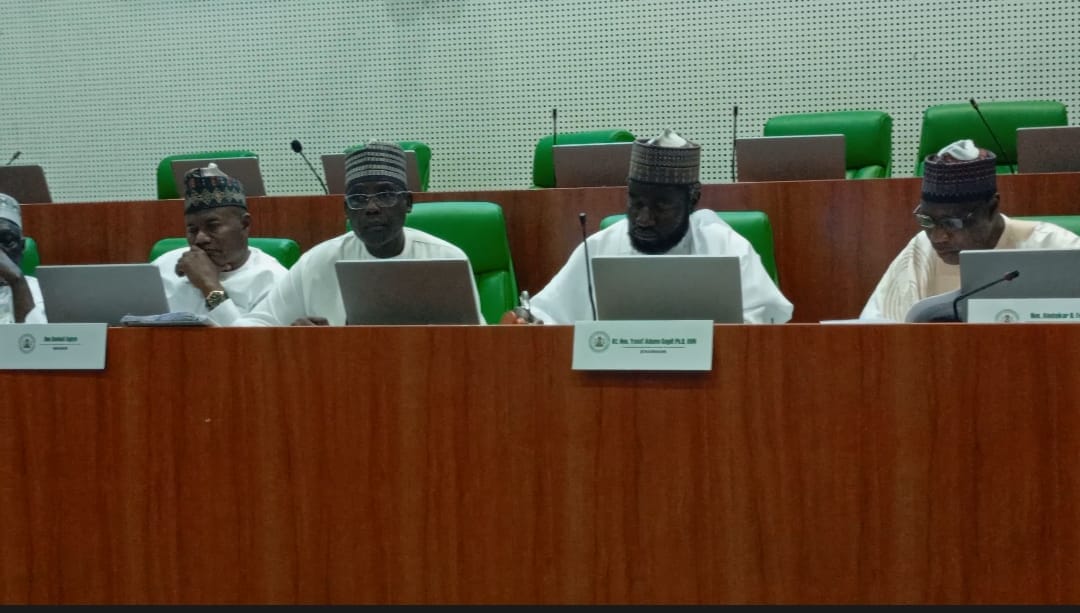
The Director-General of the Budget Office of the Federation, Tanimu Yakubu, has told the House of Representatives Ad Hoc Committee investigating the Presidential Foreign Investment Promotion Council (PFIPC) that although funds were appropriated for the agency, no expenditure was made because the statutory process required to release the funds was never completed.
Appearing before the committee, Yakubu explained that an appropriation only provides legal authority for expenditure and does not automatically result in the release or disbursement of public funds.
He said the PFIPC was included in the budget as the Presidential Economic Advisory Council/Presidential Foreign Investment Promotion Council (PEAC/PFIPC), but no money was released because the approval process ended before the necessary conditions for expenditure were met.
According to him, Nigeria’s public finance system assigns responsibilities to different government institutions. While the Office of the Head of the Civil Service of the Federation is responsible for establishment and recruitment approvals, the National Salaries, Incomes and Wages Commission regulates remuneration, the Budget Office assesses fiscal implications and issues Financial Clearance, while the Federal Ministry of Finance and the Office of the Accountant-General of the Federation oversee warrants, releases and payments.
Yakubu said the Budget Office neither created the council nor approved its establishment, budget code or recruitment waiver, noting that it merely assessed the fiscal implications of official documents received through recognised government channels.
He disclosed that although the council requested ₦3.85 billion for personnel costs, the Budget Office independently calculated the requirement at ₦802.98 million based on the approved establishment, recruitment waiver and applicable public service salary structure. That amount was subsequently included in the Executive Budget proposal and appropriated by the National Assembly.
The Director-General stressed that financial clearance, which is mandatory before recruitment and salary payments can commence, was never issued because key conditions remained unmet.
He explained that the 2026 Appropriation Bill only became law after receiving Presidential assent on 31 March 2026, while confirmation from the National Salaries, Incomes and Wages Commission on staffing and remuneration arrangements was still outstanding.
“As a result, there was no Financial Clearance, no lawful recruitment, no payroll enrolment and no salary payment,” Yakubu said.
He further explained that the personnel allocation of ₦802.98 million, representing 61.63 per cent of the agency’s total appropriation of ₦1.303 billion, could never have been released as a lump sum even if all approvals had been secured, as personnel funds are paid monthly into the accounts of verified employees through the Federal Government payroll system.
“Not one kobo of the personnel provision could lawfully have been drawn. Not one kobo was drawn. There is no personnel expenditure to recover because there was no personnel expenditure,” The Director-General said.
Yakubu also noted that the agency’s ₦200 million overhead allocation, representing 15.35 per cent of the total appropriation, was likewise not payable as a single annual release.
During the hearing, members of the committee questioned whether the Budget Office should have raised concerns after receiving correspondence from the council requesting personnel cost estimates.
Responding, Yakubu maintained that the office does not rely on requests from agencies when determining personnel costs. Instead, it calculates the fiscal implications using approved establishment structures, recruitment waivers and salary frameworks issued by the relevant government authorities.
Chairman of the committee, Yusuf Gagdi, said the evidence presented so far indicated that the Budget Office acted on official approvals and documents issued by other government agencies.
He also revealed that the Office of the Head of the Civil Service of the Federation had informed the committee that some of the documents submitted to it were later discovered to have been forged after action had already been taken on them.
Gagdi said the committee would next examine the role of the Office of the Accountant-General of the Federation, particularly how the council obtained its budget code.
“The Accountant-General should appear before this committee and explain how the budget code was created,” Gagdi said.
He added that the committee would continue hearing from relevant government agencies before reaching any conclusions on where responsibility lies.