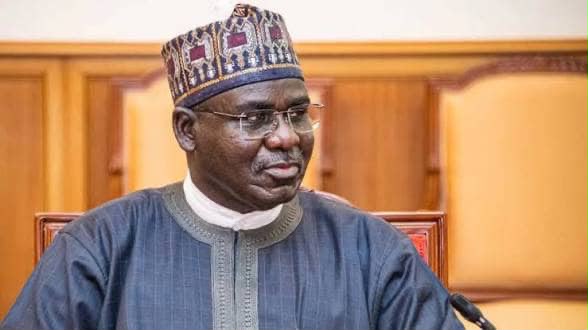
Former Chief of Army Staff, retired Lieutenant General Tukur Buratai, has called for a more integrated approach to Nigeria’s national security, arguing that military operations must work alongside intelligence, technology, community engagement and credible public communication to deliver lasting stability.
Buratai made the call at the Defence Correspondents Association of Nigeria (DECAN) Annual Lecture and Awards Ceremony, held at the Army Headquarters Command Officers’ Mess in Abuja on October 12, 2026.
He received the Distinguished Leadership Award in recognition of his leadership of the Nigerian Army, his role in the counterinsurgency campaign and his contributions to national security during his tenure as Chief of Army Staff from July 2015 to January 2021.
READ ALSO: Information Minister Advocates Intelligence-Led Approach to National Security
His lecture, titled “Beyond Kinetic Warfare: Harnessing Technology and Intelligence-Led Operations for Nigeria’s National Security,” examined lessons from the campaign against Boko Haram and outlined proposals for strengthening the country’s wider security architecture.
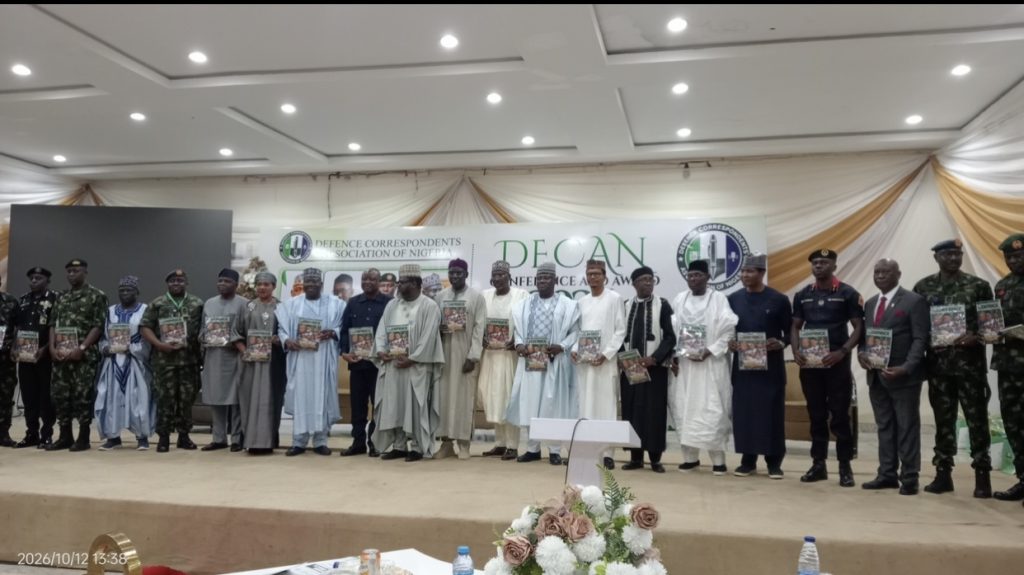
Reflecting on operations against Boko Haram, territorial recovery and efforts to restore access to affected communities, Buratai stressed that military gains must translate into lasting security.
He argued that military victories alone could not guarantee stability without functioning civil authority, restored livelihoods and public confidence.
On counterinsurgency, Buratai emphasised the need for non-kinetic measures, including civil-military cooperation, community engagement, dialogue, rehabilitation and reintegration alongside military operations. He maintained that security institutions must address the grievances and vulnerabilities exploited by armed groups.
On intelligence and technology, the retired Army Chief advocated stronger command-and-control systems, including command, control, communications, computers and intelligence (C4I) architecture, artificial intelligence, unmanned systems and improved intelligence fusion.
He stressed that technical capabilities must complement human intelligence and be supported by trained personnel and domestic maintenance capacity.
Buratai also highlighted the importance of targeting insurgents’ support networks, including supply lines, logistics and relationships that sustain armed groups. He called for stronger intelligence coordination among the military, police and intelligence institutions.

Addressing the media’s role in security governance, Buratai reflected on the embedded-journalist model used during his tenure, arguing that frontline access helped journalists document military operations, challenge insurgent propaganda and improve public understanding.
He also acknowledged the importance of independent reporting and scrutiny of military conduct.
On procurement and accountability, Buratai addressed allegations concerning a one-billion-dollar defence procurement allocation and alleged human rights violations during counterinsurgency operations. He maintained that responsibility for procurement should be traced to the institutions that handled the funds, while credible allegations of misconduct should be investigated.
Among his recommendations for security sector reform were predictable funding for non-kinetic operations, stronger domestic defence technology capacity, community intelligence networks, improved procurement transparency and clearer communication of military accountability procedures.
Buratai also urged DECAN to deepen specialist defence reporting, proposing collaboration with Defence Headquarters and the Office of the National Security Adviser on regular training for security correspondents. He further proposed a standing military-media dialogue forum that would meet quarterly.
The retired general’s central argument was that Nigeria’s security institutions must connect military force, intelligence, technology, community engagement and communication within a coordinated system. He stressed that better equipment alone could not guarantee success without reliable intelligence, skilled personnel and institutional cooperation.
He also maintained that operational gains would struggle to produce lasting stability where communities remained vulnerable and accountability was weak.
The effectiveness of the proposed reforms will depend on implementation, funding, clearly defined responsibilities and measurable results, with safer communities, stronger institutions and greater public confidence serving as key indicators of progress.