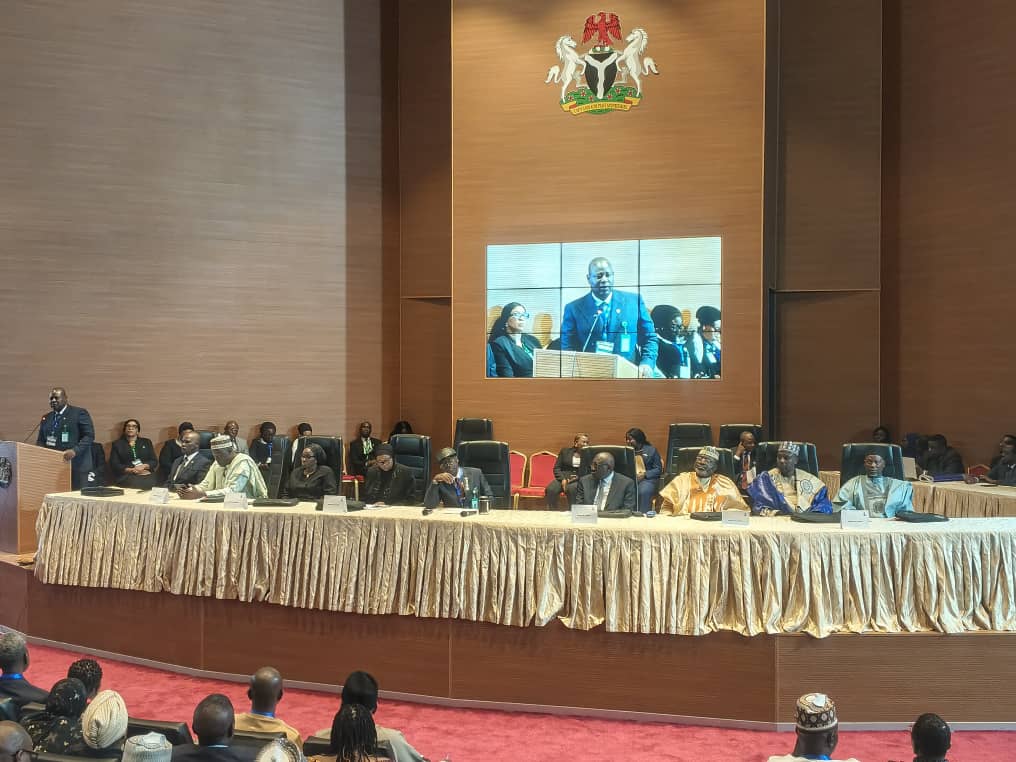
The Chief Justice of Nigeria, CJN, Justice Kudirat Kekere-Ekun has called for stronger management of judicial financial resources to improve justice delivery, protect judicial independence, and strengthen public confidence in the legal system.
The call came as Nigeria advances reforms aimed at modernising its courts.
Speaking at the opening of the 2026 National Workshop on Management of Judicial Financial Resources in Abuja, the Nigerian capital, Justice Kekere-Ekun said “effective administration of judicial resources was as critical as securing adequate funding.”
Represented by the Administrator of the National Judicial Institute (NJI), Justice Babatunde Adejumo, she stressed that robust monitoring and oversight mechanisms were essential to ensuring judicial resources are used efficiently and transparently.
“Whether available funding is meagre or abundant, what truly makes the difference is how those assets are administered,” Justice Kekere-Ekun said.
The Chief Justice linked efficient resource management to broader judicial reforms, warning that poor administration could contribute to case backlogs, delays and weakened institutional independence.
She said; “strategic deployment of funding, technology and human resources would help accelerate case resolution, reduce administrative bottlenecks and limit undue external influence on the judiciary.”
Drawing on global trends, Justice Kekere-Ekun highlighted how courts across the Global South have modernised their operations despite limited resources by adopting digital innovations such as electronic filing systems, digital case registries and automated case management tools.
She pointed to Nigeria’s ongoing efforts to digitise its judiciary through the implementation of the Nigerian Case Management System (NCMS) and the Supreme Court Practice Directions 2026, which mandate the electronic filing of court processes and records.
“This initiative represents a major step toward realizing a fully digitised registry and a more efficient, technology-driven judicial system,” she said.
While speaking, Justice Kekere-Ekun described sound financial management as a cornerstone of effective justice administration, emphasising that the performance of courts depends not only on judicial decisions but also on the institutional systems supporting them.
“The effective administration of justice depends not only on the quality of judicial decision-making but also on the strength of the institutional systems that support it.”
“Behind every successful judicial institution lies a framework of prudent budgeting, transparent accounting, responsible procurement, efficient resource allocation, and effective financial oversight,”she said
Justice Kekere-Ekun said judicial financial management had become increasingly complex as public expectations for transparency, efficiency and accountability continue to grow.
According to her, every stage of financial administration from budgeting and procurement to expenditure and reporting directly affects court performance and public trust.
The workshop, organised by the National Judicial Institute, Nigeria’s judicial training and policy development body, brought together senior finance and administrative officers from courts across the country.