


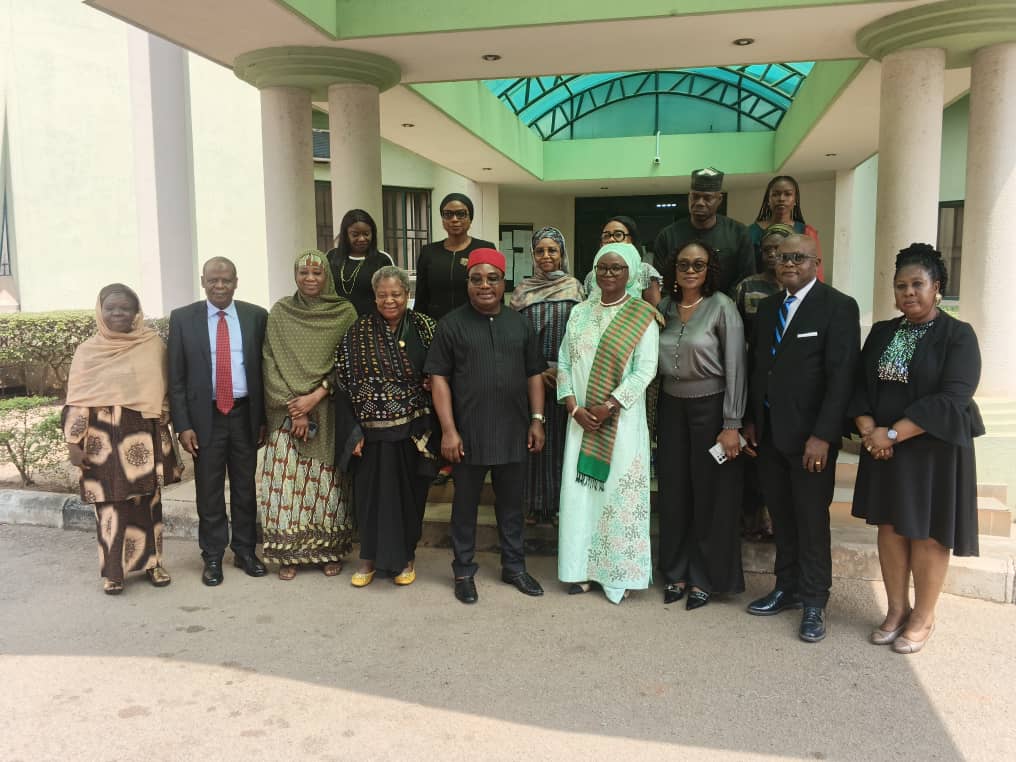
The National Human Rights Commission (NHRC) and the African Commission on Human and Peoples’ Rights (ACHPR) have pledged to intensify advocacy against femicide and all forms of violence against women and girls in Nigeria.
The commitment was made in Abuja when the Special Rapporteur on the Rights of Women in Africa, Ms. Janet Ramatoulie Salla-Njie, visited the Executive Secretary of the NHRC, Dr. Tony Ojukwu.
Both leaders resolved to strengthen collaboration with government institutions and civil society organizations to advance women’s rights, ensure accountability, and improve access to justice.
Rising Femicide, Tech-Facilitated Abuse
Dr. Ojukwu identified the rising cases of femicide and technology-facilitated violence against women as major concerns that require urgent legislative action, stakeholder collaboration and improved access to justice.

He said the NHRC would collaborate with civil society to strengthen nationwide advocacy against femicide and push for Nigeria’s adoption and ratification of the African Union Convention on Ending Violence Against Women and Girls.
“The NHRC would collaborate with civil society organisations to strengthen nationwide advocacy against femicide and support Nigeria’s adoption and ratification of the African Union Convention on Ending Violence Against Women and Girls,” Ojukwu said.
He disclosed that the Commission has established a dedicated Department of Women and Children to strengthen its response to violations, moving beyond its previous focus on legal enforcement alone.
Ojukwu added that the Commission uses resolutions and recommendations of the African Commission to interpret complaints, facilitate remedies and strengthen human rights protection nationally.
He described the relationship between the NHRC and the African Commission as complementary, aimed at ensuring regional commitments produce practical results in Nigeria.
The NHRC boss also emphasised women’s participation in decision-making and called on women to use their voting power strategically in forthcoming elections to support candidates who protect women’s interests.
According to him, increased female representation in executive and legislative positions would enable women to shape policies affecting their welfare.
He expressed optimism about renewed efforts to secure affirmative action for women in the National Assembly, recalling the Commission’s advocacy for special legislative seats for women.
Nigeria Urged to Lead AU Convention Ratification
On her part, Salla-Njie called on Nigeria to take a leading role in advancing the African Union Convention on Ending Violence Against Women and Girls.
She noted that the Convention was adopted by the African Union in February 2025, building on the Protocol to the African Charter on Human and Peoples’ Rights on the Rights of Women in Africa, popularly known as the Maputo Protocol.

The Special Rapporteur urged Nigeria to become one of the 15 countries required for the Convention to enter into force, saying it would reinforce the country’s leadership in promoting women’s rights in Africa.
She expressed concern over the increasing incidence of femicide in Nigeria, Cameroon and South Africa, as highlighted in the African Commission’s monitoring across the continent.
“The new convention specifically addresses femicide and its prohibition,” she said, describing Nigeria’s support as an important step toward ending violence against women and girls.
Salla-Njie called on the NHRC to champion the ratification process, facilitate Nigeria’s national report and monitor implementation of concrete legislation to protect women and girls.
She stressed that governments, national human rights institutions and civil society must work together, noting that the responsibility cannot rest on one institution alone.
She commended the NHRC for its collaboration and acknowledged the contributions of women and male allies working to advance women’s rights, reaffirming that the difficult circumstances confronting vulnerable women and girls should strengthen collective efforts.

