

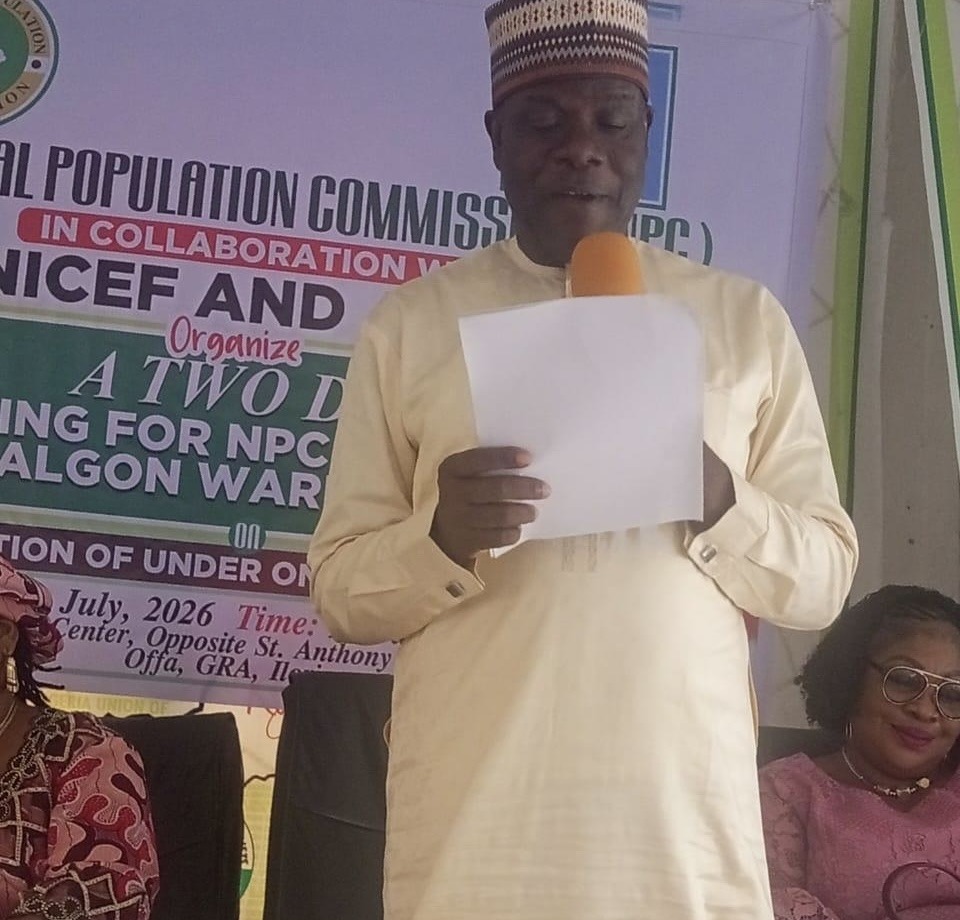
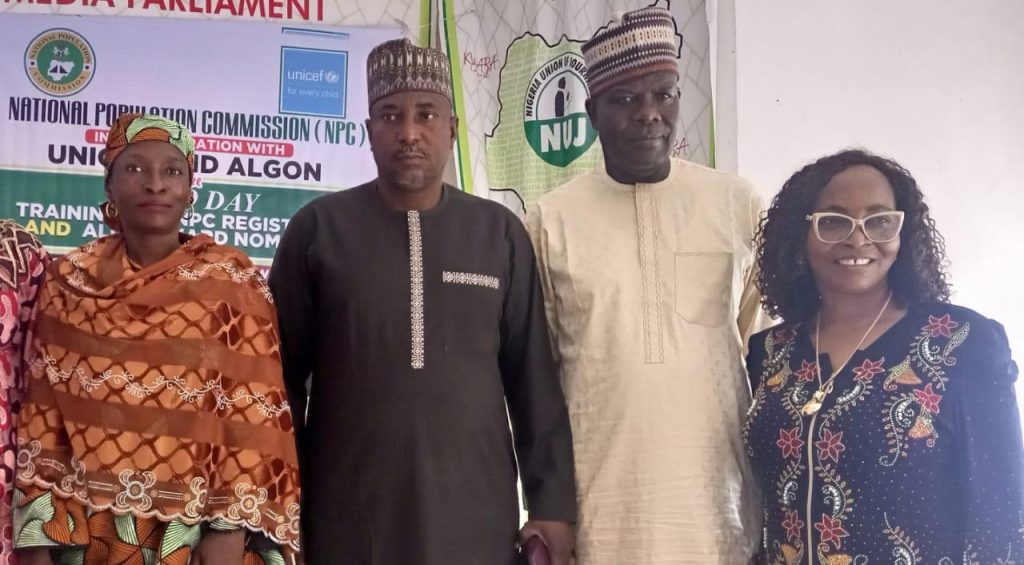
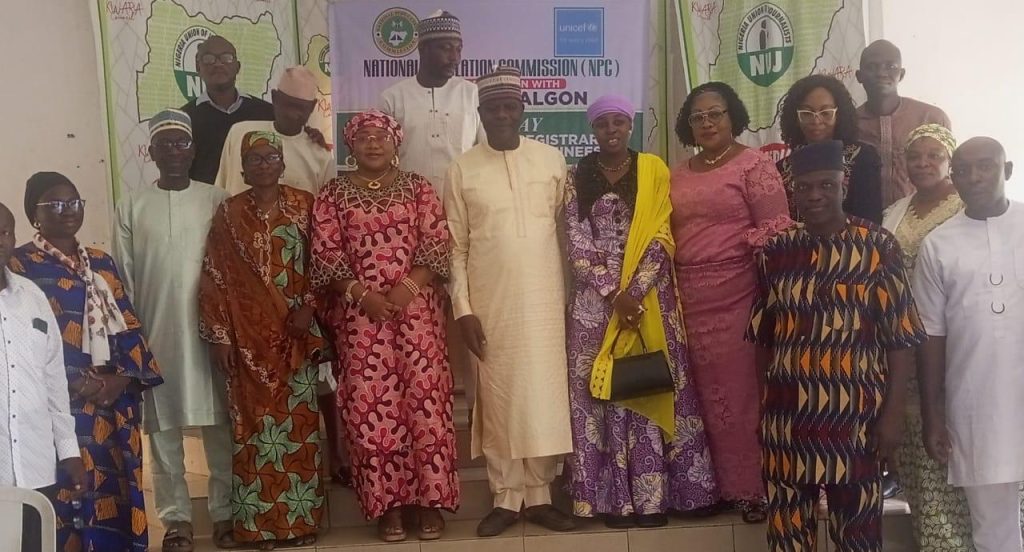
The National Population Commission (NPC), in collaboration with the Association of Local Governments of Nigeria (ALGON) and development partners, including UNICEF, has conducted a two-day capacity-building training programme for ward registrars to strengthen birth registration and civil registration systems in Kwara State.
Speaking in Ilorin, the Federal Commissioner of the NPC in Kwara State, Dr Yahaya Isiaka Alada, described the initiative as a landmark step towards decentralising and harmonising the Civil Registration and Vital Statistics (CRVS) system across Nigeria.
He emphasised that the training marks the transition from policy agreements to practical implementation at the grassroots level.
Alada noted that the Commission remains committed to expanding the electronic Civil Registration and Vital Statistics (eCRVS) system nationwide, in line with the Federal Government’s Renewed Hope Agenda.
- READ ALSO: First Lady Lauds UNICEF for Boosting Nigeria’s Birth Registration
- Nigeria Intensifies Digital Birth, Death Registration Campaign
He recalled a strategic meeting convened by UNICEF in December 2024, which brought together key stakeholders, including NPC, ALGON, NIMC, and technology partners, to strengthen collaboration and improve birth registration processes in the country.
According to him, “the partnership is aimed at ensuring that every child born in Nigeria is registered,” stressing that decentralisation would bring registration services closer to communities.
He added that plans are underway to establish additional registration centres across the 16 local government areas of Kwara State and to ensure the timely issuance of birth certificates with unique identification numbers.
The Federal Commissioner further highlighted key implementation strategies, including the use of community structures such as traditional institutions, wards, and public spaces as registration points, as well as the integration of birth registration with the National Identification Number (NIN) system.
He called on stakeholders, including traditional rulers and community leaders, to support the initiative and ensure its success.
The National Project Coordinator on Birth Registration for ALGON, Ms Latifah Aspitah Isah, underscored the importance of birth registration as the foundation of legal identity.
She described it as a gateway to essential services such as healthcare, education, and social protection, warning that unregistered children risk exclusion from government interventions.
Ms Isah stressed that local government authorities play a critical role in bridging the gap in birth registration, as they are closest to the communities where births occur.
She also highlighted the importance of interoperability, noting that data generated at the local level must seamlessly integrate with national systems to ensure a unified and reliable identity framework.

, in collaboration with the Association of Local Governments of Nigeria (ALGON) and development..)