The National Credit Guarantee Company Limited (NCGC) says it has facilitated ₦64.13 billion in loans to businesses and individuals across Nigeria, supported by ₦30.19 billion in credit guarantees.
The devopment is part of the Nigerian Government’s efforts to expand access to finance, stimulate economic activities and support sustainable economic growth.
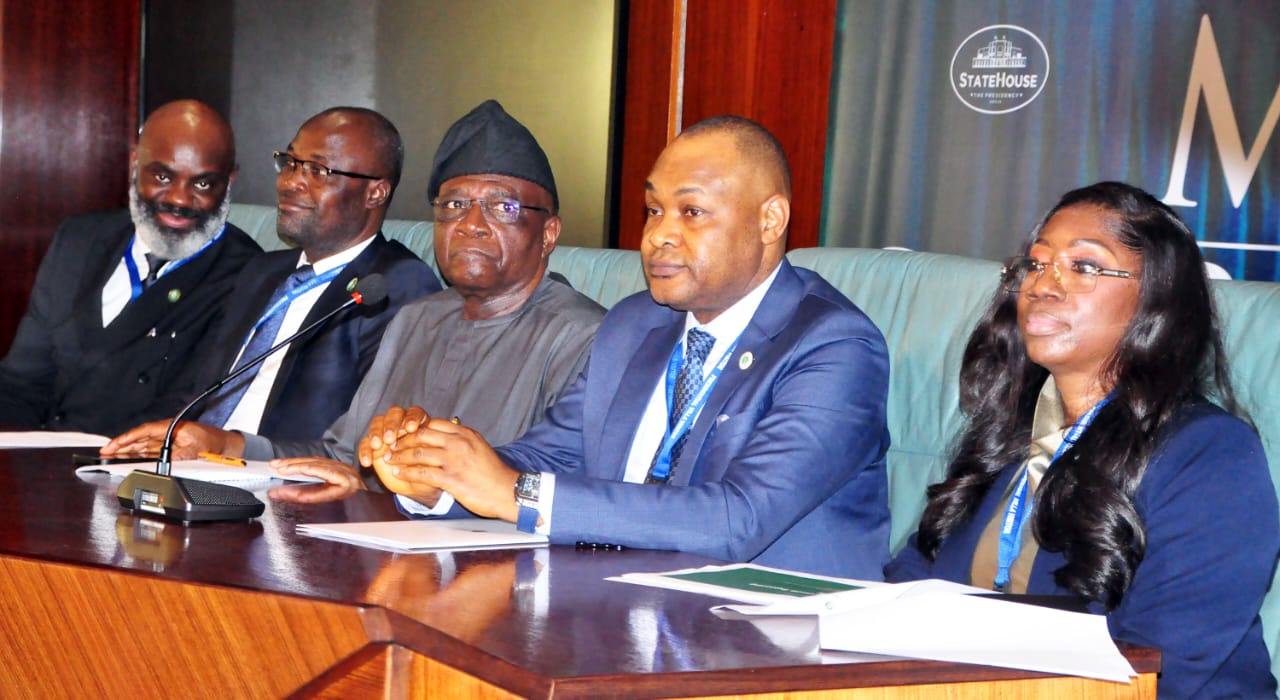
The Managing Director and Chief Executive Officer of NCGC, Dr. Bonaventure Okhaimo, disclosed this on Tuesday while briefing State House correspondents at the Presidential Villa, Abuja, on the company’s operations, achievements and ongoing initiatives to improve credit accessibility nationwide.
Okhaimo explained that “the figures, contained in the company’s programme performance report as of October 21, represented approximately ₦2.12 in loans facilitated for every ₦1 of guarantee provided, demonstrating the capacity of credit guarantees to stimulate lending and unlock financing opportunities.”
He disclosed that the company had reached 174,495 borrowers across the 36 states of the federation and the Federal Capital Territory through 19 participating financial institutions, comprising commercial banks, microfinance banks and development finance institutions.
According to him, “the intervention has also contributed to employment opportunities, with participating financial institutions reporting 175,481 direct jobs associated with supported borrowers, while an estimated 739,310 indirect jobs brought the total employment impact to 914,791.”
The NCGC Chief Executive further said that 74,503 beneficiaries, representing 42.7 per cent of total borrowers, were women, while 22,616 individuals, accounting for 12.96 per cent, accessed formal financial services for the first time.
He said that 7,731 beneficiaries were captured under youth empowerment initiatives, with trade, commerce, agribusiness and agro-processing collectively accounting for more than 80 per cent of borrowers supported under the programme.
Explaining the company’s operational framework, Okhaimo said NCGC does not provide loans directly to individuals or businesses but offers partial credit guarantees to participating financial institutions to reduce lending risks and encourage financing for eligible borrowers.
He noted that the arrangement enables financial institutions to extend credit to businesses and individuals who might otherwise be excluded from conventional lending because of inadequate collateral or other credit constraints.
The Managing Director explained that by sharing a portion of potential losses with lending institutions, the company creates opportunities for borrowers to access financing under more favourable conditions, including reduced collateral requirements and improved loan terms.
He also highlighted the company’s Guaranteeher initiative, a gender-responsive credit guarantee framework designed to strengthen access to financing for women-owned micro, small and medium enterprises through existing financial institutions.
Okhaimo disclosed that the initiative targets the mobilisation of more than ₦100 billion in lending over five years to support at least 20,000 women-owned enterprises and facilitate more than 150,000 direct and indirect employment opportunities.
He explained that GuaranteeHer provides credit guarantee coverage of up to 70 per cent of eligible loan exposure, with a maximum financing limit of ₦50 million per borrower, enabling participating financial institutions to offer lower interest rates, reduced collateral requirements and longer repayment periods.
The NCGC Chief Executive further disclosed that the company was strengthening institutional partnerships with the Small and Medium Enterprises Development Agency of Nigeria (SMEDAN), the Nigerian Consumer Credit Corporation (CREDICORP), the Bank of Industry and other relevant institutions to broaden financial inclusion and improve access to credit.
He said the company was also collaborating with NIRSAL on a co-guarantee framework for agribusiness and engaging development partners, including the World Bank Group, on technical assistance and first-loss capital arrangements to strengthen its credit guarantee operations.
Providing background on the institution, Okhaimo explained that NCGC was established by the Federal Government on May 29, 2025, under President Bola Ahmed Tinubu’s economic reform agenda and subsequently licensed by the Central Bank of Nigeria on August 9, 2025.
He stated that the company operates with a capital base of ₦100 billion, jointly held in equal proportions by the Bank of Industry, Ministry of Finance Incorporated, Nigeria Sovereign Investment Authority and CREDICORP.
Also speaking, the Special Adviser to the President on Information and Strategy, Mr. Bayo Onanuga, described the establishment of NCGC as one of President Bola Tinubu’s most consequential economic reforms, designed to strengthen Nigeria’s credit culture and accelerate economic growth.
Onanuga said the President was seeking to replicate aspects of the credit-driven economy of the United States, where individuals and businesses could access financing for essential purchases, homeownership and investments without making full payments upfront.
“No society can ever grow without credit,” he stated, explaining that the establishment of CREDICORP and NCGC reflected the administration’s commitment to expanding financing opportunities for Nigerians.” He added.
He expressed optimism that increased capitalisation of NCGC would strengthen its capacity to guarantee more loans for micro, small and medium enterprises, stimulate business expansion and accelerate economic development.