


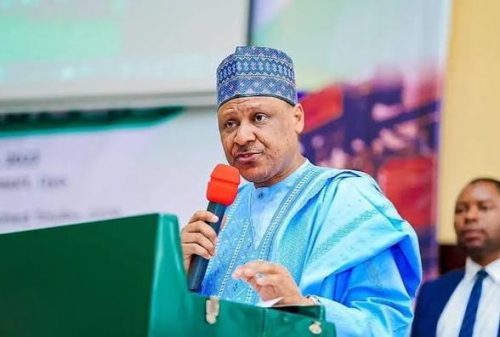
Nigeria’s Minister of Information and National Orientation, Mohammed Idris, says the education reforms introduced by President Bola Ahmed Tinubu’s administration are expanding access to tertiary education, promoting vocational skills development and strengthening teacher education in the country.
The minister stated this in Abuja on Thursday, October 29, 2026, while delivering a keynote address at a meeting of the Committee of Governing Councils of Federal Colleges of Education.
Idris, who was represented by the Director-General of the Nigerian Television Authority (NTA), Salihu Abdulhamid Dembos, said education remained a central pillar of President Tinubu’s Renewed Hope Agenda.
He noted that sustained investment in human capital was essential to national development and the building of an inclusive economy.
“Education occupies a central place in President Bola Ahmed Tinubu’s Renewed Hope Agenda because the administration recognises that Nigeria’s greatest resource is its people. Our ambition to build a prosperous and inclusive economy can only be achieved through sustained investment in human capital, particularly the education and development of our young people,” he said.
Highlighting some of the Federal Government’s interventions in the education sector, Idris identified the Nigerian Education Loan Fund (NELFUND) as a major initiative designed to remove financial barriers preventing eligible students from accessing tertiary education.
READ ALSO: President Tinubu’s Reforms Need Grassroots, Public Support – Information Minister
He also pointed to the renewed emphasis on Technical and Vocational Education and Training (TVET), saying the programme was aimed at equipping young Nigerians with practical and relevant skills to improve their employability, entrepreneurship and participation in emerging labour market opportunities.
According to him, the success of the government’s education reforms will largely depend on the availability of well-trained teachers, effective institutional leadership and responsible governance.
He therefore charged members of governing councils of Federal Colleges of Education to uphold transparency, accountability and prudent resource management while maintaining constructive working relationships with institutional management.
The minister stressed that teacher training remained critical to improving the quality of education and shaping the future of Nigerian children.
“Every investment we make in the training of a teacher is an investment in the future of countless Nigerian children. The quality of our teachers will shape learning outcomes, national development and the opportunities available to future generations,” he said.
He further urged the governing councils to strengthen the teaching of national values, civic responsibility and critical thinking in their respective institutions.
Idris noted that teachers had an important responsibility to prepare young Nigerians to distinguish facts from falsehoods, respect diversity and contribute meaningfully to national unity and peaceful coexistence.
“Success must be reflected in improved academic standards, stronger institutional governance, better-equipped teachers and, ultimately, improved learning outcomes for Nigerian children,” he said.
The minister challenged participants at the meeting to develop practical and implementable recommendations that would strengthen governance structures and improve academic standards across Federal Colleges of Education.
Idris also congratulated the committee on its commitment to advancing teacher education and reaffirmed the Federal Government’s recognition of the important role Federal Colleges of Education play in national development.
He urged members of the governing councils to discharge their responsibilities with dedication, integrity and a strong sense of accountability.

